Interesting Dao
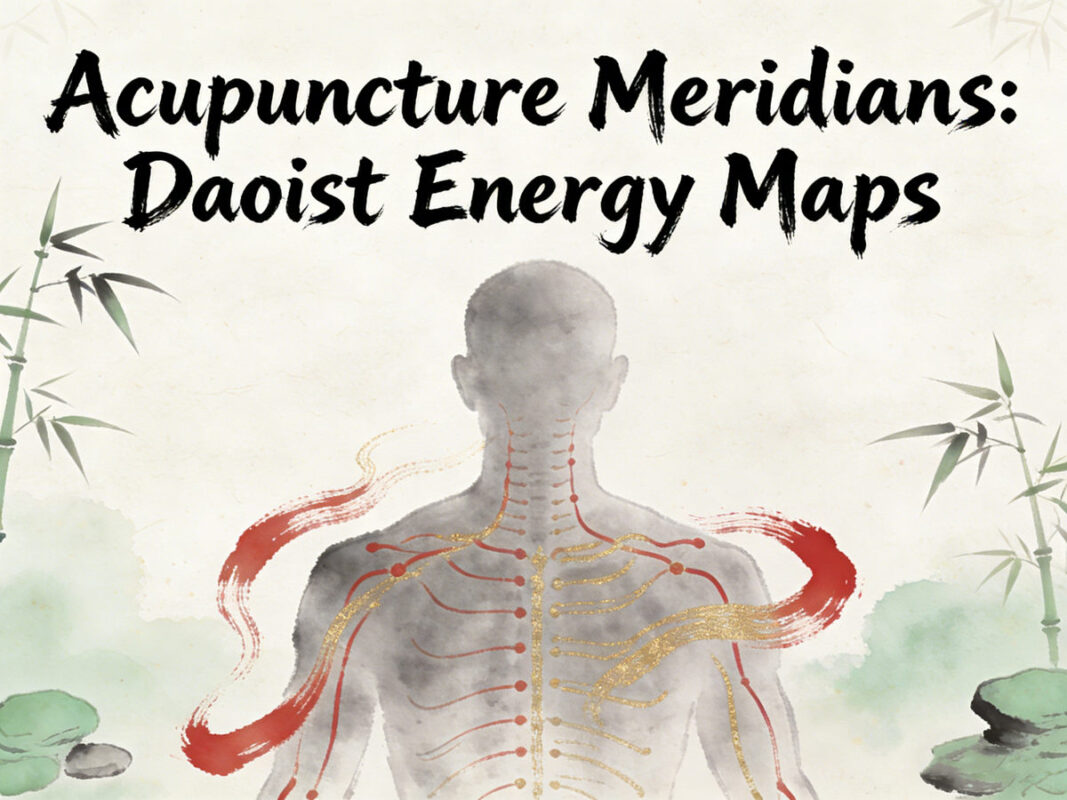
Acupuncture Meridians: Daoist Energy Maps
Jan
In the quiet sanctuaries of ancient Daoist temples, masters contemplated the human body not merely as flesh and bone, but as a luminous landscape traversed by rivers of vital force. These intricate pathways, known as meridians or Jing Luo, represent one of the most profound contributions of Daoist cosmology to healing wisdom: a dynamic map of life energy (Qi) flow that forms the very foundation of acupuncture, acupressure, and countless internal cultivation practices. Far more than simple anatomical conduits, these channels embody a sophisticated understanding of how the microcosm of the human form reflects the macrocosm of the universe, governed by the interplay of Yin and Yang and the transformative power of the Five Elements (Wu Xing). To study the meridian system is to engage with a living cartography of vitality, a guide to harmonizing our internal energies with the eternal rhythms of the Cosmic Dao.
I. Beyond Anatomy: The Daoist Cosmology Embodied in the Meridian System
Daoist physiology perceives the body as a universe in miniature, a sacred vessel animated and sustained by the ceaseless movement of Qi. The meridian network is the infrastructure of this inner cosmos:
- Qi as the Animating Principle: Daoist masters observed that life depends on an invisible, vital force circulating within all living things. This Qi is not static; it ebbs and flows, gathers and disperses, nourishes and protects. Health manifests when Qi flows freely and abundantly; disease arises from its blockage, deficiency, or rebellion. The meridians are the primary channels through which this essential energy travels, connecting the surface to the depths, the organs to the extremities.
- Yin-Yang Dynamics in the Channel Network: The meridian system is inherently structured by Yin and Yang principles. Yin meridians (associated with solid organs like Liver, Heart, Spleen, Lung, Kidney) tend to flow along the inner, anterior, and medial aspects of the body, embodying qualities of nourishment, storage, and structure. Yang meridians (associated with hollow organs like Gallbladder, Small Intestine, Stomach, Large Intestine, Bladder) typically course along the outer, posterior, and lateral aspects, governing activity, transformation, and defense. Their balanced interaction is paramount.
- The Five Phases as Energetic Blueprint: Each primary meridian is intrinsically linked to one of the Five Elements (Wood, Fire, Earth, Metal, Water) and its corresponding organ system. This isn’t merely symbolic; it describes a network of generative (Sheng) and controlling (Ke) cycles that govern physiological and energetic relationships. For instance, the Wood element (Liver/Gallbladder) generates Fire (Heart/Small Intestine) but controls Earth (Spleen/Stomach). Imbalances within an element manifest in its associated meridian and can ripple through the entire system. The meridians thus map not just pathways, but the dynamic, interconnected relationships that sustain life.
II. Charting the Internal Landscape: The Primary Meridians and Their Functions
Twelve primary meridians form the core of this energetic highway system, each with distinct pathways, peak activity times, and physiological/psychological associations:
- Lung (LU) Tai Yin (Metal): Governs respiration and Qi distribution, influences skin vitality, and manages grief. Pathway flows from chest to thumb.
- Large Intestine (LI) Yang Ming (Metal): Responsible for elimination and processing waste (physical and emotional), linked to the nose and letting go. Pathway flows from index finger to face.
- Stomach (ST) Yang Ming (Earth): The “Sea of Nourishment,” vital for digestion, assimilation of food and ideas, grounding. Pathway flows from face to 2nd toe.
- Spleen (SP) Tai Yin (Earth): Governs transformation and transportation (digestion, fluid metabolism, thought), central to energy production and blood integrity. Pathway flows from big toe to chest.
- Heart (HT) Shao Yin (Fire): Houses the Shen (Spirit), governs blood circulation, consciousness, joy, and speech. Pathway flows from armpit to little finger.
- Small Intestine (SI) Tai Yang (Fire): Separates the pure from the impure (digestively and mentally), associated with discernment and clarity. Pathway flows from little finger to ear.
- Bladder (BL) Tai Yang (Water): The longest meridian, acts as the body’s main drainage pathway, stores and excretes fluids, governs the back and fear responses. Pathway flows from eye to little toe.
- Kidney (KI) Shao Yin (Water): Stores Jing (Essence), the root of Yin and Yang for the whole body, governs water metabolism, reproduction, willpower, and foundational fear. Pathway flows from sole to chest.
- Pericardium (PC) Jue Yin (Fire): Protects the Heart (physically and emotionally), governs blood vessel integrity, circulation to extremities, and emotional intimacy (“Heart Protector”). Pathway flows from chest to middle finger.
- Triple Burner (TB) Shao Yang (Fire): Regulates fluid metabolism and temperature across three body cavities (upper/middle/lower burner), coordinates overall Qi movement and defensive Qi. Pathway flows from ring finger to eye.
- Gallbladder (GB) Shao Yang (Wood): Governs decision-making, courage, and the smooth flow of Qi (especially muscular and tendon function). Pathway flows from eye to 4th toe.
- Liver (LV) Jue Yin (Wood): Ensures the free and smooth flow of Qi throughout the body, stores blood, regulates menstruation, influences planning, and harbors anger when imbalanced. Pathway flows from big toe to chest.
These pathways interconnect at specific points (acupoints), forming a continuous circuit ensuring the constant, rhythmic movement of Qi essential for life.
III. The Extraordinary Vessels: Deep Reservoirs and Regulators of Life Force
Beyond the twelve primary channels lie eight Extraordinary Vessels (Qi Jing Ba Mai), acting as deep reservoirs and sophisticated regulators of fundamental energies:
- Conception Vessel (Ren Mai): The “Sea of Yin,” running down the anterior midline. Governs all Yin meridians, regulates reproductive functions, pregnancy, and nourishes the chest and abdomen.
- Governing Vessel (Du Mai): The “Sea of Yang,” running up the spine. Governs all Yang meridians, strengthens the back, influences the brain and spinal cord, and controls Yang Qi.
- Penetrating Vessel (Chong Mai): The “Sea of Blood” and “Sea of the Twelve Meridians.” Vital for blood circulation, menstruation, and connecting the core (Heart/Kidneys/Uterus). A major pathway in Internal Alchemy (Nei Dan).
- Girdle Vessel (Dai Mai): The only horizontal meridian, encircling the waist. Binds and integrates the vertical channels, influences lumbar health, and regulates “damp” conditions.
- Yin/Yang Heel Vessels (Yin Qiao Mai / Yang Qiao Mai): Govern the body’s motility and balance (especially leg movement and eye opening/closing), regulate sleep cycles, and influence the state of Yin and Yang in the lower body.
- Yin/Yang Linking Vessels (Yin Wei Mai / Yang Wei Mai): Connect and network all the Yin and Yang meridians respectively, helping to balance and harmonize the entire system, particularly influencing the internal organs and emotional states.
These vessels are crucial for storing and releasing Yuan Qi (Original Qi), managing deep constitutional patterns, and form the core energetic circuit (Microcosmic Orbit) used in advanced Qi cultivation practices for longevity and spiritual refinement.
IV. Acupoints: Gates of Qi and Windows to the Internal Terrain
Scattered along the meridian pathways are hundreds of acupoints – specific locations where Qi pools near the surface and can be accessed and influenced. These are not random dots, but precise portals:
- Functional Significance: Each point has specific therapeutic properties based on its location (which meridian/organ it affects), its depth (Yin/Yang nature), and its historical and empirical use. Points can tonify (strengthen), sedate (reduce excess), cool, warm, regulate Qi or Blood, calm the Shen, expel pathogens, or influence specific body regions.
- The Art of Point Selection: Acupuncture efficacy relies profoundly on the practitioner’s ability to diagnose the underlying pattern of imbalance (e.g., Liver Qi Stagnation, Spleen Qi Deficiency) and select a combination of points that synergistically address the root cause and symptoms. This involves understanding the points’ classical indications, their relationships within the meridian and Five Element cycles, and their empirically verified effects.
- Beyond Needles: While acupuncture needles are the most direct tool, acupoints can be stimulated effectively through acupressure (finger pressure), moxibustion (warming with mugwort), cupping, laser, or even focused intention (Yi) during Qigong or meditation, demonstrating the responsiveness of the meridian system to various energetic inputs.
V. The Meridian System in Action: Diagnosis and Treatment Principles
Daoist medicine uses the meridian map as its primary diagnostic and therapeutic guide:
- Reading the Energetic Terrain: Practitioners assess the state of the meridians through palpation (feeling for tenderness, tightness, or emptiness along the channels and at key points), observing physical signs (tongue coating, facial color, areas of tension or swelling), and listening to the patient’s description of symptoms and their location (which often trace meridian pathways). Pulse diagnosis is a highly refined art for gauging the state of Qi, Blood, Yin, Yang, and the organs within the meridian context.
- Restoring the Flow: The core therapeutic principle is to regulate Qi and Blood. Treatment aims to: Remove blockages (e.g., using reducing techniques on points); Tonify deficiencies (e.g., using reinforcing techniques or moxa); Harmonize imbalances between organs/elements (e.g., sedating an overactive Liver meridian while tonifying a deficient Spleen); Warm cold conditions; Cool heat conditions; Calm the Shen. This is achieved by carefully selecting and stimulating specific acupoint combinations based on the diagnosed pattern.
- Prevention and Cultivation: Crucially, the meridian system isn’t only addressed reactively in illness. Daoist practices like Qigong, Tai Chi, and specific Dao Yin exercises are designed to proactively maintain smooth, strong Qi flow through the meridians, preventing stagnation and blockages from forming, thus embodying the principle of preventive medicine rooted in energetic awareness.
VI. Integrating the Meridian Map: From Healing Arts to Harmonious Living
Understanding the meridian system extends far beyond the treatment couch; it offers a blueprint for living in energetic harmony:
- Movement as Meridian Activation: Practices like Tai Chi and Qigong are essentially moving meditations designed to open, stretch, and stimulate the meridian pathways, promoting the free flow of Qi and preventing stagnation. Specific postures and movements target specific channels, enhancing organ function and overall vitality through gentle, mindful action.
- Emotional Alchemy Through Awareness: Recognizing that emotions impact Qi flow (e.g., anger constricts Liver Qi, grief constricts Lung Qi) allows for conscious awareness. Daoist practices encourage observing emotions as energetic movements within the meridian network, allowing them to arise and pass without becoming lodged and causing physical disharmony, thus practicing internal emotional alchemy.
- Seasonal and Dietary Resonance: Aligning lifestyle with the Five Elements and their associated meridians is key. Supporting the Kidney/Bladder (Water) in winter with warming foods and rest; nourishing the Liver/Gallbladder (Wood) in spring with greens and gentle movement; strengthening the Spleen/Stomach (Earth) in late summer with easily digestible foods – these are applications of meridian wisdom in daily nourishment.
- Dao Decor & Crafts: Cultivating an Energetic Sanctuary: The principles governing meridian flow extend to our environment. Dao decor emphasizes creating spaces that support, rather than hinder, the movement of Qi. This involves incorporating natural materials (wood, stone, bamboo), ensuring good air and light flow (representing smooth Qi), using curved lines reminiscent of meandering meridians, minimizing harsh angles and clutter (which create energetic “sha qi” or harmful energy), and integrating elements representing the Five Phases harmoniously. Similarly, engaging in dao crafts – mindful activities like brush calligraphy, tea ceremony, gardening, or pottery – becomes a practice of directing Qi with intention and focus. The rhythmic movements, the absorption in the task, and the reverence for the materials mirror the focused flow within the meridians, transforming creative action into a meditation that nourishes the body’s internal rivers of light. By consciously shaping our surroundings and activities through the lens of meridian harmony, we weave the wisdom of these ancient energy maps into the very fabric of our existence, fostering an enduring state of vitality and resonance with the Dao.