
Interesting Dao
Daoist Breathing Exercises to Cultivate Qi
Feb
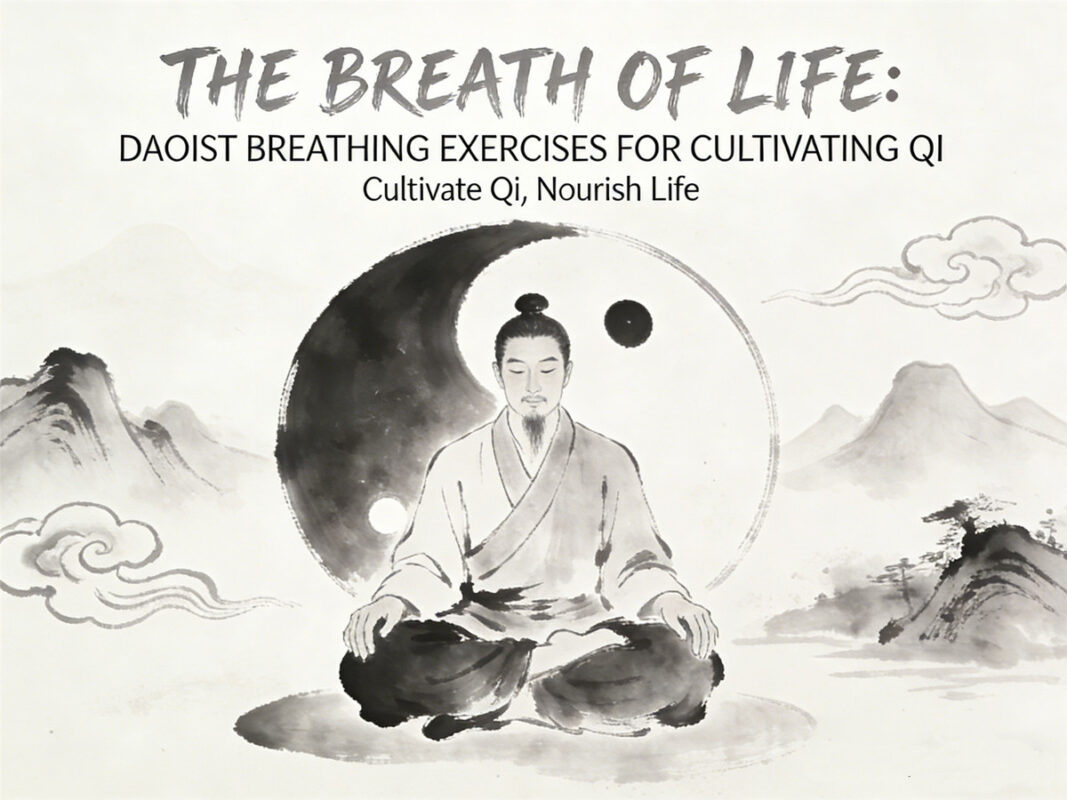
The pursuit of vitality, inner peace, and a profound connection to the fundamental forces of existence has captivated humanity for ages. Within the rich tapestry of ancient Chinese wisdom, Daoism offers a path deeply intertwined with the natural world and the subtle energies that animate life itself. Central to this path is the concept of Qi (Chi), the vital life force energy that flows through all things, sustaining health, consciousness, and spiritual potential. While Qi cultivation encompasses diverse practices, from movement arts like Tai Chi and Qigong to meditation and dietary regimens, the mastery of the breath stands as one of the most accessible and potent gateways to harmonizing and strengthening this essential energy. Daoist breathing exercises, far more than simple inhalation and exhalation, are sophisticated techniques designed to align the individual with the rhythms of the cosmos, purify the body-mind, and ultimately, cultivate a reservoir of vibrant, flowing Qi. This ancient art transforms the mundane act of breathing into a profound tool for transformation and well-being.
I. The Daoist Foundation: Qi, Breath, and Cosmic Harmony
To understand Daoist breathing practices, one must first appreciate their philosophical bedrock. Daoism, centered on the Dao or “The Way,” emphasizes living in accordance with the natural order, embracing effortless action (Wu Wei), and recognizing the interconnectedness of all phenomena. The human body, in this view, is a microcosm reflecting the macrocosm of the universe.
- Qi as the Essence: Qi is the animating principle, the vital substance that differentiates life from inert matter. It circulates through defined pathways known as meridians, nourishing organs, tissues, and the mind. Health is perceived as a state of abundant, smooth-flowing Qi, while illness or disharmony often stems from Qi deficiency, stagnation, or imbalance. Cultivating Qi is, therefore, synonymous with cultivating health and longevity.
- Breath as the Bridge: Breathing occupies a unique position as the most immediate and constant interaction between the inner self and the outer environment. We draw in air, containing Heaven Qi, and expel waste gases. Daoist philosophy views the breath not merely as a physiological process for gas exchange but as the primary means of gathering, refining, and circulating Qi within the body. The quality and depth of one’s breath directly influence the quality and quantity of Qi available. It is the bridge connecting the individual’s spirit (Shen) with the vital essence (Jing) and the energy (Qi) itself – the Three Treasures (Jing, Qi, Shen) of Daoist cultivation.
- Harmony with Natural Cycles: Daoist breathing techniques often seek to mirror natural rhythms – the ebb and flow of tides, the cycle of the seasons, or the quietude of deep night. By aligning the breath with these larger patterns, practitioners aim to synchronize their personal energy with the universal energy field, fostering a profound sense of cosmic harmony and reducing the friction of existence that drains Qi.
Understanding this context elevates breathing from an automatic function to a conscious practice of self-cultivation and energetic refinement.
II. Core Techniques: Foundational Daoist Breathing Methods
Daoist breathing encompasses a spectrum of practices, ranging from simple foundational exercises suitable for beginners to more complex internal alchemy techniques. Several core methods form the essential toolkit for Qi cultivation through breath:
- Abdominal Breathing (Dantian Breathing): This is often the starting point. Unlike shallow chest breathing common in stressed states, abdominal breathing focuses on deepening the inhalation to expand the lower belly, allowing the diaphragm to descend fully, and gently contracting the abdomen on exhalation. The focal point is the Lower Dantian, located a few inches below the navel, considered the primary reservoir and transformation center for Qi in the body. Consistent practice strengthens the diaphragm, massages internal organs, promotes relaxation, and gradually builds awareness of Qi sensations in this vital center. It establishes a stable foundation for energy work.
- Reverse Abdominal Breathing (Ni Huxi): A more advanced technique often employed in martial arts and deeper Qi cultivation. Here, the abdomen is gently drawn in during inhalation and allowed to expand during exhalation. This method is believed to create a stronger pumping action, drawing Qi deeper into the bones and marrow, and generating internal pressure useful for specific therapeutic or energetic purposes. It requires greater control and should ideally be learned under guidance to avoid potential strain. Its application is often targeted rather than used as a constant breathing mode.
- Embryonic Breathing (Tai Xi): This represents a highly refined state, aiming to mimic the subtle, nearly imperceptible breathing of an embryo in the womb or a hibernating animal. The goal is to minimize respiratory effort to the point where breathing seems to cease externally while internally, a profound, self-sustaining circulation of Qi occurs. It is associated with deep states of meditation, conservation of vital essence, and advanced stages of internal alchemy. Achieving genuine embryonic breathing requires significant mastery and tranquility.
Mastering these core techniques provides the practitioner with versatile tools for gathering, circulating, and conserving Qi through conscious respiratory control.
III. The Practice: Integrating Breath, Awareness, and Intention
Effective Qi cultivation through breathing transcends mere mechanical repetition. It involves the integration of focused awareness, mindful intention, and often, subtle visualization or inner sound techniques, transforming the exercise into a meditative discipline.
- Cultivating Mindfulness: The first step is developing acute awareness of the natural breath – its rhythm, depth, temperature, and the sensations it creates in the nostrils, chest, and abdomen. This present-moment awareness anchors the mind, reducing distracting thoughts that dissipate energy. Observing the breath without forcing it is a practice in itself, calming the nervous system and preparing the ground for deeper work.
- Directing Qi with Intention (Yi): In Daoist practice, the mind’s power, known as Yi (intention), is paramount in guiding Qi. Once basic breath awareness is established, practitioners gently introduce the intention to guide Qi along with the breath. For instance:
- Inhalation: Visualize or sense pure, luminous Qi entering through the nostrils or pores, descending along the front midline of the body (Conception Vessel or Ren Mai) to nourish the Lower Dantian.
- Exhalation: Sense turbid or stagnant Qi being released from the body, or visualize Qi moving from the Dantian up the spine (Governing Vessel or Du Mai) and over the head, completing a Microcosmic Orbit (Xiao Zhou Tian). The intention should be soft and focused, like a gentle guide rather than a forceful commander.
- Coordinating with Subtle Sensations: As practice deepens, practitioners learn to coordinate the breath with internal sensations of Qi flow, warmth, vibration, or pulsing, often felt in the hands, Dantian, or along meridians. This sensory feedback loop helps refine the practice and confirms the efficacy of the techniques. Patience and regular practice are essential to develop this sensitivity.
This integrated approach transforms breathing exercises into a dynamic internal process of energy cultivation and refinement.
IV. Beyond the Basics: Breath in Meditation and Inner Alchemy
In advanced Daoist practice, breathing techniques are seamlessly woven into meditation and the esoteric arts of internal alchemy (Nei Dan), where the focus shifts from merely gathering Qi to transforming it into higher forms of spiritual energy and consciousness.
- Breath as the Anchor in Stillness: In seated meditation (Zuo Wang), the breath serves as the primary anchor for the mind. Observing its natural flow, or employing specific rhythmic patterns like abdominal breathing, helps quiet mental chatter, enter states of deep stillness, and access subtler levels of awareness where Qi perception becomes clearer. The breath becomes the bridge between the active mind and the tranquil spirit (Shen).
- Breath and the Circulation of Light: Certain Nei Dan practices involve complex visualizations where the breath is used to circulate not just Qi, but also inner light or luminous consciousness, often visualized as a pearl or sphere of light moving along specific internal pathways (like the Microcosmic and Macrocosmic Orbits). The breath rhythm acts as the engine for this internal circulation, facilitating the alchemical process of refining Jing (essence) into Qi, and Qi into Shen (spirit).
- The Union of Breath and Spirit: At the highest levels, the distinction between the breath, the Qi it cultivates, and the observing consciousness begins to dissolve. The practitioner experiences a state of non-dual awareness, where the breath becomes spontaneous and effortless, perfectly aligned with the movements of Qi and Spirit. This represents the pinnacle of breath mastery within the Daoist framework, embodying the principle of Wu Wei – action through non-action.
Here, breathing exercises transcend physical cultivation, becoming integral to profound spiritual development and self-realization.
V. The Resonant Benefits: Health, Vitality, and Mindful Presence
The dedicated practice of Daoist breathing exercises yields a multitude of benefits that resonate through physical health, emotional balance, and mental clarity, making its ancient wisdom profoundly relevant today.
- Physiological Harmony: Deep, rhythmic breathing directly stimulates the parasympathetic nervous system, counteracting the stress-induced “fight-or-flight” response. This promotes relaxation, lowers blood pressure and heart rate, improves digestion, enhances oxygenation of tissues, and boosts immune function. The massage effect on internal organs via diaphragmatic movement further supports detoxification and overall vitality. It’s a direct path to homeostasis.
- Energetic Enhancement: Consistent practice builds and regulates Qi flow. Practitioners often report increased energy levels, reduced fatigue, faster recovery from illness, and a greater sense of overall robustness. Stagnations are cleared, deficiencies are addressed, and the body’s inherent healing capacities are amplified through improved energetic circulation.
- Emotional Equilibrium and Mental Clarity: The focused awareness required in breath practice cultivates mindfulness, pulling the practitioner out of ruminative past thoughts or anxious future projections into the present moment. This reduces anxiety, mitigates depression, enhances emotional resilience, and fosters a calmer, more centered state of being. Mental fog clears, concentration improves, and a sense of inner spaciousness develops.
- Spiritual Connection: Beyond the tangible benefits, the practice cultivates a deeper sense of connection – to one’s own body and inner landscape, to the subtle energy of life, and ultimately, to the larger rhythms of the natural world and the Dao itself. It fosters a quiet inner stillness and a profound sense of belonging within the cosmos.
These benefits are not merely theoretical but are increasingly recognized and validated by modern scientific research into the mind-body connection.
VI. Integrating the Practice: Bringing Daoist Breath into Daily Life
The true power of Daoist breathing lies not just in dedicated practice sessions but in its integration into the fabric of everyday existence. Cultivating Qi through breath is a lifelong journey of refinement and awareness.
- Establishing a Consistent Routine: Begin with short, daily sessions (even 5-10 minutes) focusing on foundational abdominal breathing and mindfulness. Consistency is far more valuable than occasional lengthy efforts. Choose a quiet space, but understand that the skill lies in eventually maintaining awareness amidst activity. Morning practice can set a calm tone for the day, while evening practice aids relaxation and sleep.
- Mindful Moments Throughout the Day: Use the breath as an anchor during moments of stress, frustration, or overwhelm. Simply stopping to take three deep, conscious abdominal breaths can interrupt the stress response, restore perspective, and reconnect you with your center. Turn waiting times, commutes (if not driving!), or brief breaks into opportunities for mini breath-awareness sessions.
- Synergy with Other Practices: Daoist breathing naturally complements other wellness activities. Integrate it into your Tai Chi or Qigong practice, use it to deepen meditation sessions, or employ it to enhance focus before creative work or demanding tasks. It pairs beautifully with gentle movement or stretching.
- Creating a Supportive Environment: While the practice itself is internal, the environment can support your efforts. A clean, uncluttered space (reflecting Qi flow) is beneficial. Some practitioners find that elements symbolizing air, purity, or tranquility – perhaps a simple, well-placed Feng Shui accessory like a clear quartz crystal or an object representing gentle wind – can subtly enhance the atmosphere for breathwork. Similarly, incorporating the aesthetic and intentional qualities of Dao crafts – objects made with mindfulness and connection to natural principles – into your practice space can serve as gentle reminders of the harmony you seek to cultivate within. Explore pieces that resonate with your practice at daocrafts.com.
Embracing Daoist breathing exercises is an invitation to reclaim the transformative power inherent in every breath, cultivating not just Qi, but a deeper, more harmonious, and vibrant experience of life itself. It is a practice rooted in ancient wisdom, yet offering timeless tools for modern well-being.