
Interesting Dao
Daoist Dietetics: Food as Energetic Medicine
Jan
In the luminous tapestry of Daoist wisdom, food transcends mere sustenance. It becomes a potent medium of energetic medicine, a fundamental tool for cultivating vitality, harmonizing the internal landscape, and aligning with the profound rhythms of nature and the Cosmic Dao. Daoist dietetics, far removed from transient fads or simplistic calorie counting, presents a sophisticated, millennia-old system where every morsel is imbued with intrinsic properties that interact dynamically with our internal Qi (vital life force), the balance of Yin and Yang, and the transformative cycles of the Five Elements (Wu Xing). This is not merely eating; it is a conscious practice of internal alchemy, where the selection, preparation, and consumption of food are elevated to an art form dedicated to nurturing Jing (Essence), circulating Qi, and calming the Shen (Spirit) – the very pillars of health and longevity according to Daoist sages. To engage with Daoist dietetics is to learn the subtle language of food as energy and to wield it with intention for profound healing and harmonious living.
I. The Foundational Pillars: Qi, Yin-Yang, and the Five Elements on the Plate
Daoist nutritional philosophy rests upon core cosmological principles that view the human body as a microcosm of the universe. Food is classified and understood through this energetic lens:
- Qi: The Vital Currency of Food: Every food possesses its own unique Qi signature – its inherent energy, vitality, and dynamic potential. This Qi can be tonifying (building, strengthening), reducing (dispelling excess, clearing), warming, cooling, ascending, or descending. Consuming food introduces this specific Qi into the body’s energetic system, directly influencing the flow and quality of our own Qi. Fresh, whole, naturally grown foods are prized for their vibrant, life-affirming Qi, while processed, stale, or chemically altered foods are considered to have depleted or chaotic Qi, potentially weakening our internal reserves.
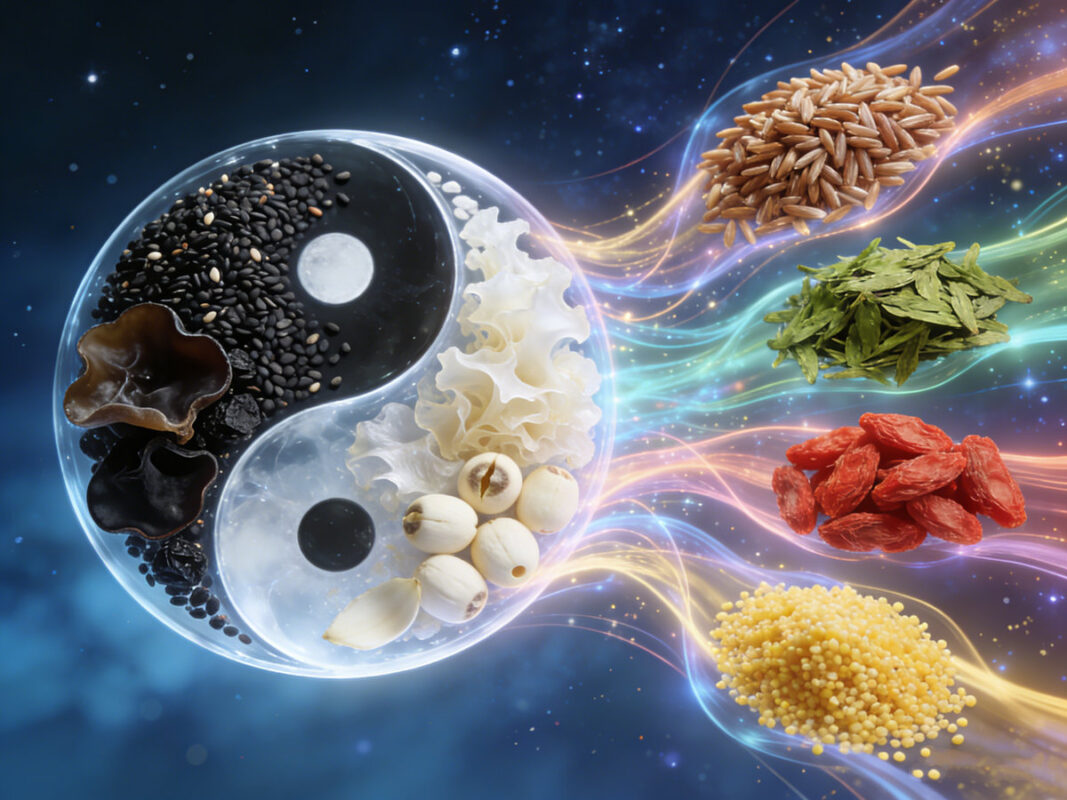
- Yin-Yang Dynamics in Sustenance: The fundamental duality of Yin (cooling, moistening, nourishing, inward) and Yang (warming, activating, drying, outward) is intrinsic to food energetics. Yin foods (e.g., cucumber, tofu, watermelon, most fruits) cool the body, moisten dryness, and nourish fluids and blood. Yang foods (e.g., ginger, lamb, peppers, leeks) warm the body, boost metabolism, and invigorate circulation. Health is maintained through a dynamic equilibrium between these forces. Dietary therapy often involves using Yin foods to cool excess heat (inflammation, agitation) or Yang foods to warm internal cold (fatigue, poor circulation), always striving for harmonious balance tailored to the individual’s constitution and current state.
- The Five Elements: Flavor, Organ Resonance, and Seasonal Wisdom: The Five Elements (Wood, Fire, Earth, Metal, Water) provide the most nuanced framework. Each element corresponds to specific organs, seasons, flavors, colors, and energetic qualities. Food becomes medicine by resonating with and regulating these elemental systems:
- Wood (Liver/Gallbladder): Sour flavor (lemons, vinegar, pickles, green leafy vegetables). Governs smooth flow of Qi, detoxification, vision, planning. Associated with Spring.
- Fire (Heart/Small Intestine, Pericardium/Triple Burner): Bitter flavor (dandelion greens, bitter melon, romaine lettuce, rye). Governs circulation, mental clarity, joy, warmth regulation. Associated with Summer.
- Earth (Spleen/Stomach): Sweet flavor (whole grains, sweet potatoes, carrots, legumes, naturally sweet fruits). Governs digestion, transformation, nourishment, thought, grounding. Associated with Late Summer/Earth Season.
- Metal (Lung/Large Intestine): Pungent/Spicy flavor (ginger, garlic, onions, radishes, mild peppers). Governs respiration, immunity, elimination, letting go. Associated with Autumn.
- Water (Kidney/Bladder): Salty flavor (seaweed, miso, mineral salts, black beans). Governs fluid metabolism, reproduction, bones, willpower, foundational energy (Jing). Associated with Winter.
II. The Energetic Properties of Food: Beyond Macronutrients
Daoist dietetics delves deep into the intrinsic qualities of foods, categorizing them by their thermal nature, taste, directionality, and affinity for specific organ systems:
- Thermal Nature (Si Qi): Foods are classified as Cold, Cool, Neutral, Warm, or Hot. This describes their intrinsic effect on the body’s temperature and metabolic activity. A cucumber (Cold) cools internal heat, while cinnamon (Hot) disperses cold. Understanding this is crucial for correcting imbalances – one wouldn’t use ice-cold drinks (Cold) for someone with chronic diarrhea and cold limbs (Yang deficiency).
- Flavor (Wu Wei): The Five Flavors (Sour, Bitter, Sweet, Pungent, Salty) are not merely sensory experiences; they possess specific therapeutic actions and direct the Qi to particular organ networks:
- Sour: Astringes, consolidates (stops sweating, diarrhea), benefits Liver/Gallbladder.
- Bitter: Drains, dries, clears heat, descends Qi (reduces inflammation, promotes bowel movement), benefits Heart/Small Intestine.
- Sweet: Tonifies, harmonizes, moistens (builds energy, relaxes tension, nourishes), benefits Spleen/Stomach. (Note: Refined sugar is considered a perversion of sweet, creating dampness).
- Pungent: Disperses, moves Qi, promotes sweating, benefits Lung/Large Intestine.
- Salty: Softens hardness, purges, directs downward, benefits Kidney/Bladder.
- Directionality: Foods can have an ascending, descending, floating, or sinking effect on Qi. Mint (ascending, floating) lifts the spirits and clears the head; celery (descending) helps lower blood pressure. This guides their use in directing energy flow.
- Organ Affinity: Foods naturally resonate with and nourish specific organs based on their flavor, color, and nature. Black sesame seeds (black, salty) nourish Kidneys; orange squash (orange/yellow, sweet) nourishes Spleen/Stomach.
III. Seasonal and Constitutional Eating: Aligning with Heaven and Self
A cornerstone of Daoist practice is living in harmony with natural cycles. This is paramount in diet:
- Honoring the Seasons: Each season corresponds to a dominant element and organ system. Daoist dietetics emphasizes consuming foods that align with the season’s energy:
- Spring (Wood): Focus on young greens, sprouts, lightly cooked vegetables, sour flavors to support Liver’s detoxifying surge.
- Summer (Fire): Emphasize cooling foods like salads, fruits, cucumbers, bitter greens to clear summer heat and nourish the Heart.
- Late Summer (Earth): Root vegetables, grains, legumes, sweet potatoes to strengthen the Spleen/Stomach during the harvest and grounding season.
- Autumn (Metal): More pungent flavors (ginger, garlic), pears, apples, cruciferous vegetables to support the Lungs and immunity as the energy contracts.
- Winter (Water): Warming, nourishing foods like stews, bone broths, roasted root vegetables, black beans, seaweed to deeply nourish the Kidneys and conserve Jing.
- Constitutional Tailoring: Equally vital is understanding one’s inherent constitution – the unique balance of Yin, Yang, Qi, and Blood we are born with, influenced by lifestyle. A person with a Yang-deficient constitution (often feeling cold, fatigued) benefits significantly from warming, cooked foods and spices, while someone with Yin deficiency (heat sensations, dryness, restlessness) needs cooling, moistening foods. Skilled dietary therapy addresses both the root constitutional pattern and any current imbalances or seasonal influences.
IV. The Art of Preparation and Consumption: Ritual as Medicine
How food is prepared and eaten is as crucial as what is eaten in Daoist tradition, transforming eating into a mindful, energetically optimized practice:
- Cooking as Transformation: Cooking methods alter a food’s energetic properties. Raw foods (Cooling) become more digestible and warming when cooked. Steaming and boiling preserve moisture (Yin), while baking, roasting, and grilling add dryness and warmth (Yang). Stir-frying offers a quick, balanced approach. Slow-cooking stews and congees are deeply nourishing (Tonifying) and easy to assimilate, especially for weakness.
- Mindful Eating (Yi Shi): Eating with full presence is paramount. This means:
- Environment: Creating a calm, pleasant, undistracted space. Avoid eating while working, driving, or stressed.
- Attention: Focusing on the food – its colors, aromas, textures, and flavors. Chewing thoroughly (often advised 30+ times per bite) is essential for proper digestion (Spleen function) and extracting maximum Qi. It signals satiety and allows the Shen to register nourishment.
- Pace: Eating at a moderate pace, stopping before feeling completely full (“Eat until 80% full” is a common adage). This prevents overburdening the Spleen/Stomach and promotes smooth Qi flow.
- Gratitude: Cultivating appreciation for the food and its sources fosters a positive, receptive state beneficial for assimilation.
V. Food as Specific Energetic Medicine: Addressing Imbalances
Daoist dietary therapy provides specific strategies for common patterns of disharmony:
- Supporting Digestion (Spleen/Stomach Qi): Prioritize warm, cooked, easily digestible foods (congees, soups, stews, well-cooked grains/vegetables). Minimize raw, cold, greasy, overly sweet, or processed foods. Incorporate digestive spices like ginger, cardamom, cinnamon. Eat regular meals in a relaxed state. Bitter flavors can stimulate sluggish digestion.
- Clearing Dampness and Phlegm: Reduce damp-forming foods (dairy, excessive sugars, fried foods, refined flours, cold drinks). Increase diuretic and drying foods (adzuki beans, celery, corn, barley, bitter greens, radishes). Cooking methods like baking, roasting, and grilling are preferable to boiling.
- Nourishing Blood and Yin: Consume deeply nourishing foods like dark leafy greens, beets, black sesame seeds, bone broth, organic meats (in moderation), eggs, goji berries, and seaweed. Cook with moistening methods (stews, soups). Minimize drying or overly spicy foods if Yin deficiency is pronounced.
- Invigorating Yang and Warming Interior Cold: Emphasize warming foods and spices (ginger, cinnamon, cloves, lamb, chicken, walnuts, leeks, onions, chives). Avoid cold and raw foods. Soups and stews are ideal. Miso soup is a classic warming tonic.
- Regulating Liver Qi Stagnation: Include foods that promote the smooth flow of Qi: lightly cooked greens, celery, cilantro, mint, lemon, vinegar (in moderation), chamomile tea. Minimize excessive fats and overly rich foods. Regular meals and managing stress are key.
VI. Integrating Daoist Dietetics: From Kitchen to Life-Artistry
Embracing Daoist dietetics is not about rigid rules, but cultivating a profound sensitivity to the energetic interplay between food, body, and cosmos. It encourages us to become discerning alchemists in our own kitchens and lives:
- Cultivating Awareness: Begin simply by noticing how different foods make you feel – not just physically (energy levels, digestion) but emotionally and mentally. Does a salad invigorate or chill you? Does a rich meal leave you energized or sluggish? This self-observation is the first step towards personalized dietary wisdom.
- Seasonal Alignment as Ritual: Make a conscious effort to source and incorporate seasonal, local produce. Visit farmers markets. Observe the changing offerings of nature and let them guide your menu. This reconnects us viscerally to the natural cycles we are part of.
- Mindful Kitchen as Sacred Space: Approach food preparation with presence and care. View chopping, stirring, and seasoning as mindful practices, infusing the food with positive intention. The state of the cook influences the Qi of the meal.
- Dao Decor & Crafts: Nourishing the Energetic Field of Nourishment: Extend the principles of harmony and vitality to the environment where food is prepared and consumed. Dao decor in the kitchen and dining area emphasizes simplicity, natural materials (wooden cutting boards, stone countertops, ceramic bowls), good light (representing clear Qi), and uncluttered spaces to allow energy to flow freely. Avoid harsh lighting or chaotic environments while eating. Incorporate elements reflecting the Five Phases subtly – the warmth of wood (cabinetry), the grounding of earth (pottery), the clarity of metal (utensils), the flow of water (a small fountain or water carafe), and the brightness of fire (candles or warm lighting). Engaging in dao crafts like mindful pottery making for your own tableware, learning the art of tea ceremony (Cha Dao) as a prelude to meals, or practicing calligraphy to create blessings for the table, deepens the connection between creative action, intention, and nourishment. These practices cultivate the inner stillness and reverence that transforms eating from a mundane act into a sacred ritual of receiving and integrating the world’s vital energy. By consciously shaping our approach to food – from selection and preparation to the ambiance of consumption and the mindful crafts that surround it – we weave the profound wisdom of Daoist energetic medicine into the daily tapestry of our lives, fostering resilience, harmony, and enduring vitality rooted in the ever-flowing Dao.