
Interesting Dao
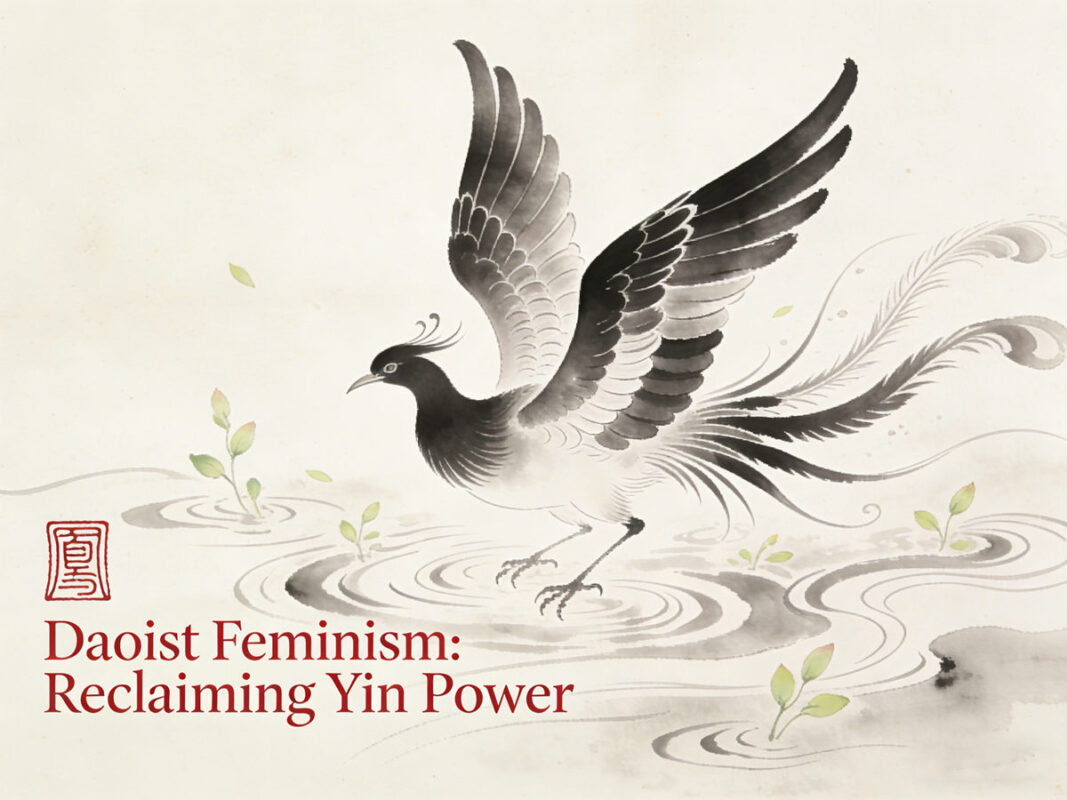
Daoist Feminism: Reclaiming Yin Power
Jan
In a world frequently dominated by paradigms of conquest, linear progress, and assertive control – hallmarks often associated with an imbalanced hyper-Yang – a profound counter-current emerges from the ancient wisdom of Daoism. Daoist Feminism is not merely an academic intersection but a vital, living philosophy seeking to reclaim, revalue, and re-center the potent, often suppressed, essence of Yin. This journey goes beyond simple gender binaries; it is an excavation of a primordial principle – Yin as the dark, receptive, nurturing, intuitive, yielding, and profoundly creative force foundational to the Dao itself. It challenges millennia of patriarchal distortion within religious and philosophical interpretations, urging a return to the radical balance envisioned in the Daodejing, where Yin is recognized not as weakness, but as the source of life and transformation. This exploration delves into the philosophical bedrock of Daoist Feminism, illuminating its critique, its reimagining of power, and its practical pathways towards embodying Yin as a source of strength, wisdom, and ecological harmony.
I. The Primordial Pair: Yin and Yang Revisited
The foundation of Daoist Feminism rests upon a rigorous re-examination of the core cosmological principle: the dynamic interplay of Yin and Yang.
- Beyond Hierarchy: The Essential Interdependence: While popular conceptions often place Yang (light, active, masculine, heaven) above Yin (dark, receptive, feminine, earth), classical Daoist texts, particularly the Daodejing, present a radically different view. Chapter 42 states: “The Dao produced the One; the One produced the two; the two produced the three; the three produced the ten thousand things. The ten thousand things carry Yin on their backs and embrace Yang in their arms, achieving harmony through the blending of these vital breaths.” Here, Yin is not secondary; it is the foundational support, the receptive ground from which Yang activity emerges and into which it returns. They are co-equal, co-creative, and utterly interdependent. True power arises from their harmonious blending (Qi), not the domination of one over the other.
- The Misinterpretation and the Marginalization of Yin: Over centuries, particularly under the influence of Confucian patriarchal structures that prioritized rigid hierarchy and male authority, the dynamic balance of Yin-Yang became skewed. Yin qualities – receptivity, intuition, emotional depth, collaboration, nurturing – were systematically devalued, associated with weakness, passivity, and relegated primarily to the domestic, “inferior” sphere of women. Yang principles – action, rationality, competition, control – became valorized as the sole markers of power and success, dominating public, political, and intellectual life. This distortion severed the essential connection, leading to the profound ecological, social, and spiritual crises we face today.
II. The Daodejing’s Mysterious Feminine: A Foundational Text for Reclamation
The Daodejing, attributed to Laozi, stands as the most potent scriptural source for Daoist Feminism, replete with imagery celebrating the Yin and the feminine principle as embodiments of the Dao.
- The Valley Spirit and the Mysterious Female (Xuán Pìn 玄牝): Chapter 6 offers a cornerstone metaphor: “The valley spirit never dies; it is called the mysterious female. The gateway of the mysterious female is called the root of heaven and earth. Dimly visible, it seems as if it were there, Yet use will never drain it.” The “valley spirit” represents the receptive, low-lying space (deeply Yin) that holds life-giving water. The “mysterious female” (Xuán Pìn) explicitly links this Yin power to the generative, life-giving capacity of the feminine. She is the gateway, the source, the inexhaustible root of all creation – a direct counter-narrative to patriarchal creation myths centered on a male deity.
- The Power of Receptivity and Water: Throughout the text, Laozi repeatedly extols virtues aligned with Yin: yielding, softness, humility, and the power found in non-coercive action (Wuwei). Chapter 78 famously states: “Nothing in the world is softer and weaker than water; But for attacking the hard and strong, there is nothing like it! For nothing can take its place. That the weak overcomes the strong, And the soft overcomes the hard… These are things all under heaven know, But none practice accordingly.” Water, the ultimate Yin symbol, wears away stone, nourishes all life without contention, and flows around obstacles. This is not weakness; it is a different, profound mode of efficacy – the efficacy of the Dao itself. Daoist Feminism reclaims this understanding of power as inherent in receptivity, adaptability, and persistent, gentle influence.
III. Wuwei: Non-Action as Feminine Strategy and Ecological Ethic
Central to Daoist practice and crucial to Daoist Feminism is the concept of Wuwei – often translated as “non-action” but more accurately understood as “effortless action” or “action in accordance with the Dao.”
- Action Through Alignment, Not Force: Wuwei is the antithesis of dominating, controlling, ego-driven effort. It is acting spontaneously from a place of deep attunement to the natural patterns and rhythms of existence. It involves listening deeply, responding intuitively, and allowing processes to unfold organically rather than forcing predetermined outcomes. This mode of being is deeply resonant with Yin qualities of receptivity and yielding. It is the strategy of the water, not the hammer.
- Feminine Wisdom and Ecological Harmony: Daoist Feminism positions Wuwei as a specifically feminine wisdom, historically cultivated in marginalized spaces and domestic spheres where direct force was often ineffective or unavailable. It is the wisdom of nurturing growth, facilitating dialogue, building consensus, and tending to relationships and environments. This approach extends naturally into an ecological ethic: living lightly on the earth, respecting the intrinsic cycles of nature, and intervening with humility and minimal disruption, recognizing humanity as part of, not master over, the web of life – a fundamentally Yin perspective valuing interconnectedness.
IV. Reclaiming the Body and the Senses: Yin as Embodied Wisdom
Patriarchal systems have often sought to control, objectify, or transcend the physical body, particularly the female body. Daoist Feminism initiates a powerful reclamation of the body as a sacred vessel of Yin wisdom.
- The Body as Microcosm and Field of Practice: Traditional Daoist practices, including Qi Gong and internal alchemy (Neidan), view the body as a microcosm of the universe, a landscape where Yin and Yang energies circulate. Daoist Feminism embraces this, seeing the body – with its cycles, sensations, and intuitive knowing – not as a hindrance or source of pollution, but as a primary source of knowledge and connection to the Dao. Menstruation, pregnancy, childbirth, and menopause are not pathologies but potent expressions of Yin creativity and transformation.
- Sensual Knowing and Intuition: Reclaiming Yin involves valuing non-rational ways of knowing: intuition, somatic awareness, emotional intelligence, and sensory attunement. These are not “irrational” but represent a different, holistic mode of perception often dismissed within hyper-Yang intellectual frameworks. Daoist Feminism honors the wisdom gained through feeling, listening to the gut, and perceiving subtle energies – ways of knowing deeply connected to the receptive, embodied nature of Yin.
V. Challenging Patriarchy Within and Without: Internal Alchemy for Social Change
Daoist Feminism recognizes that patriarchal structures are not only external systems but are internalized, shaping our thoughts, behaviors, and self-perception. Reclaiming Yin power requires inner work alongside outer transformation.
- Dissolving Internalized Oppression: Centuries of devaluing Yin mean that women, and all people socialized within patriarchal norms, often harbor deep-seated beliefs about the inferiority of receptive, nurturing, or emotional qualities. Daoist Feminism encourages practices of self-inquiry, meditation, and ritual to identify and dissolve these internalized patterns, fostering self-acceptance and reclaiming the inherent value of Yin within oneself.
- Alchemizing Anger and Grief: The systemic devaluation of Yin and the lived experiences of oppression generate powerful emotions like anger and grief. Rather than suppressing these (a Yang tactic) or being consumed by them, Daoist Feminism, drawing on Daoist internal alchemical principles, seeks to alchemize these energies. This involves acknowledging, honoring, and consciously transforming the heat of anger and the depth of grief into focused clarity, compassionate action, and resilient creativity – turning the “lead” of injustice into the “gold” of empowered change, a process deeply rooted in Yin’s capacity for profound transformation.
VI. Ziran: Cultivating Naturalness and Authentic Expression
Ziran (自然), often translated as “self-so” or “naturalness,” is a core Daoist value describing the state of being spontaneous, authentic, and uncontrived, acting in accordance with one’s inherent nature.
- Rejecting Artificial Constructs of Gender: Daoist Feminism leverages Ziran to challenge rigid, socially constructed gender roles that confine and distort both women and men. It advocates for individuals to discover and express their unique constellation of Yin and Yang qualities authentically, free from prescriptive norms. What is “natural” is the unique expression of one’s inner Dao, not conformity to external expectations based on biological sex.
- The Flourishing of Diverse Expressions: Embracing Ziran within a feminist framework means celebrating the vast diversity of ways Yin power manifests – from the quiet strength of the contemplative to the fierce protectiveness of the mother, from the collaborative leadership of the community builder to the visionary insights of the artist. It validates all authentic expressions of being that arise from a place of inner alignment, dismantling the notion that there is only one valid way to be powerful or feminine.
VII. Interconnection and Relationality: Yin as the Web of Life
Yin consciousness is inherently relational. It perceives the self not as a separate, isolated entity striving for dominance, but as an integral node within a vast, interconnected web of existence.
- From Individualism to Ecological Kinship: Daoist Feminism critiques the hyper-individualism fostered by imbalanced Yang culture, which prioritizes personal gain over collective well-being and views nature as a resource to exploit. Rooted in Yin’s receptive interconnectedness, it fosters an ethic of care, reciprocity, and deep kinship with all living beings and the Earth itself. Power is redefined not as power over, but as power with and power for – the power to nurture, sustain, and collaborate within the web of life.
- Building Communities of Care: This principle translates into building communities and relationships based on mutual support, empathy, active listening, and collaborative decision-making – practices embodying Yin values. It emphasizes healing relational ruptures, fostering dialogue across differences, and creating structures that prioritize care for the vulnerable and the flourishing of all, recognizing that true strength lies in resilient interdependence.
VIII. Embodying Yin Power: Ritual, Art, and the Integration into Daily Life
Reclaiming Yin power is not solely an intellectual pursuit; it demands embodiment, practice, and integration into the fabric of daily existence. This is where philosophy becomes lived experience.
- Sacred Ritual and Cyclical Awareness: Creating personal or communal rituals that honor the cycles of the moon, the seasons, and the body’s own rhythms serves to reconnect with Yin temporality – a time of gestation, reflection, and inward turning, distinct from linear, goal-oriented Yang time. Rituals celebrating the Mysterious Female, acknowledging ancestors (especially matrilineal lines where possible), or simply creating sacred space for stillness and receptivity are potent acts of reclamation.
- Art as Expression and Exploration: Engaging in creative practices – painting, dance, poetry, music, fiber arts – provides powerful channels for exploring and expressing Yin consciousness. These arts often thrive on intuition, emotional resonance, and a receptivity to emergent form, embodying the principles of Wuwei and Ziran. Creating art that celebrates the female form, natural landscapes, or themes of interconnection becomes a feminist act within the Daoist framework.
- Dao Decor and Dao Crafts: Weaving Yin Essence into Our Surroundings: The principles of Daoist Feminism find tangible expression in the spaces we inhabit and the objects we create and use. Dao decor informed by Yin consciousness prioritizes creating environments of deep rest and receptivity. Think soft, natural textiles, curved lines echoing natural forms, muted earth tones alongside the profound power of darkness, and the intentional, sacred use of empty space (Liúbái), allowing energy to flow and the spirit to settle. It’s about crafting havens that nurture rather than stimulate, honoring the need for sanctuary in a hyper-Yang world. Similarly, Dao crafts become a meditative practice of embodying Yin. The slow, attentive weaving of a basket, the careful shaping of clay on a wheel attuned to its natural rhythm, the mindful stitching of fabric – these are not merely productive acts but rituals of presence. They cultivate patience, receptivity to the material’s inherent nature, and a deep respect for process over hurried outcome. Crafting functional or beautiful objects with this mindful, yielding approach imbues them with the Qi of Yin – a quiet strength and nurturing presence. Whether arranging a room according to Yin principles of flow and restfulness or shaping a vessel with attentive care, dao decor and dao crafts become daily acts of resistance against the devaluation of the receptive, a tangible way to weave the reclamation of Yin power into the very fabric of our lives. The journey of reclaiming Yin is the journey of returning to the valley, the source, the dark, fertile ground from which all life and authentic power eternally spring.