
Interesting Dao
Daoist Music: Sound Healing Through Ritual
Dec
1. The First Resonance
In the earliest stories passed from wandering hermits to mountain recluses, Daoist sages often described a moment when they first sensed a subtle vibration behind ordinary sound, a faint hum that seemed to rise from stone, wind, and water as if the natural world carried an ancient rhythm waiting for those patient enough to listen, and in this recognition the foundation of Daoist music quietly formed, not as entertainment or ornament but as a way to reveal the underlying pulse of the Dao itself, the same pulse that shaped clouds drifting past cliffs and stirred roots beneath deep forest soil. While later traditions developed formal instruments and codified rituals, the beginning of Daoist musical thought was simply an awareness that the world was already singing, and that aligning oneself with this current could calm the spirit, clarify intention, and realign the inner body with the natural cycles continually unfolding around it.
2. The Breath of Tone and the Spirit of Ritual
2.1 The Origin of Sacred Tone
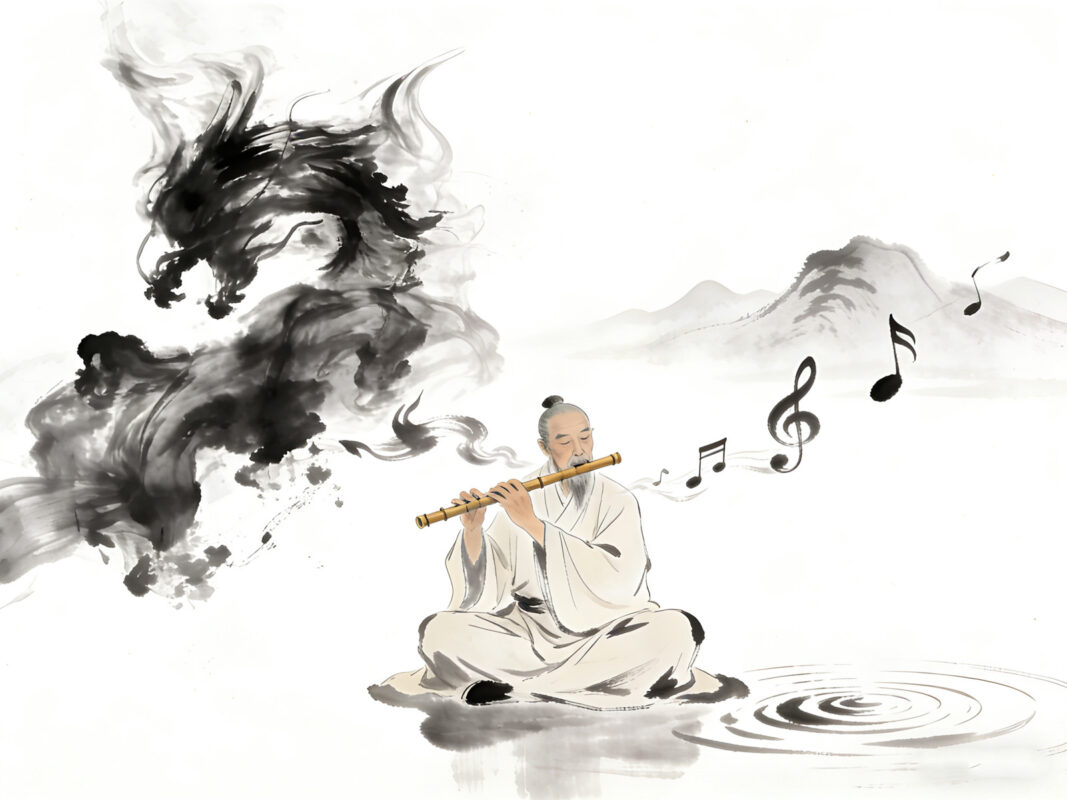
Daoist musical tradition holds that tone arises from qi, just as breath arises from life, so every note produced in ritual settings is seen as a physical expression of the subtle energies circulating through the cosmos, and this belief gave early practitioners a profound respect for simplicity, since a single well-placed note, carried gently on a bamboo flute, could evoke more resonance than elaborate compositions meant merely to impress. Many historical records describe ritual musicians who spent years learning how to control breath in long, continuous streams, shaping the air column inside their instruments until the tone settled into a vibration that felt alive, and when this occurred the sound was believed to pierce through layers of tension within listeners, bringing them toward the quiet center where their minds could soften and their bodies could release long-held stress.
2.2 Instruments as Vessels of Qi
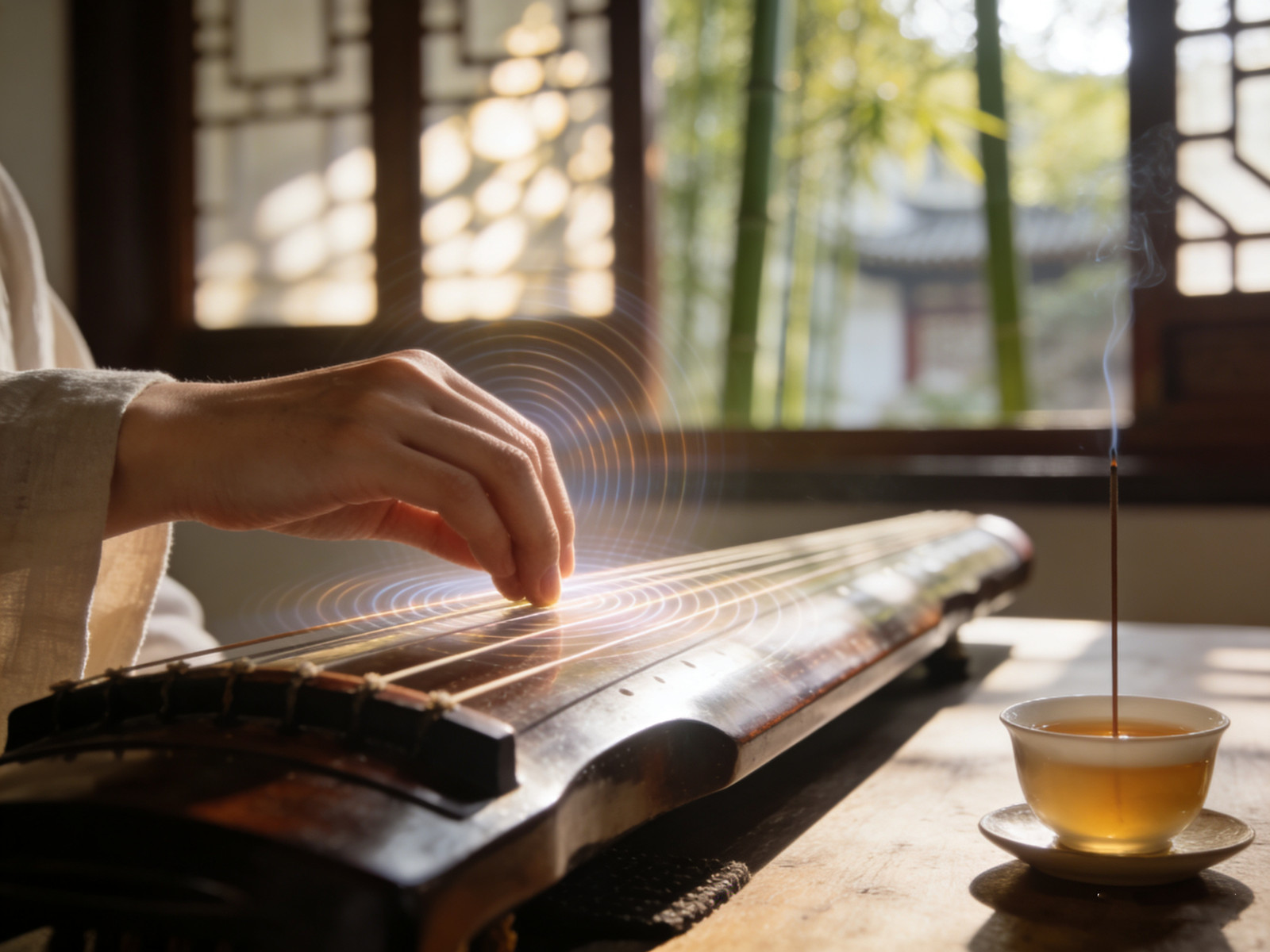
The instruments associated with Daoist ritual work—the xiao, the guqin, hand-held bells, wooden clappers, bronze bowls—were crafted not just for acoustic properties but for the way their materials interacted with natural energy, and artisans often selected old bamboo, seasoned wood, or metal infused with specific mineral content because each material produced a tone that reflected a particular quality of Yin or Yang. When musicians played these instruments in ceremonies, they acted as interpreters between realms, giving shape to otherwise invisible movements of qi, and the audience listened not for melody alone but for the feeling of being pulled into a wider field of stillness where clarity became easier to access.
3. The Five Phases and the Architecture of Healing Sound
3.1 Mapping Tone to Nature
In Daoist cosmology, the Five Phases—Wood, Fire, Earth, Metal, and Water—form a dynamic cycle of generation and regulation, and Daoist musicians applied this system to the structure of healing sound by associating certain tones, timbres, and rhythms with each phase, creating a musical vocabulary that mirrored natural processes. A rising, expansive note carried the quality of Wood; a bright, penetrating sound reflected Fire; a warm, stabilizing resonance matched Earth; a clear, clean vibration belonged to Metal; and a deep, flowing tone suggested Water, so musicians could guide listeners through emotional or spiritual imbalances by shaping sound sequences that restored harmony among these phases, much like adjusting the channels of qi within the body.
3.2 Ritual Settings and the Atmospheric Field
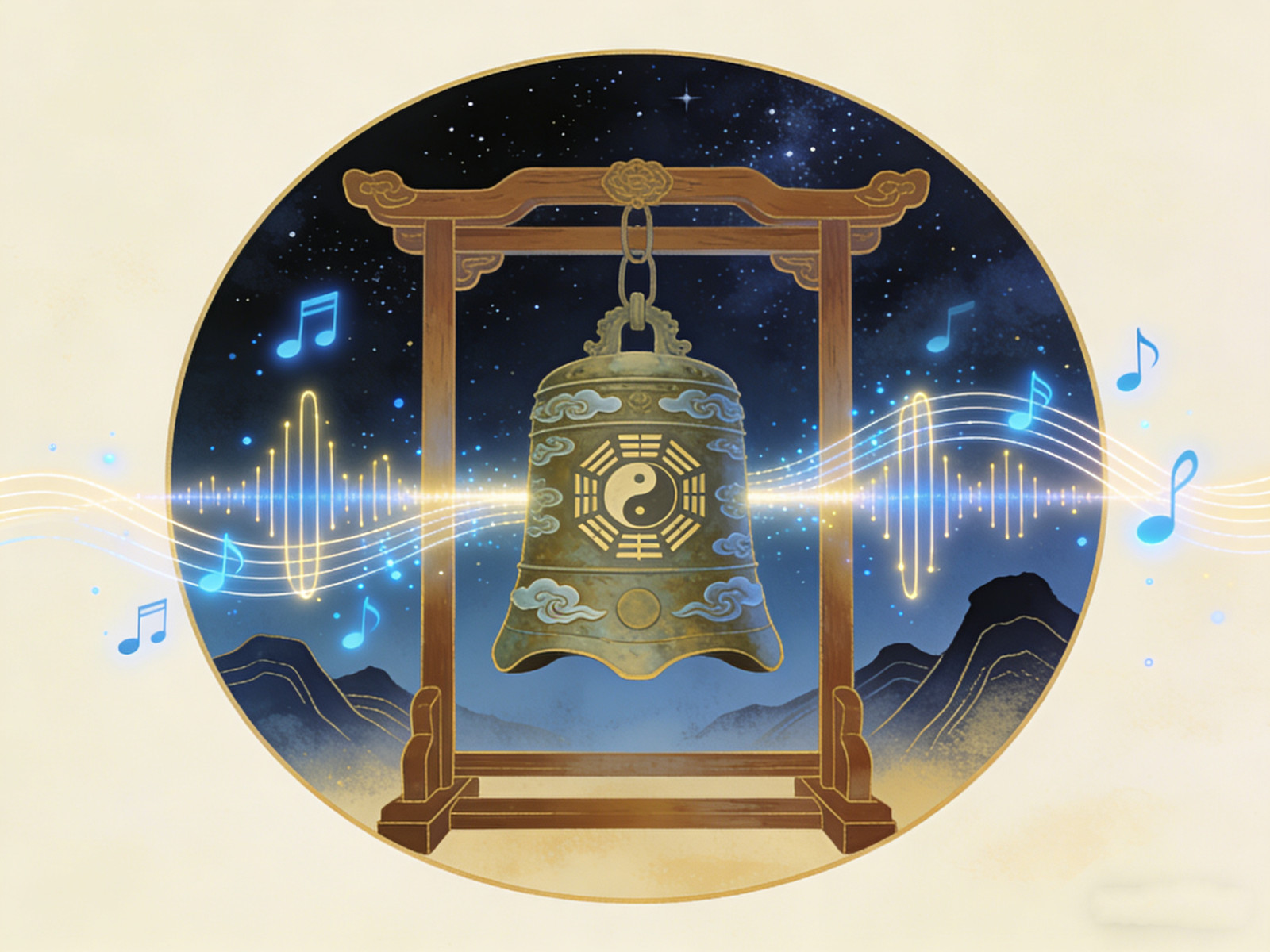
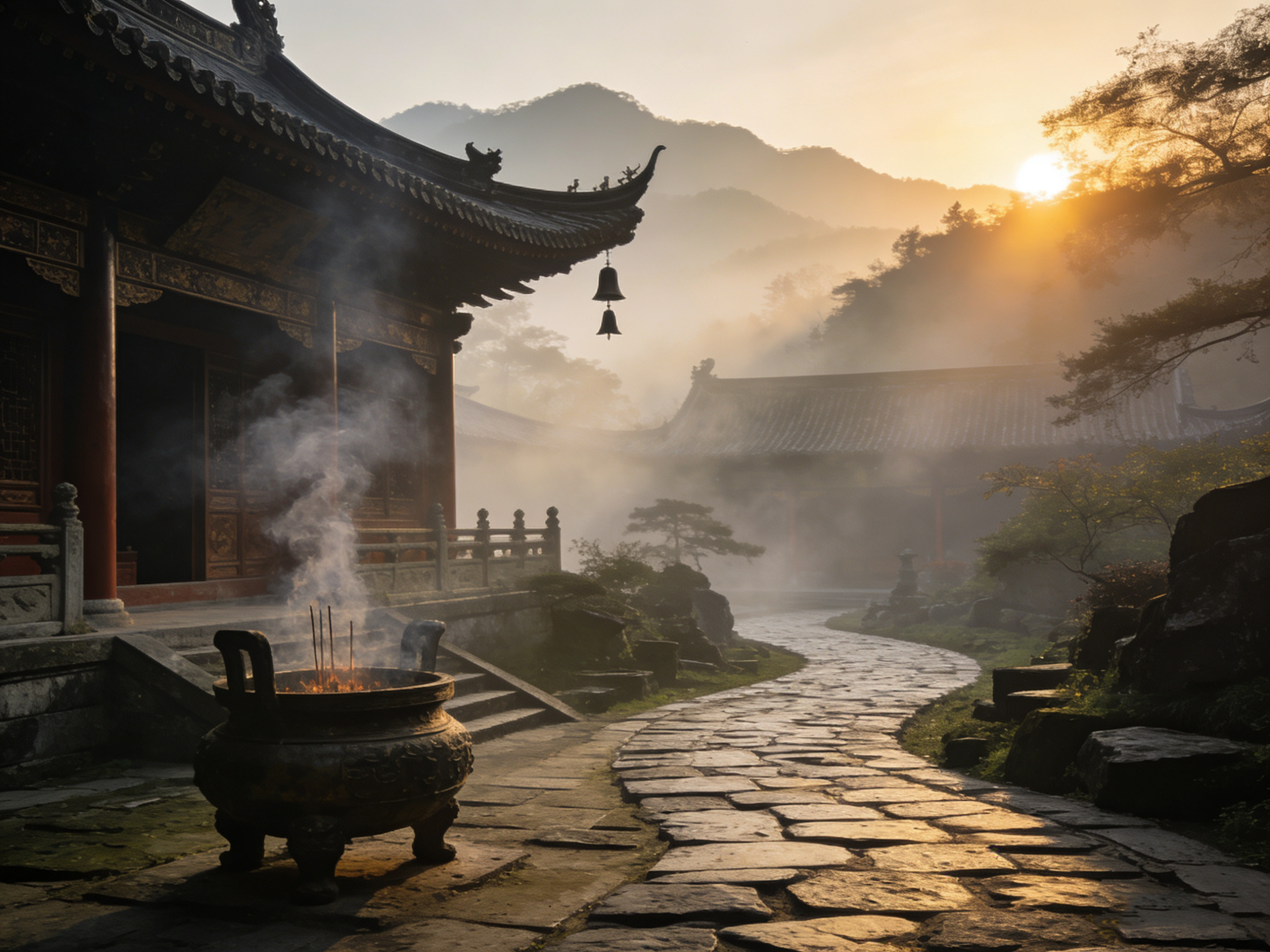
Daoist rituals often took place in carefully constructed atmospheric spaces—temples open to the sky, courtyards surrounded by ancient trees, mountaintop altars where wind echoed naturally—because sound healing depended not only on the quality of the tones but also on the environment in which they traveled, and priests believed that sound shaped space while space shaped sound in a reciprocal pattern. When bells rang across a valley or when the long, plaintive call of the xiao drifted through carved wooden halls, participants sensed that the sound was carrying away anxiety, smoothing emotional turbulence, and awakening a deeper awareness of their own breathing, and through this subtle shift the ritual became a living exercise in cultivating equilibrium between internal and external worlds.
4. Stories from the Ritual Path
4.1 The Hermit of Moonlit Valley
One story told by later practitioners describes a hermit who lived deep within a valley known for its echoing walls, and every night he played a simple bamboo flute whose soft tone blended with the sound of flowing water, creating a layered resonance that villagers described as both mournful and comforting. They believed the hermit was guiding the valley back into seasonal harmony after a long period of drought, and though no official chronicles confirm this tale, the narrative illustrates a recurring theme in Daoist teachings: that sound can interact with landscape, emotion, and weather in subtle but meaningful ways, and that a single human voice or instrument, when aligned with natural intention, can shift the energetic field of an entire community.
4.2 The Court Rituals of Renewal
Another tradition recounts imperial ceremonies in which Daoist musicians played during seasonal transitions, especially during the shift from winter to spring, when the qi of the land was believed to be delicate and easily disturbed. Musicians would begin with deep, slow tones representing Water, allowing the energies of winter to settle, then gradually introduce Wood-phase notes that rose in gentle arcs, signaling the return of growth and vitality, and this slow escalation helped participants release lingering stagnation, making room for new momentum to gather within their bodies and thoughts. In these rituals, the music was not ornamental but functional, shaping collective consciousness in accordance with seasonal qi, and reinforcing the idea that humans, like forests and rivers, belong to cycles greater than themselves.
5. Internal Listening and the Music of the Body
Although Daoist ritual music is often performed externally with instruments and chanting, a parallel practice exists within the realm of internal cultivation, where practitioners learn to hear the inner music of their own bodies, a subtle series of pulses, vibrations, and rhythmic waves that arise from breath, heartbeat, and the movement of qi through meridians. This internal listening does not aim to produce literal sound but rather to awaken awareness of the body’s hidden harmonics, and advanced practitioners describe moments when their inner rhythm aligns with environmental sounds—wind in bamboo, distant thunder, the low hum of cicadas—creating a sense of unity that feels both grounding and expansive. In Daoist philosophy, this alignment is one of the highest forms of sound healing because it arises naturally, without effort or intention, demonstrating the deep principle that harmony inside invites harmony outside.
5.1 Chanting as Energetic Regulation
Chanting plays a significant role in many Daoist rituals, and the long, continuous syllables used in sacred formulas are designed to vibrate specific regions of the chest, throat, and abdomen, stimulating channels of qi and calming the spirit. When a group chants together, the overlapping vibrations create a field of resonance that can stabilize scattered thoughts, promote emotional release, and help participants return to a state of centered clarity, and because many chants incorporate tones tied to the Five Phases, they operate as a subtle form of energetic regulation. Listeners often describe the sensation not as hearing the chanting but as feeling it, as though the sound is washing through their body, gently dissolving tension while inviting stillness to rise.
5.2 The Healing Curve of Silence
In Daoist ritual music, silence is not the absence of sound but the essential partner of tone, a resting space where the echoes of previous notes can settle into the body and where listeners can absorb the full effect of the preceding vibrations. Ritual leaders often pause after significant musical passages, allowing participants to drift into a liminal state that feels both empty and full, a moment where the boundaries between external atmosphere and internal awareness grow soft. This silence becomes a healing curve, the place where integration occurs, and many Daoist texts emphasize that without silence there can be no genuine resonance, for harmony emerges not only from sound but from the space that receives it.
6. A Closing Reflection on Ritual Sound
As the long lineage of Daoist ritual practice continues into the modern world, the tradition of sound healing remains a living path, guided by the belief that tone, breath, and intention can align human beings with the deeper movement of the cosmos, and that music, when shaped with awareness, acts as a bridge between the seen and unseen layers of life. Whether played on bamboo flutes in mountain temples, sung through ancient chants in community rites, or explored through personal meditation in quiet rooms lit by soft lantern glow, Daoist music preserves the understanding that healing is not an external gift but an internal awakening, stirred into motion by resonance that touches the body and the spirit at the same time. Today, those drawn to Daoist aesthetics, traditional arts, and symbolic craftsmanship can still find echoes of this musical heritage reflected in contemporary practices and handcrafted objects inspired by the ritual world, including the culture-centered offerings of daocrafts.com and the gentle beauty of Dao decor, both of which carry forward the spirit of harmony that has shaped Daoist sound traditions for centuries.