
Interesting Dao
Digital Daoism: VR Meditation Platforms
Jan
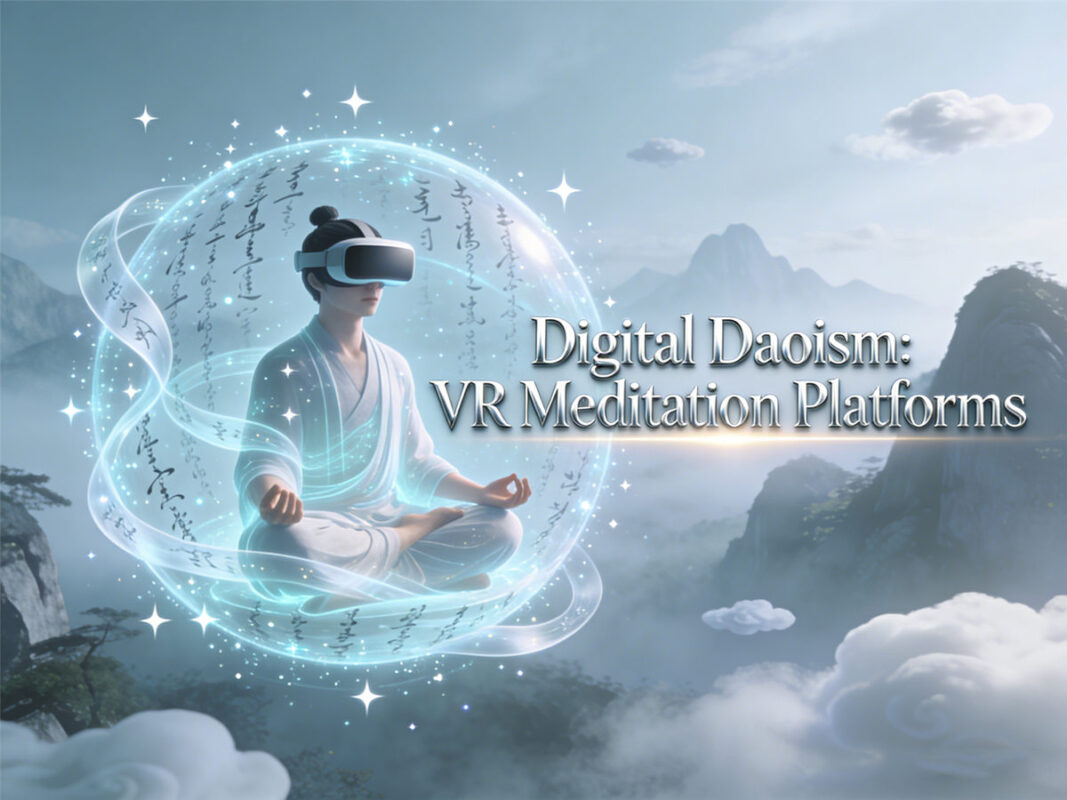
In the relentless yang of our hyper-connected, digitally saturated age, where attention is fragmented and stillness feels increasingly elusive, an unexpected resonance emerges between ancient Daoist wisdom and cutting-edge technology. Digital Daoism represents not a dilution of tradition, but a profound exploration of how virtual reality (VR) platforms can facilitate deep immersion into core principles of the Dao – particularly the cultivation of Wu Wei (effortless action), Ziran (naturalness), and the harmonious flow of Qi. These VR meditation environments offer more than mere digital escapes; they present meticulously crafted experiential landscapes designed to bypass the overactive mind and guide practitioners towards states of profound receptivity (Yin) and inner alignment. This exploration delves into the burgeoning synergy between timeless Daoist philosophy and immersive technology, examining its transformative potential and inherent paradoxes in redefining contemplative practice for the 21st century.
I. The Convergence: Ancient Wisdom Meets Immersive Technology
The marriage of Daoism and VR is not as incongruous as it may initially appear. Both, in their essence, are fundamentally concerned with perception, reality, and the nature of experience.
- Daoism’s Fluidity and Technological Potential: Daoist philosophy, rooted in the Daodejing and Zhuangzi, emphasizes the fluid, interconnected, and ultimately ungraspable nature of reality (Dao). It values direct experience over dogma and recognizes the mind’s tendency to construct limitations. VR, by its very nature, demonstrates the malleability of perception, constructing entire believable realities that can temporarily override our sensory input. This technological capacity aligns intriguingly with the Daoist insight that our conventional experience of “reality” is itself a kind of construct.
- Transcending Physical Limitations: Traditional Daoist practices often sought ideal natural environments – deep valleys, misty mountains, tranquil streams – to cultivate harmony and stillness. VR meditation platforms effectively dissolve geographical and temporal barriers. A practitioner in a bustling metropolis can instantly find themselves immersed in a meticulously rendered ancient forest at dawn, beside a cascading waterfall echoing Laozi’s praise of water’s soft power, or within a minimalist celestial void mirroring the undifferentiated state of pre-creation (Wuji). This technological transcendence offers unprecedented access to environments conducive to Yin receptivity and introspection.
II. Crafting the Void: How VR Platforms Emulate Daoist Principles
Sophisticated VR meditation platforms function as digital crucibles, intentionally designed to evoke and facilitate core Daoist meditative states through sensory orchestration.
- Visualizing the Formless (Wu Xing): A central challenge in conveying Daoism is representing the formless Dao. VR excels at suggesting the ineffable. Platforms utilize subtle particle effects resembling flowing Qi, expansive vistas dissolving into mist or star fields, dynamic voids where light and darkness interplay, and abstract, morphing geometries that evoke the constant transformation underlying all phenomena (Yin-Yang interaction). These visual metaphors guide the mind away from fixation on concrete forms towards an appreciation of spaciousness and potential.
- Auditory Alchemy: Sound design is paramount. Spatial audio creates deeply immersive soundscapes: the distant, resonant tone of a virtual singing bowl clearing mental clutter, the complex layers of a forest soundscape (rustling leaves, birdsong, distant water) mimicking the interconnectedness of the Ten Thousand Things, or minimalist harmonic drones that resonate within the body, facilitating a somatic sense of vibration and flow. These soundscapes are carefully curated to avoid jarring interruptions, supporting the practitioner’s journey into inner silence and auditory Wu Wei – effortless listening.
- Guided Embodiment Within the Digital: Beyond passive environments, advanced platforms incorporate guided meditations rooted in Daoist concepts. Expert narrators might softly invoke Laozi’s verses on the Mysterious Female (Xuán Pìn), guide awareness through the Three Dan Tian energy centers using subtle visual cues within the VR space, or facilitate embodied practices like standing meditation (Zhan Zhuang) through gentle postural reminders and biofeedback integration, helping users sense and align their virtual (and thus physical) posture for optimal Qi flow.
III. Wu Wei in the Wired World: Effortless Presence Through Digital Containment
The core Daoist principle of Wu Wei – acting in effortless alignment with the natural flow – finds a unique expression within the structured freedom of VR meditation.
- The Paradox of Structured Spontaneity: VR provides a carefully bounded “container” for experience. Once the headset is on and the session begins, the relentless external stimuli of the modern world – notifications, demands, visual clutter – are temporarily suspended. This enforced sensory simplification creates a powerful condition for practicing Wu Wei. The practitioner isn’t doing meditation in the striving sense; they are allowed to simply be within the digital environment, observing sensations, thoughts, and the virtual landscape unfolding without the imperative to actively manage external distractions.
- Reducing Friction, Enhancing Flow: The immersive nature of VR reduces the cognitive friction often associated with beginning a meditation practice in distracting environments. The transition into a mindful state becomes smoother, facilitated by the encompassing visuals and sound. The technology acts as a skillful means (Upaya), lowering the barrier to entry and enabling users, especially beginners, to more readily access states of Ziran (naturalness) and inner quietude that might otherwise require years of dedicated practice to achieve spontaneously in chaotic surroundings.
IV. The Embodiment Dilemma: Virtual Experience and Physical Integration
A critical consideration in Digital Daoism revolves around the relationship between the virtual experience and the practitioner’s physical, incarnate reality – the very ground of traditional Daoist cultivation.
- Somatic Resonance and Virtual Qi: While VR excels at visual and auditory immersion, the full somatic dimension of Qi Gong or deep internal alchemy (Neidan) remains challenging to replicate digitally. However, platforms are innovating. Haptic feedback systems (vibrations in controllers or suits) can simulate the gentle pulse of energy or the resonant strike of a virtual gong. Motion tracking allows for subtle posture correction. Biofeedback sensors (heart rate variability, respiration) integrated into some systems provide real-time data visualized within the VR space, offering tangible anchors for cultivating somatic awareness – a crucial bridge between the digital experience and the physical body’s energetic landscape.
- Virtual Catalyst, Physical Practice: The most sustainable approach views VR not as a replacement for embodied practice, but as a potent catalyst and complement. The deep states of calm, focus, or energetic sensitivity cultivated in VR can create a powerful “afterglow” effect. Practitioners emerge into their physical reality with a heightened awareness of their breath, posture, and inner sensations, making it significantly easier to transition into traditional, non-digital practices like seated meditation, gentle movement, or mindful daily activities, thereby grounding the virtual insights into tangible embodiment.
V. Architectural Serenity: Designing Virtual Wu Wei Spaces
Beyond guided journeys, VR platforms increasingly offer customizable environments or dedicated “virtual meditation halls,” applying principles akin to feng shui and Daoist aesthetics to digital space.
- Principles of Digital Feng Shui: These virtual spaces prioritize harmony, flow, and uncluttered simplicity. Design elements include:
- Liúbái (留白 – Intentional Empty Space): Ample negative space reduces visual overwhelm, promoting mental spaciousness.
- Harmonious Proportions: Structures and vistas conform to ratios that feel naturally balanced and calming.
- Natural Element Integration: Dominance of wood, water, stone motifs, and organic forms, reflecting the Five Elements (Wu Xing) in equilibrium.
- Soft Lighting and Gentle Movement: Diffuse, dynamic lighting (simulating dawn, dusk, moonlight) and subtle, naturalistic animations (leaves drifting, water rippling) engage without agitating.
- Personal Sanctuaries: Users can personalize these spaces – choosing mountain vistas, bamboo groves, tranquil ponds, or minimalist celestial platforms. This personalization fosters a sense of ownership and sanctuary, a dedicated virtual “cave” or “valley” spirit where one reliably returns to cultivate stillness, embodying the concept of creating sacred space, even within the digital realm.
VI. Cultivating Virtual Sangha: Community and Shared Presence
Daoism, while valuing solitary cultivation, also acknowledges the importance of community and shared energy. Multi-user VR meditation platforms are pioneering new forms of digital spiritual community.
- Shared Energetic Containers: Practitioners can meditate together in real-time within the same serene virtual environment, represented perhaps by simple avatars or luminous orbs. While direct verbal communication might be minimal or disabled, the mere awareness of others engaged in the same practice creates a powerful collective field of focused intention. This shared virtual space amplifies the sense of tranquility and mutual support, echoing the communal energy (Qi field) cultivated in physical Daoist temples or group practice.
- Silent Communion and Guided Group Practice: Facilitators can lead group meditations, their voice guiding all participants simultaneously through shared visualizations or breathwork within the cohesive virtual landscape. Silent group sits foster a profound sense of interconnected stillness, demonstrating how technology can facilitate a unique form of silent communion, transcending physical distance while honoring the quiet essence of Yin.
VII. Navigating the Digital Stream: Ethical Considerations and Paradoxes
Embracing Digital Daoism necessitates mindful navigation of inherent tensions between the medium’s nature and Daoist ideals.
- The Paradox of Technological Non-Attachment: Daoism emphasizes non-attachment (Wu Zhu) and simplicity. Heavy reliance on sophisticated, often expensive technology poses a potential contradiction. Practitioners must cultivate awareness to avoid becoming attached to the experience generated by the headset or dependent on the technology as the sole gateway to peace. The virtual journey should ultimately point back towards finding the Dao in the ordinary, unmediated moments of daily life.
- Data, Privacy, and the Sacred: Engaging with VR platforms involves generating user data – session length, physiological responses (if monitored), environmental preferences. Protecting this intimate data as sacred and ensuring robust privacy measures is an essential ethical imperative. The commercialization of contemplative states and the potential for targeted advertising within or around these experiences represent significant concerns requiring vigilance and transparent ethical frameworks from developers.
- Avoiding Digital Escapism: VR’s power to create compelling alternate realities risks fostering escapism rather than mindful engagement. The practice must remain intentional – using the virtual environment as a tool to deepen presence and resilience, not as a permanent refuge from the complexities and challenges of embodied existence. The insights gained in the virtual void must nourish the practitioner’s engagement with the tangible world.
VIII. The Unfolding Path: Integration and the Future of Contemplative Tech
The journey of Digital Daoism is nascent, its trajectory pointing towards deeper integration and mindful evolution, blurring the lines between the cultivated digital environment and the mindful arrangement of our physical lives.
- Refinement and Biofeedback Integration: Future platforms will likely feature even more sophisticated biofeedback, translating subtle physiological states into real-time adjustments of the virtual environment (e.g., visuals softening as heart rate decreases, soundscapes becoming more spacious as brainwave patterns indicate deeper calm). AI could personalize journeys based on individual responses, creating truly adaptive meditative experiences. Haptic technology will advance to provide more nuanced sensations of Qi movement or environmental interaction.
- Augmented Reality (AR) and the Blended Dao: Beyond fully immersive VR, Augmented Reality (AR) holds promise for overlaying Daoist-inspired mindfulness cues and subtle energetic visualizations onto the user’s actual physical environment. Imagine seeing Qi flow hints during physical Qi Gong practice, or serene virtual elements enhancing a real-world natural setting, fostering a continuous sense of the sacred interwoven with the everyday. This represents a move towards Ziran within one’s immediate, unmediated surroundings.
- Dao Decor and Dao Crafts: Bridging the Virtual and Tangible: The serenity and aesthetic principles encountered in virtual Daoist spaces inevitably inspire the tangible world. This is where dao decor and dao crafts flourish as natural extensions. The profound sense of balance and tranquility experienced in a well-designed VR sanctuary motivates practitioners to cultivate similar harmony in their physical homes. Dao decor manifests in the conscious arrangement of space – prioritizing natural light, incorporating organic materials like wood and stone, employing a restrained palette echoing earth and sky, creating areas of intentional emptiness (Liúbái), and placing objects that evoke stillness and natural flow. Similarly, dao crafts become a mindful practice of embodiment. The slow, attentive process of handcrafting – whether shaping pottery on a wheel attuned to its inherent rhythm, weaving with natural fibers, carving wood following its grain, or mindfully arranging stones in a miniature landscape – embodies Wu Wei and Ziran. These crafts are not just about producing objects; they are meditative rituals in themselves, anchoring the practitioner in the present moment, fostering patience, and cultivating a deep respect for the materials’ innate qualities. Crafting a simple tea bowl or weaving a reed mat becomes an act of aligning with the Dao through attentive making, creating functional beauty imbued with quiet intention. The virtual experience, therefore, doesn’t remain confined to the headset; it spills over, enriching our physical reality through inspired dao decor and the mindful practice of dao crafts, weaving digital insights into the tangible fabric of a harmonious life. This seamless integration signifies the maturation of Digital Daoism, where technology serves not as an end, but as a resonant vessel guiding us back to the ever-present, unmediated flow of the Dao within and around us.