
Interesting Dao
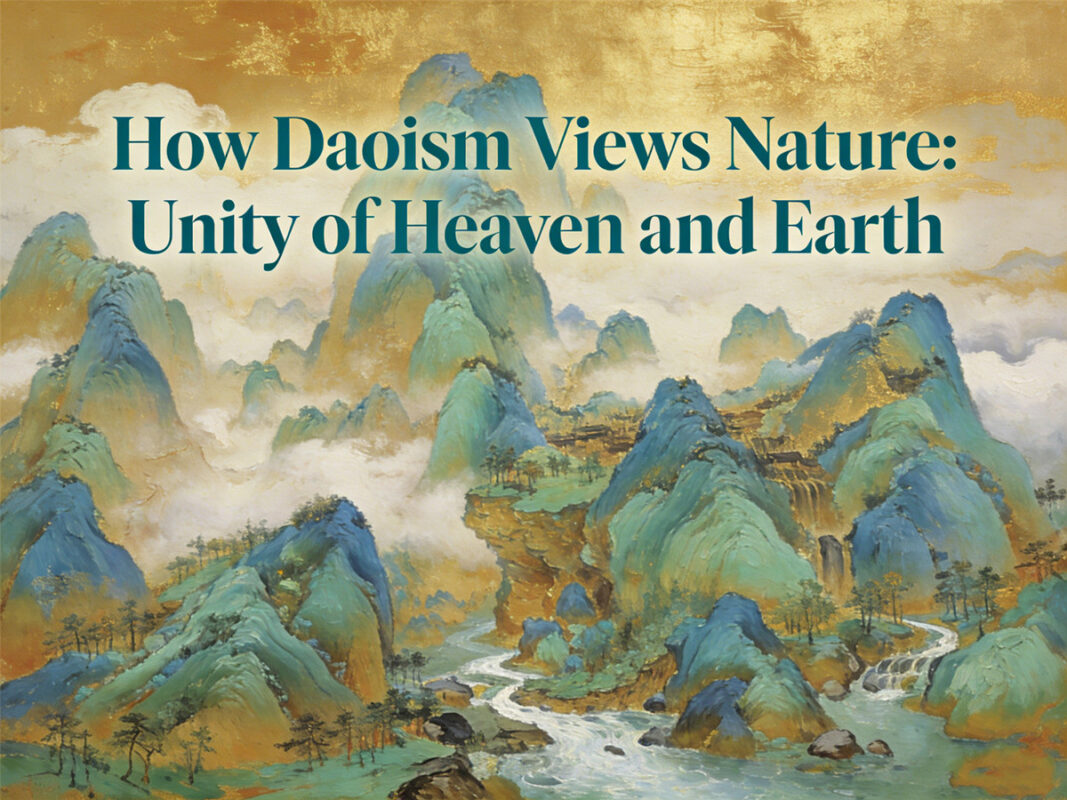
How Daoism Views Nature: Unity of Heaven and Earth
Mar
In the vast tapestry of human thought regarding the natural world, Daoism offers a perspective that is both profoundly simple and endlessly profound. It sees nature not as a collection of resources to be exploited, nor as a mere backdrop to human drama, but as the living manifestation of the Dao itself. This ancient Chinese philosophy, rooted in texts like the Daodejing (道德經) attributed to Laozi and the Zhuangzi (莊子), presents a worldview where humanity is not the conqueror or center of the universe, but an integral, humble participant within the grand, self-so (ziran 自然) unfolding of Heaven (Tian 天) and Earth (Di 地). To understand how Daoism views nature is to grasp its core teachings on existence, harmony, and the path to authentic being. It is a vision of radical unity, dynamic interdependence, and profound reverence.
I. The Cosmic Framework: Dao, Heaven, Earth, and Humanity
The Daoist understanding of nature rests upon a fundamental cosmological principle: the interconnectedness and hierarchical flow of Dao, Heaven, Earth, and Humanity (Ren 人).
- The Dao: The Ineffable Source: At the apex of all existence is the Dao. It is the ultimate, ineffable principle – the origin, the pattern, and the sustaining force of the entire cosmos. It is formless, nameless, and eternal, yet it gives birth to and nourishes the myriad things (wan wu 萬物). The Dao operates through natural spontaneity (ziran), meaning it acts effortlessly and without forced intention, like water flowing downhill or a seed sprouting. Nature, in its purest state, is the Dao in visible, tangible form – the Dao expressing itself through mountains, rivers, forests, and creatures.
- Heaven and Earth: The Great Parents: The Dao gives rise to One; One gives rise to Two (Heaven and Earth); Two gives rise to Three (the harmonious interaction of Yin, Yang, and the primordial breath); Three gives rise to the Myriad Things (Daodejing, Ch. 42). Heaven represents the Yang principle: the celestial, the active, the creative force, the patterns of the stars, the cycles of time, the breath of life (qi 氣). Earth represents the Yin principle: the terrestrial, the receptive, the nurturing force, the solid ground, the fertile soil, the vessel that holds and nourishes. Together, Heaven and Earth form a sacred partnership, a dynamic polarity whose interaction generates and sustains all life. Nature is the theater where this cosmic dance unfolds.
- Humanity’s Place: Within the Triad: Humanity (Ren) is born from the interaction of Heaven and Earth, inheriting the essence of both. Humans are not separate rulers but occupy a specific place within the Triad of Powers: Heaven, Earth, and Humanity. Our role is not to dominate nature but to align ourselves with the patterns of Heaven and the nurturing qualities of Earth. We are stewards, participants, and observers within the larger cosmic order. True wisdom and virtue (De 德) arise from recognizing this interconnectedness and acting in harmony with it.
II. Ziran: Nature’s Way as Self-So Spontaneity
The concept of ziran (自然), often translated as “naturalness” or “self-so,” is central to the Daoist reverence for nature. It describes the inherent, spontaneous, unforced way in which the Dao manifests and all things naturally behave when unimpeded.
- The Principle of Non-Interference: Ziran implies that nature possesses its own intrinsic wisdom and order. Trees grow towards the sun without being told; rivers carve their paths without conscious design; ecosystems achieve complex balance through natural processes. Daoism teaches that the highest form of action is wu wei (無爲), often misunderstood as “inaction,” but more accurately meaning “non-forcing action” or “effortless action.” Wu wei is acting in accordance with the natural flow, like a skilled sailor adjusting the sails to the wind, rather than fighting against it. Applied to humanity’s relationship with nature, wu wei means observing natural patterns, understanding intrinsic balances, and intervening minimally, only when necessary and always with respect for the inherent tendencies (ziran) of the system. It is the antithesis of large-scale, disruptive manipulation aimed at bending nature solely to human will.
- Nature as the Teacher: Daoism encourages humans to look to nature as the ultimate teacher. The Daodejing is replete with natural metaphors: water (soft yet powerful), the valley (humble yet receptive), the uncarved block (pu 樸, symbolizing natural simplicity). By observing the resilience of grass, the adaptability of water, the quiet strength of mountains, and the cycles of growth and decay, humans can learn profound lessons about flexibility, persistence, humility, and the acceptance of change. Nature demonstrates the efficacy of softness, the power of yielding, and the beauty of processes unfolding in their own time.
III. Qi: The Breath of Life and Universal Interconnection
Underpinning the visible forms of nature is the concept of Qi (氣), the vital energy or breath that animates all existence and flows through everything.
- The Universal Current: Qi is the fundamental substance and energy that constitutes the cosmos. It permeates Heaven, Earth, and all living beings. It is the life force in plants and animals, the energy in sunlight and wind, the dynamism in flowing water. Daoism views the natural world not as a collection of separate objects but as a vast, interconnected web of Qi flow. Mountains channel Qi; rivers carry it; forests generate it. The health of any part of this web affects the whole.
- Resonance and Interaction: Because all things share the same underlying Qi, they resonate and interact. Human actions impact the environment’s Qi, and the state of the environmental Qi impacts human health and well-being (a principle central to practices like Feng Shui). This deep interconnection fosters a sense of kinship with all living things. Harming nature is seen as harming oneself, disrupting the harmonious flow of Qi that sustains life. Practices aimed at cultivating personal Qi (like Qigong) often involve connecting with the Qi of natural environments – forests, mountains, bodies of water – recognizing the shared energetic substrate.
IV. The Ecological Imperative: Harmony, Balance, and Sustainability
From its cosmological foundations and principles like ziran and Qi, Daoism derives a powerful ecological ethic. It promotes living in harmony and balance with the natural world, ensuring sustainability.
- Yin-Yang Balance in Nature: The dynamic interplay of Yin (earth, dark, receptive, cool, moist) and Yang (heaven, light, active, warm, dry) is fundamental to natural processes – day and night, seasons, growth and decay, predator and prey. Daoism emphasizes the importance of maintaining this dynamic equilibrium. Human activities that excessively favor Yang (exploitation, speed, consumption, heat) over Yin (conservation, slowness, regeneration, coolness) disrupt this balance, leading to environmental degradation, resource depletion, and climatic extremes. Sustainable living means respecting and nurturing both principles.
- Frugality and Simplicity: The Daodejing extols the virtues of frugality and simplicity (jian 儉, pu 樸). “He who knows contentment is rich” (Ch. 33). “He who hoards most will lose heavily” (Ch. 44). Applied to nature, this means consuming resources mindfully, avoiding excess and waste, and finding contentment with sufficiency rather than relentless growth. It values the intrinsic beauty and worth of nature in its own right, not merely for its utility to humans. This ethos directly counters the modern drive for limitless consumption that drives environmental destruction.
- Respect for All Life: The interconnectedness fostered by Qi and the recognition of the Dao in all things cultivate a deep respect for all forms of life. Daoist texts often speak of valuing the “myriad creatures.” While practical needs are acknowledged, there is an underlying sentiment against wanton destruction or cruelty. This perspective encourages biodiversity conservation and seeing non-human life as possessing its own inherent value and place within the cosmic order.
V. Time, Cycles, and the Wisdom of Change
Daoism perceives nature not as static but as inherently dynamic, governed by cyclical patterns and constant transformation.
- Following the Seasons: Living in harmony with nature means aligning human activities with the rhythms of the seasons and the cycles of the moon. Ancient Daoist practices, including agriculture, medicine, and personal cultivation, were deeply attuned to these cycles. Activities, diet, and even emotional focus were adjusted to resonate with the dominant Qi of spring (growth, expansion), summer (flourishing, activity), autumn (harvest, consolidation), and winter (rest, conservation). This attunement ensures efficiency and reduces stress on both humans and the environment.
- Embracing Impermanence: Nature constantly demonstrates impermanence – leaves fall, rivers change course, landscapes erode. Daoism teaches acceptance of this flux. The Zhuangzi contains parables illustrating the relativity and transience of all things. Resisting change causes suffering; flowing with it (wu wei) brings peace. This perspective helps in accepting natural disasters as part of the Earth’s dynamic processes and encourages resilience and adaptation in the face of environmental shifts, rather than futile attempts to rigidly control inherently fluid systems.
- Long-Term Perspective: Daoist thought, particularly through practices aimed at longevity and alignment with the cosmos, often implicitly adopts a long-term perspective. Actions are considered not just for immediate gain but for their consequences over generations and within the larger web of life. This contrasts sharply with short-term exploitation that ignores cumulative environmental damage.
VI. Embodying the Dao: Integrating Nature’s Wisdom into Modern Life
The Daoist view of nature is not merely a historical curiosity but offers vital wisdom for navigating the environmental challenges of the modern world and cultivating a more harmonious existence.
- Cultivating Awareness and Reverence: The first step is cultivating awareness of the natural world and a sense of reverence for its processes. This means spending time in nature mindfully – observing its details, feeling its rhythms, recognizing its beauty and complexity not as separate scenery but as expressions of the same Dao that flows within us. Practices like Qigong or mindful walking in nature can deepen this connection.
- Living Wu Wei: Sustainable Choices: Applying wu wei means making choices that align with natural patterns. This includes supporting sustainable agriculture (working with soil and seasons), conserving water and energy (respecting natural limits), reducing consumption and waste (simplicity), choosing products with minimal ecological disruption, and advocating for policies that protect ecosystems rather than fragment them. It favors local, organic, and cyclical systems over globalized, extractive linear ones.
- Designing with Nature: Feng Shui Principles: Incorporating principles from Feng Shui – the art of arranging spaces to harmonize with environmental Qi – into architecture and urban planning can create living and working environments that feel more balanced, promote well-being, and minimize negative impacts on the land. This involves considering orientation, natural light, airflow, surrounding landforms, and the integration of green spaces.
- The Symbolism of Natural Harmony: Surrounding ourselves with objects that reflect the beauty and principles of nature can serve as constant reminders of our connection to the larger whole. Dao accessories and dao crafts, such as those found at daocrafts.com, often embody the aesthetics of simplicity, natural materials, and forms that echo the patterns of the Dao – whether in the curve of a ceramic bowl reminiscent of a river stone, the grain of wood left visible, or the balanced asymmetry of a sculpture. These pieces are not mere decorations but tangible expressions of Daoist philosophy, acting as focal points for contemplation and reinforcing our intention to live in harmony with Heaven and Earth. They help bring the essence of nature’s wisdom into our daily environments, subtly supporting our journey towards a more integrated and reverent way of being.
Daoism’s vision of nature as the embodiment of the Dao, characterized by ziran, flowing Qi, and the dynamic unity of Heaven and Earth, provides a profound alternative to the dominant paradigms of separation and exploitation. It calls us to humility, observation, and alignment. It teaches that true vitality and peace come not from conquering nature but from recognizing our place within it, flowing with its rhythms, and honoring the sacred covenant that binds all life within the unfolding mystery of the Dao. In an age of ecological crisis, this ancient wisdom offers not just solace, but a practical path towards a more sustainable and harmonious future.