Interesting Dao
Ink Painting Philosophy: Daoist Aesthetics Expressed
Jan
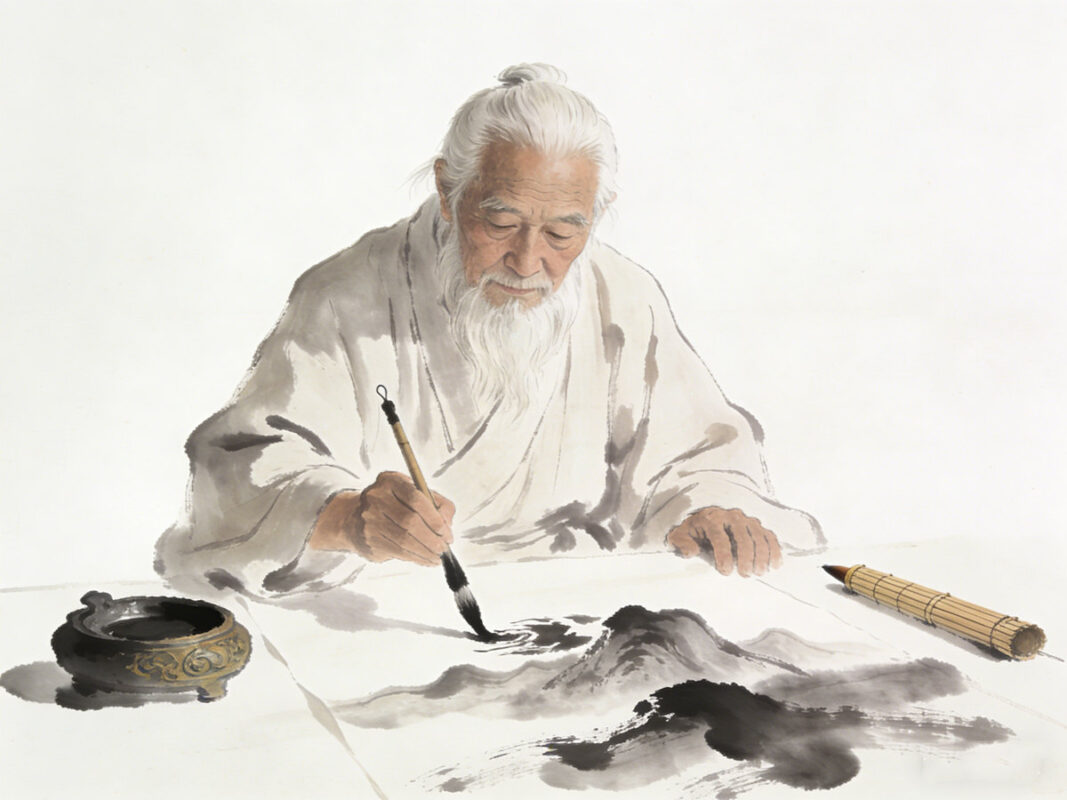
In the hushed interplay of ink and water, brushed upon the receptive surface of paper or silk, lies not merely an artistic technique, but a profound visual philosophy deeply rooted in the heart of Daoist thought. Chinese ink painting (Shuǐmòhuà 水墨画), far beyond its monochromatic elegance, serves as a dynamic vessel for expressing the core principles of the Dao (道, the Way) – the fundamental, ineffable principle underlying the universe. It is an art form where the artist becomes a conduit, not a dictator; where emptiness speaks as eloquently as form; and where the pursuit of capturing the Qi (氣, vital energy) of a subject transcends mere representation, aiming instead for a resonance with the very pulse of creation. This exploration delves into the philosophical bedrock of ink painting, revealing how its aesthetics are an exquisite, tangible manifestation of Daoist sensibilities, transforming the act of painting into a meditative practice and the finished work into a portal to contemplation.
I. The Daoist Essence of the Medium: Simplicity, Fluidity, and Transformation
The very materials and fundamental approach of ink painting embody core Daoist tenets, establishing a direct link between philosophy and practice.
- Wuwei (無為) in Action: Effortless Effort: The concept of Wuwei, often translated as “non-action” or “effortless action,” is central. It does not imply passivity, but rather acting in spontaneous harmony with the Dao, without forced intention or ego-driven interference. In ink painting, this manifests in the emphasis on spontaneity and the cultivated ability to respond fluidly to the medium’s inherent properties. The artist must understand the absorbency of the paper, the viscosity of the ink, and the flow of water, allowing these elements to collaborate in the moment of creation. A masterful stroke appears effortless, born of deep understanding and intuitive response, not rigid pre-planning. The brush becomes an extension of the artist’s Qi, moving with a kind of natural inevitability.
- The Primacy of Simplicity and the Uncarved Block (Pu 樸): Daoism venerates simplicity, spontaneity, and the unadorned essence of things – the state of Pu, the “uncarved block.” Ink painting, with its restrained palette (primarily ink and water, occasionally minimal color), inherently embraces this simplicity. It strips away the distraction of color, focusing attention on the essential qualities of form, texture, space, and the dynamic interplay of light and dark. This reduction is not a lack, but a profound concentration, echoing the Daoist pursuit of returning to the fundamental, undifferentiated source.
- Water and Ink: Agents of Change and the Unity of Opposites: Water, the vital solvent, and ink, the concentrated essence of black, embody the Daoist principle of constant transformation and the interdependence of opposites (Yin-Yang). Water dilutes ink, creating infinite gradations of tone. Ink shapes and defines, yet is utterly dependent on water for its flow and expression. Their interaction on the paper is unpredictable and dynamic, mirroring the ever-changing flux of the Dao. The artist must embrace this fluidity, understanding that control is an illusion; true mastery lies in guiding the inherent tendencies of the medium towards a harmonious outcome.
II. The Dance of Yin and Yang: Ink as Light, Space as Substance
The visual language of ink painting directly translates the Daoist cosmology of complementary opposites into potent aesthetic principles.
- The Alchemy of Ink Tones: The masterful manipulation of ink – from the deepest, richest black (Mo 墨) through myriad greys to the faintest whisper – is not merely a technical skill but a philosophical exercise. These tonal variations represent the dynamic spectrum of Yin (dark, receptive, yielding, potential) and Yang (light, active, assertive, manifest). A single brushstroke can embody both, with a dark, assertive tip fading into a soft, diffused wash. The interplay of dark and light defines form, creates depth, and generates visual rhythm, embodying the ceaseless interaction and mutual generation of Yin and Yang that sustains the cosmos.
- The Power of Emptiness: Liúbái (留白) and the Void: Perhaps the most distinctive and profoundly Daoist element is the strategic and expressive use of blank space, known as Liúbái (“leaving white”). This emptiness is not merely unfinished background; it is an active, vital component of the composition. It represents the Dao itself – the fertile void from which all things emerge and to which they return. It is the space of potential, the breath between notes, the silence that gives meaning to sound. Liúbái allows the painted forms to “breathe,” suggesting mist, water, sky, distance, or pure transcendent space. It invites the viewer’s imagination to participate, completing the scene in their mind’s eye. This reverence for the void echoes the Daoist understanding that “The thirty spokes share the wheel’s hub; It is the center hole that makes it useful… Therefore profit comes from what is there; Usefulness from what is not there” (Dao De Jing, Ch. 11).
III. Capturing the Spirit, Not the Form: Qìyùn Shēngdòng (氣韻生動)
The ultimate goal of ink painting transcends mere technical virtuosity or realistic depiction; it seeks to capture the vital life force, the essential spirit of the subject.
- Beyond Likeness: Xiéyì (寫意) vs. Xiěshí (寫實): While some styles lean towards meticulous detail (Xiěshí, “writing reality”), the dominant philosophical thrust, especially in landscapes and expressive works, is Xiéyì (“writing idea” or “sketching the spirit”). Xiéyì prioritizes conveying the inner vitality, the Qi, the feeling evoked by a mountain, a bamboo stalk, or a bird in flight, over photographic accuracy. It involves simplification, abstraction, exaggeration, and the artist’s subjective interpretation and emotional response. A few deft strokes suggesting bamboo convey its resilient spirit more powerfully than a painstakingly rendered, lifeless copy. This aligns perfectly with the Daoist view that true essence lies beneath surface appearance.
- The Resonance of Qi: The concept of Qìyùn Shēngdòng, often translated as “spirit resonance” or “vitality in motion,” is the paramount aesthetic criterion established by Xie He in the 6th century. It demands that a painting pulsate with the inherent life energy of its subject. This is achieved not through outward detail, but through the Qi transmitted by the artist via the brushstroke – its rhythm, strength, fluidity, and confidence. A mountain painted with this principle feels massive, ancient, and imbued with power; a flower feels delicate yet vibrantly alive. The painting becomes a conduit for Qi, resonating with the viewer’s own energy.
- The Artist as Cultivated Vessel: Achieving Qìyùn Shēngdòng requires more than technical skill. The artist must cultivate their own inner state – their clarity, tranquility, and alignment with the Dao. Traditional training often included meditation, calligraphy (sharing the same brushwork fundamentals), poetry, and immersion in nature. This holistic cultivation refined the artist’s Qi and Shen (spirit), allowing them to perceive and then transmit the essential spirit of their subject authentically onto the paper. The painting becomes a record of a moment of profound connection and spiritual attunement.
IV. Mountains, Water, and the Cosmos in Miniature: Landscape as Sacred Mirror
The subject matter favored in classical ink painting, particularly monumental landscapes (Shānshuǐhuà 山水畫, “mountain-water painting”), is itself a direct expression of Daoist reverence for nature and cosmology.
- Nature as the Ultimate Manifestation of Dao: For Daoists, the natural world is the most direct and uncorrupted expression of the Dao. Mountains represent permanence, stillness, wisdom, and the ascent towards the heavens (Yang). Water represents fluidity, adaptability, life-giving force, and the downward flow towards receptivity (Yin). Together, they embody the dynamic interplay of Yin-Yang and the cyclical processes of the cosmos. Painting landscapes was not merely depicting scenery; it was contemplating and participating in the grand order of nature.
- The Microcosmic View: Man’s Place within the Whole: Traditional Shānshuǐ compositions often include tiny human figures or simple dwellings nestled within vast, awe-inspiring mountain ranges and flowing rivers. This scale deliberately emphasizes humanity’s small yet integral place within the immense, eternal natural order. It reflects the Daoist ideal of harmony between humanity and nature, where humans live humbly and respectfully within the cosmic landscape, not seeking to dominate it. The viewer is invited to imaginatively enter the painting, to wander the mountain paths, and experience the perspective of being part of something vastly greater.
- Symbolism and the Immortal Realm: Specific landscape elements often carried symbolic weight rooted in Daoist mythology and the pursuit of immortality (Xian 仙). Mist-shrouded peaks evoked the elusive abodes of immortals. Gnarled pines symbolized longevity and resilience. Cranes (as discussed previously) represented transcendence. Waterfalls suggested the flow of Qi and the cleansing power of the Dao. Painting these elements was a way to connect with these potent symbols and the spiritual ideals they represented.
V. The Enduring Brushstroke: Daoist Aesthetics in Contemporary Perception and Practice
The philosophical underpinnings of ink painting continue to resonate, influencing contemporary art and offering pathways for integrating Daoist principles into modern life.
- Influence on Modern and Global Art: The principles of spontaneity, expressive brushwork, emphasis on emptiness, and the pursuit of capturing essence profoundly influenced movements like Abstract Expressionism in the West. Artists such as Mark Tobey and Franz Kline drew inspiration from the energy and gesture of East Asian calligraphy and ink painting. Contemporary Chinese artists continuously reinterpret the tradition, grappling with its philosophical depth while engaging with modern themes and materials, proving its enduring vitality.
- Meditation in Action: The Practice as Path: For practitioners today, the act of wielding the brush, grinding the ink, and engaging with paper remains a potent form of moving meditation. It demands presence, stillness of mind, and a surrender to the moment – core Daoist disciplines. The focus required to achieve a single, resonant brushstroke cultivates concentration and channels Qi, offering a tangible experience of Wuwei and connection to the creative flow. It is a practice that refines the artist internally as much as it produces an external object.
- Dao Decor and Dao Crafts: Integrating Essence into Space: The desire to embody the tranquility and harmony of Daoist aesthetics extends beyond the gallery wall into the spaces we inhabit. Dao decor embraces the spirit of ink painting through simplicity, natural materials, and a mindful appreciation for space and texture. A single scroll featuring a minimalist bamboo or mountain scene, hung with ample Liúbái around it, can transform a room, inviting contemplation and evoking the vastness of nature within the domestic sphere. Similarly, Dao crafts find deep resonance with ink painting’s philosophy. The meticulous carving of a scholar’s object from bamboo or precious wood, echoing the lines found in painting, becomes an act of focused presence. The creation of handmade paper, sensitive to the nuances of brush and ink, honors the material foundation of the art. Crafting a ceramic inkstone or water dropper with quiet elegance is itself an exercise in Wuwei, shaping form with respect for function and materiality. Even the arrangement of objects on a desk, mindful of balance and empty space, reflects the compositional principles of Shānshuǐ. These tangible expressions of Dao decor and Dao crafts allow the silent resonance of ink painting’s philosophy – its reverence for nature, its embrace of emptiness, and its pursuit of essential spirit – to permeate daily life, offering moments of stillness and connection to the enduring Dao. The brushstroke may dry, but the resonance of the Qi it captured continues to flow, a timeless testament to the profound dialogue between ink, spirit, and the Way.