
Interesting Dao
Modernization Threats to Daoist Heritage
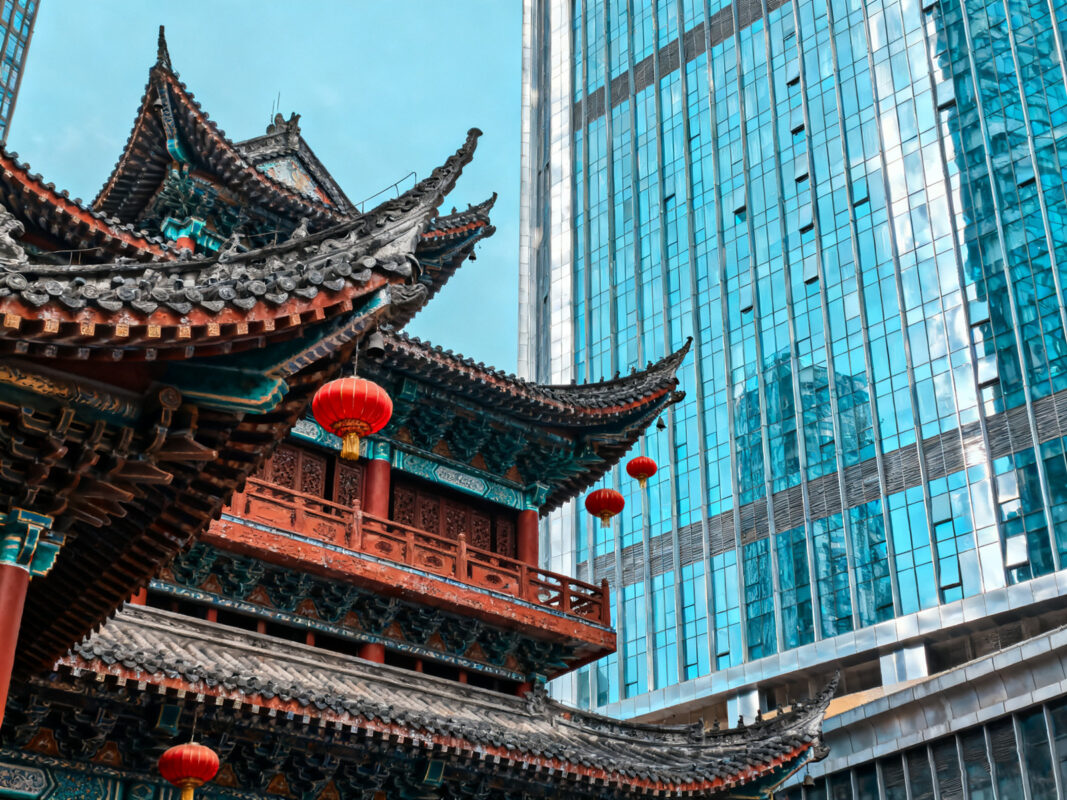
Nov
Modernization Threats to Daoist Heritage
Across the mountains of China, in remote valleys where mist lingers over ancient pine forests and temple bells echo faintly at dawn, the Daoist tradition has endured for centuries as one of humanity’s most subtle and profound spiritual systems. Yet in the accelerating tide of modernization — defined by urban expansion, industrial growth, and global consumer culture — this delicate heritage faces unprecedented pressures. What was once a living philosophy integrated into nature, architecture, ritual, and daily life now risks being overshadowed by the very modern forces that promise progress and development.
To understand these threats, one must first grasp the essence of Daoist heritage — a heritage not merely composed of temples or manuscripts, but of ways of being that connect human life with the rhythm of the cosmos. Daoism’s decline is not simply a cultural loss; it represents the erosion of a worldview that values harmony over conquest, stillness over speed, and simplicity over excess.
This article examines seven interwoven challenges confronting Daoist heritage in the modern world: urbanization, environmental degradation, commercialization, secularization, cultural displacement, digital transformation, and the fading of traditional craftsmanship.
1. Urban Expansion and the Erosion of Sacred Landscapes
For Daoism, the landscape itself is sacred. Mountains, rivers, caves, and forests are not backdrops to human life but living expressions of the Dao — the Way through which all forms arise and dissolve. The earliest Daoist hermits sought refuge in remote regions precisely because nature offered the clearest mirror of the uncarved state of being.
The Mountain as a Spiritual Axis
Temples such as those on Mount Wudang, Mount Qingcheng, and Mount Lao were never placed randomly; they were chosen according to geomantic principles that harmonized spiritual energy with topography. Each site represented a microcosm of the universe — a point where heaven and earth could communicate through meditation, ritual, and balance.
However, as cities expand and modern infrastructure penetrates once-isolated regions, these sacred landscapes face serious disruption. Highways, tourist resorts, and industrial zones have encroached upon temple areas once protected by remoteness. Urban noise, pollution, and artificial light alter the spiritual and ecological environments in ways that traditional Daoist geomancy never anticipated.
Loss of Environmental Integrity
When the integrity of a mountain ecosystem is compromised, the energetic field that Daoists once revered also weakens. The streams that once symbolized purity become conduits for runoff; the forests that inspired meditation give way to concrete terraces and viewing platforms. This shift from natural quiet to commercialized spectacle illustrates how modernization can strip a place of its essence while leaving its image intact.
2. Industrialization and Environmental Degradation
Daoism teaches that humanity flourishes only when it acts in accord with nature’s cycles. Yet industrialization has produced an economic logic directly opposed to this — one of extraction, acceleration, and control.
The Disappearance of Natural Sanctuaries
Air pollution and deforestation in regions like Sichuan, Hubei, and Shaanxi — historically home to numerous Daoist sanctuaries — have altered the ecological conditions necessary for monastic living. The decline of biodiversity and the contamination of water sources make self-sufficient temple communities increasingly unsustainable. Monks who once gathered wild herbs for medicine or practiced inner alchemy amid untouched wilderness now find themselves surrounded by noise and haze.
The Ecological Irony
It is a striking irony that a philosophy built around non-interference with nature is now endangered by humanity’s interference at global scale. Daoist cosmology emphasizes balance between yin and yang — a dynamic equilibrium between opposing forces — yet industrial modernity continually pushes one side of the equation: activity without stillness, production without renewal, ambition without reflection.
When viewed through a Daoist lens, the environmental crisis is not just ecological but spiritual — a manifestation of disharmony between human consciousness and the Dao itself.
3. Commercialization and the Tourist Economy
While modernization has damaged Daoist heritage physically, commercialization threatens it culturally and symbolically. Temples once devoted to quiet cultivation have increasingly become tourist attractions — packaged, priced, and marketed as cultural heritage rather than living practice.
Sacred Spaces Turned into Spectacle
On major Daoist mountains, cable cars now carry thousands of visitors daily to altars that were once reachable only through days of pilgrimage. Vendors line the pathways selling talismans, incense, and “lucky charms,” often mass-produced in factories far from any spiritual context. Ceremonies designed for introspection are re-enacted as performances for crowds with cameras.
While this influx of tourism provides financial stability for temple maintenance, it simultaneously transforms sacred experience into spectacle. The visitor’s relationship with the site becomes transactional rather than reverent, and monks, pressured by economic necessity, often become managers of cultural performance rather than transmitters of esoteric teaching.
Commodification of Spiritual Symbols
Modern consumer culture has also commodified Daoist imagery — dragons, yin-yang symbols, immortals — as decorative motifs detached from their original meanings. What was once a language of cosmological insight has become a fashion statement, losing nuance as it circulates through global markets.
The deeper danger lies not in selling these images but in forgetting what they signify — the intricate understanding of balance, emptiness, and transformation that underpins Daoist art.
4. Secularization and the Decline of Spiritual Practice
Modernization not only changes landscapes and economies but also reshapes the human mind. As materialism and secular education become dominant, fewer people see spiritual cultivation as relevant to daily life.
The Marginalization of the Monastic Path
The Daoist monk, once seen as a sage in harmony with nature, now appears to many as a relic of the past. Younger generations, drawn to cities and digital lifestyles, rarely choose monastic life. The demanding regimen of meditation, dietary discipline, and ritual observance feels alien in an era of constant distraction.
Many temples report declining numbers of novices, and those who do join often lack the cultural grounding or classical education to understand Daoist scriptures deeply. The oral transmission of secret meditation methods and alchemical formulas — once passed from master to disciple — now risks disappearing as lineages dwindle.
The Rise of Superficial Engagement
Simultaneously, popular interest in Daoism has grown abroad, but often in fragmented forms — as wellness techniques, martial arts, or aesthetic inspiration — rather than as a holistic spiritual path. The result is a paradox: Daoist ideas are more visible globally than ever, yet fewer people grasp their philosophical depth.
The challenge is to maintain authenticity in an age that rewards convenience over commitment.
5. Cultural Displacement and Identity Crisis
The rapid modernization of China and other East Asian societies has produced not only economic change but a profound cultural dislocation. Daoism, long intertwined with local customs and festivals, finds itself struggling to maintain relevance in environments increasingly defined by globalized values.
The Fragmentation of Community Life
Daoist festivals — celebrating deities like the Jade Emperor or the Queen Mother of the West — once served as anchors of community identity. Villagers gathered to build altars, perform rituals, and honor the rhythms of the agricultural year. Today, many of these traditions survive only as staged events for tourism or regional branding.
Urban migration has also emptied rural communities that once sustained local temples. When young people leave for cities, the social fabric that supported ritual practice unravels. Without participants, even well-preserved temples become hollow structures, maintained by caretakers but devoid of living ceremony.
Westernization and Loss of Cultural Confidence
Exposure to Western secular ideologies and consumer habits has also shifted perceptions of spirituality. Daoism, once seen as a source of wisdom and self-cultivation, is sometimes dismissed as superstition or folklore. This internalized bias — a legacy of modernization’s focus on scientific rationality — erodes cultural confidence and disconnects individuals from their philosophical roots.
Daoism’s subtle worldview, which emphasizes the value of the unseen and the cyclical, struggles to compete with modern narratives of linear progress and material success.
6. Digital Transformation and the Changing Face of Transmission
In the digital era, the ways people access and share knowledge have evolved dramatically. While the internet offers unprecedented access to Daoist texts, rituals, and teachings, it also presents new challenges for authenticity and depth.
Online Dissemination of Knowledge
Digital archives and social media have made classical Daoist scriptures more available than at any time in history. Practitioners from across the world can now read the Dao De Jing, explore internal alchemy treatises, and watch ritual performances online. This democratization of knowledge is invaluable for preservation, yet it also disrupts traditional teacher-disciple relationships, replacing direct transmission with fragmented, self-guided learning.
Without proper context or lineage, subtle teachings risk being oversimplified. For example, neidan (internal alchemy), a complex system of meditation and energy transformation, is often reduced online to breathing exercises or “energy hacks.”
The Virtualization of Ritual and Community
During the pandemic, many temples began streaming ceremonies and teaching via digital platforms, adapting to necessity. While this kept traditions alive, it also transformed the communal essence of Daoist practice — replacing shared space, incense, and sound with screens and microphones. Ritual, stripped of its sensory and environmental depth, becomes abstracted.
Digital modernization thus walks a fine line: it preserves through adaptation, yet risks diluting the very experiential qualities that make Daoism alive.
7. The Fading of Traditional Craftsmanship
Daoist heritage extends beyond temples and scriptures into the realm of craftsmanship — the making of ritual tools, robes, talismans, and architectural ornaments that embody sacred symbolism. Each item, from a hand-carved altar table to a silk-embroidered celestial robe, represents not only artistry but an encoded cosmology.
The Loss of Artisanal Knowledge
Modern industrial production, while efficient, undermines the continuity of traditional techniques. Younger artisans rarely apprentice under old masters, and demand for handmade ritual items has declined as mass-produced substitutes flood the market. When the chain of apprenticeship breaks, centuries of symbolic knowledge vanish — the way a brushstroke curves in a talisman, the ratio of materials in incense, the geometry of temple carvings aligned with celestial maps.
These crafts are not peripheral to Daoism; they are expressions of metaphysical principles in tangible form. When lost, Daoism risks becoming a purely intellectual memory rather than a living art.
Renewal Through Conscious Craft
Encouragingly, some contemporary initiatives seek to revive traditional Daoist craftsmanship through education and modern design. Artisans and spiritual practitioners alike are reinterpreting sacred motifs, using sustainable materials and digital tools to keep ancient techniques relevant. Platforms like DaoCrafts.com highlight this emerging dialogue between heritage and innovation, where the timeless aesthetics of Daoist culture find new resonance in modern craftsmanship.
Such efforts suggest that preservation is not about resisting modernization entirely but about guiding it — aligning technological and artistic progress with the Dao’s principles of harmony and adaptability.
As modernization accelerates, Daoism’s survival depends on more than nostalgia or protection of monuments. It depends on translation without dilution, innovation without loss of essence, and engagement without commercialization. The modern world needs Daoism’s wisdom — its capacity to teach humility in the face of complexity and stillness amid speed — as much as Daoism needs thoughtful preservation to endure.
The future of Daoist heritage may well rest in rediscovering what modernization has obscured: that progress and preservation are not opposites when guided by awareness. The challenge, as the sages would say, is not to control the Way — but to move with it.