Interesting Dao
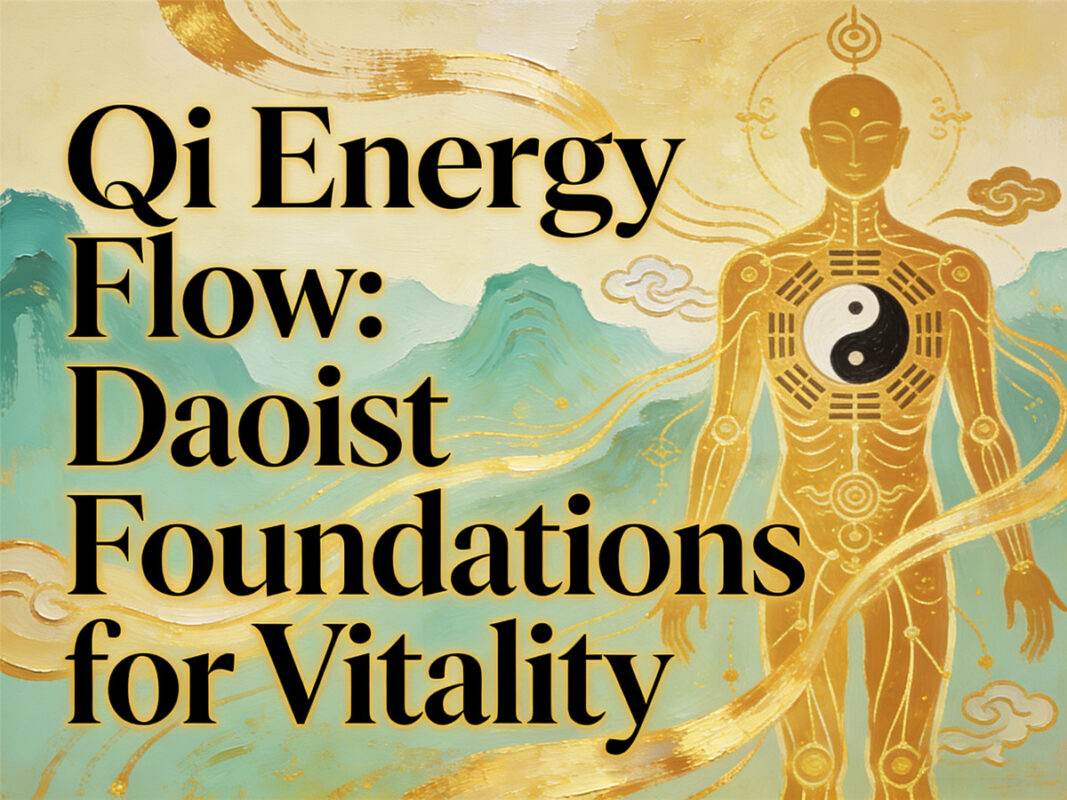
Qi Energy Flow: Daoist Foundations for Vitality
Mar
In the heart of Daoist philosophy lies a concept as fundamental as breath itself yet as elusive as the wind: Qi (氣). Often translated as “vital energy,” “life force,” or simply “breath,” Qi represents the animating principle coursing through all existence – the invisible current connecting the cosmos, nature, and the human body. Understanding Qi energy flow is not merely an intellectual exercise; it is the key to unlocking profound vitality, resilience, and harmony according to millennia-old Daoist wisdom. This intricate system of energy dynamics forms the bedrock of practices from acupuncture and Tai Chi to meditation and Feng Shui, offering a holistic framework for cultivating health and aligning with the fundamental rhythms of the Dao (道), the Way.
I. Defining the Indefinable: The Essence and Nature of Qi
Qi transcends simplistic Western categories of matter or energy. It embodies a dynamic, ever-transforming force that manifests in countless ways. Grasping its multifaceted nature is the first step.
- The Primordial Breath: At its most fundamental level, Qi is the primordial breath of the universe. Daoist cosmology describes the universe originating from Wuji (無極, the Undifferentiated Void) transitioning into Taiji (太極, the Supreme Ultimate, symbolized by Yin-Yang), generating the Three Treasures (San Bao: Jing, Qi, Shen) and the Five Phases/Elements (Wu Xing). Qi is the vital substance animating this entire process, the “stuff” of existence itself, present in the vastness of stars and the minutiae of a cell.
- Manifestations of Qi: Qi is not monolithic. Daoist thought distinguishes various types and qualities:
- Yuan Qi (原氣): Original Qi or Source Qi. Inherited from one’s parents at conception, stored primarily in the Kidneys. It represents our foundational life force, our constitutional vitality and potential longevity. Depletion of Yuan Qi is considered fundamental to aging and disease.
- Gu Qi (穀氣): Grain Qi or Food Qi. Extracted by the Spleen/Stomach system from ingested food and drink. This is the primary source of postnatal Qi production, fueling daily physiological functions and replenishing other Qi forms.
- Zong Qi (宗氣): Gathering Qi or Pectoral Qi. Formed in the chest by the combination of Gu Qi and inhaled air (Kong Qi). Governs respiration, voice strength, heart function, and the circulation of Qi and Blood to the limbs. Vital for cardiovascular and respiratory health.
- Ying Qi (營氣): Nutritive Qi. Flows within the blood vessels and meridians, nourishing the internal organs and tissues. It is closely associated with Blood (Xue), following a diurnal cycle through the meridians.
- Wei Qi (衛氣): Defensive Qi. Flows outside the meridians, primarily on the body’s surface (skin, muscles). Acts as the body’s immune defense shield, regulates sweating, body temperature, and the opening/closing of pores. Protects against external pathogenic factors (Wind, Cold, Heat, Damp, etc.).
- Qi as Dynamic Function: Crucially, Qi is defined by its function and movement. It is not static energy but a dynamic force characterized by specific directions (ascending, descending, entering, exiting) and qualities (smooth, stagnant, deficient, rebellious). Health is synonymous with the unimpeded, balanced flow of Qi; disease arises from its blockage, depletion, or rebellious movement.
II. The Daoist Blueprint: Meridians, Dantian, and the Flow Pathways
Daoist physiology provides a sophisticated map for understanding how Qi circulates within the human body, enabling its nourishing and protective functions.
- The Meridian Network (Jing Luo): The primary conduits for Qi flow are the meridians – an invisible network of channels connecting the surface of the body to the internal organs (Zang Fu). There are twelve primary meridians, each associated with a specific organ system (e.g., Lung, Heart, Liver, Kidney) and flowing in a continuous, diurnal cycle. Blockages or imbalances within these pathways disrupt Qi flow, leading to localized or systemic dysfunction.
- The Extraordinary Vessels: Beyond the primary meridians lie the Eight Extraordinary Vessels (Qi Jing Ba Mai). These act as deep reservoirs and regulators of Qi, particularly Yuan Qi. Key vessels include:
- Du Mai (Governing Vessel): Governs all Yang meridians, runs up the spine, governing the back, brain, and Shen (Spirit).
- Ren Mai (Conception Vessel): Governs all Yin meridians, runs down the front midline, governing the chest, abdomen, and reproductive essence (Jing).
- Chong Mai (Penetrating Vessel): The “Sea of Blood,” crucial for Blood and Qi circulation to the uterus and abdomen.
- The Dantian: Powerhouses of Transformation: Within the body, specific energetic centers act as focal points for cultivating, storing, and transforming Qi. The most significant are the Three Dantians:
- Lower Dantian (Xia Dantian): Located roughly three finger-widths below the navel and deep within the abdomen. Associated with the Kidneys, Yuan Qi, Jing (Essence), and physical vitality. Considered the root of life and the primary center for foundational energy cultivation (e.g., in Qigong).
- Middle Dantian (Zhong Dantian): Located in the center of the chest. Associated with the Heart, Zong Qi, emotions, and compassion. Governs respiration and Qi-blood interaction.
- Upper Dantian (Shang Dantian): Located in the center of the head, behind the point between the eyebrows. Associated with the brain, Shen (Spirit), consciousness, intuition, and spiritual insight.
III. Cultivating the Current: Daoist Practices for Harmonizing Qi Flow
Daoism offers a rich toolkit of practices designed specifically to cultivate, regulate, and harmonize Qi energy flow, enhancing vitality and promoting longevity.
- Qigong (氣功): The Art of Qi Mastery: Qigong translates as “skill in working with Qi.” It encompasses a vast array of practices involving gentle movement, specific postures, breath regulation (Tu Na), focused intention (Yi), and sometimes sound or self-massage. Qigong aims to:
- Remove blockages in the meridians.
- Strengthen and balance Qi in the organs and Dantian.
- Enhance the quality and quantity of Qi (especially Wei Qi and Yuan Qi).
- Calm the Shen (Spirit) and harmonize the mind-body connection.
- Dao Yin (導引): Guiding and Pulling Qi: An ancient precursor to Qigong and Tai Chi, Dao Yin involves therapeutic exercises combining movement, breath, and visualization to “guide” Qi along specific pathways and “pull out” pathogenic factors. It focuses on stretching, twisting, and self-massage to open the meridians and joints.
- Meditation and Neidan (內丹): Internal Alchemy: Sitting meditation, particularly Neidan (Internal Alchemy), is a profound method for refining Qi. It involves deep stillness, breath control, and intricate visualizations to circulate Qi internally (e.g., along the Microcosmic Orbit – connecting Ren and Du Mai), transforming Jing (Essence) into Qi, Qi into Shen (Spirit), and ultimately returning to the Void (Wuji). This is the path of spiritual immortality in Daoism.
- Breathwork (Tu Na – 吐納): The Gateway of Qi: Conscious breathing is fundamental. Tu Na practices involve specific techniques – deep abdominal breathing, reverse breathing, holding patterns, and visualization – to directly draw in Heavenly Qi (from air) and refine it within the body, influencing the flow and quality of internal Qi.
IV. Qi Flow and Vital Health: The Energetic Basis of Well-being
In Daoist medicine (a foundation of Traditional Chinese Medicine – TCM), optimal health is intrinsically linked to the state of Qi. Disruptions in flow manifest as physical, emotional, and mental symptoms.
- Qi Dynamics and Disease Patterns:
- Qi Deficiency (Qi Xu): Lack of energy, fatigue, weak voice, shortness of breath, poor digestion, susceptibility to illness. Often involves Spleen or Lung Qi.
- Qi Stagnation (Qi Zhi): Pain (often distending or moving), emotional frustration, irritability, depression, tightness in chest/ribs, menstrual irregularities. Commonly affects Liver Qi.
- Qi Sinking: Prolapse of organs (e.g., uterus, rectum), chronic diarrhea, dizziness. Often involves Spleen Qi deficiency losing its “lifting” function.
- Rebellious Qi: Qi flowing in the wrong direction (e.g., Stomach Qi rebelling upward causing nausea/vomiting; Lung Qi failing to descend causing cough).
- Supporting Vitality Through Qi Regulation: Daoist longevity practices emphasize the conservation of Yuan Qi (avoiding overexertion, excessive emotions, sexual dissipation) and the efficient generation and smooth circulation of postnatal Qi (through diet, breath, exercise, and emotional balance). Strengthening Wei Qi is paramount for robust immunity.
V. Beyond the Body: Environmental Qi and the Cosmic Connection
Daoist understanding extends Qi beyond the individual, recognizing its flow within the environment and the cosmos. Humans are seen as microcosms reflecting the macrocosm.
- Feng Shui (風水): The Wind and Water of Qi: Feng Shui is the art and science of arranging living spaces to harmonize with the natural flow of environmental Qi (Di Qi – Earth Qi). It considers landforms, watercourses, building orientation, and interior layout to optimize the Sheng Qi (beneficial, nourishing Qi) and minimize Sha Qi (harmful, stagnant or attacking Qi), promoting health, prosperity, and well-being for the inhabitants. The goal is alignment with Tian Qi (Heavenly Qi).
- Living in Accord with Nature: Daoist vitality practices emphasize aligning personal rhythms with seasonal cycles and natural forces (Wu Xing). Activities, diet, and even emotional focus are adjusted to harmonize with the dominant Qi of each season (e.g., conservation in winter, expansion in spring), ensuring the smooth intake and utilization of environmental Qi.
VI. Integrating Qi Wisdom: Cultivating Flow in the Modern World
The principles of Qi flow offer timeless wisdom for navigating contemporary life, providing tools to counteract stress, enhance resilience, and foster enduring vitality.
- Mindful Movement as Medicine: Integrating practices like Tai Chi or simple Qigong routines into daily life is profoundly accessible. Even short sessions cultivate awareness of internal sensations, regulate breath, release physical tension (a sign of Qi stagnation), and promote a palpable sense of energetic circulation. These are antidotes to sedentary lifestyles and mental fragmentation.
- Breath: The Immediate Regulator: Conscious breathing is the most readily available tool. Taking moments throughout the day to engage in deep, abdominal breaths instantly calms the nervous system (regulates Heart Shen), oxygenates tissues, and stimulates Qi flow. It anchors us in the present moment, the only place where Qi can be consciously influenced.
- Diet for Qi Nourishment: Viewing food through the lens of Qi means choosing foods that generate strong, clean Qi (Gu Qi). This typically involves fresh, seasonal, locally grown produce, minimally processed, prepared in ways that preserve vitality. Overeating, excessive cold/raw foods, or greasy, sugary diets burden the Spleen/Stomach, impairing Qi transformation and leading to Dampness or Phlegm – forms of pathological Qi stagnation.
- Emotional Hygiene: Daoists recognize intense or prolonged emotions as major disruptors of Qi flow (e.g., anger stagnates Liver Qi, grief depletes Lung Qi). Cultivating emotional awareness, practicing non-attachment, and developing equanimity are crucial aspects of Qi management. Techniques like meditation help process emotions without allowing them to become lodged energetically.
- Creating Harmonious Spaces: Applying basic Feng Shui principles fosters an environment supportive of healthy Qi flow in homes and workplaces. This includes decluttering (removes stagnation), maximizing natural light and air, ensuring good air quality, and arranging furniture to allow for ease of movement and a sense of safety and openness. Surrounding oneself with objects that inspire peace, natural beauty, and mindful intention can subtly enhance the ambient Qi. Consider incorporating elements that resonate with the harmonious flow of the Dao, such as carefully chosen dao accessories or pieces from artisans dedicated to mindful creation. The subtle beauty and intentionality found in dao crafts, like those curated at daocrafts.com, can serve as tangible anchors, reminding us of the principles of balance, flow, and natural vitality inherent in the Daoist worldview, supporting our ongoing cultivation of vibrant Qi in our daily environment.
Understanding and cultivating Qi energy flow is an invitation to participate consciously in the great dance of life. It is a journey of deepening sensitivity, refining awareness, and learning to move with the currents of existence rather than against them. By tending to this unseen river within and around us through dedicated practice and mindful living, we unlock a profound source of resilience, vitality, and harmony – aligning our personal energy with the boundless, animating force of the Dao itself.