
Interesting Dao
Yin Yang Balance: Daoist Principles for Modern Life
Nov
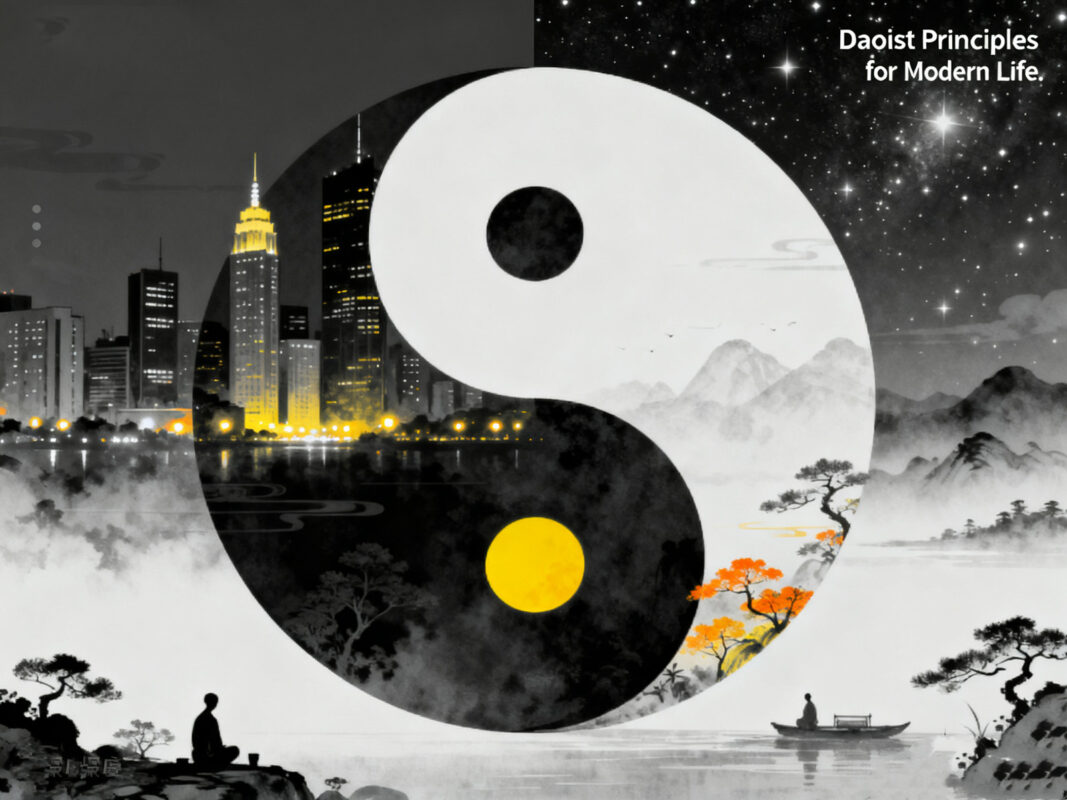
In an age defined by rapid acceleration, constant digital stimulation, and relentless pressure for achievement, the ancient Daoist principle of Yin and Yang offers a profound antidote—a reminder that balance, rather than dominance, defines the natural order of existence. The Yin-Yang philosophy, rooted in classical Daoism, transcends dualistic thinking and calls for a deeper harmony between opposites. Where modern life insists on productivity, Yang, Daoism quietly reminds us of the forgotten grace of stillness, Yin. Where contemporary culture celebrates ambition and conquest, the Daoist tradition teaches alignment, rhythm, and the art of effortless action.
These insights, first articulated more than two millennia ago in texts like the Dao De Jing and Zhuangzi, are not antiquated wisdom; they are living principles that can restore equilibrium to contemporary living—physically, mentally, and spiritually. The challenge lies not in understanding them intellectually but in embodying them in daily life: at work, in relationships, in personal health, and even in how we shape our living spaces and environments.
1. The Essence of Yin and Yang: The Dynamic Unity of Opposites
To grasp the significance of Yin-Yang balance in modern life, one must first understand that these are not static opposites but complementary forces in perpetual motion. Yin represents qualities of stillness, receptivity, and introspection—symbolized by water, night, and the moon—while Yang embodies action, brightness, and expansion—associated with fire, day, and the sun. Neither can exist without the other, and both are constantly transforming into each other.
The cyclical rhythm of existence
In Daoist cosmology, everything flows through the interaction of Yin and Yang—day turns to night, winter gives way to spring, rest prepares for movement. This cyclical rhythm is not a metaphor but a natural law when life is dominated by one force—too much Yang in constant doing or too much Yin in passive withdrawal—imbalance arises, leading to stress, exhaustion, or stagnation.
This idea is strikingly modern: the epidemic of burnout, emotional fatigue, and environmental depletion in today’s world can be understood as a civilization caught in perpetual Yang overdrive—always expanding, rarely replenishing. Reintroducing Yin into the collective consciousness does not mean rejecting progress but restoring rhythm, learning to breathe in harmony with the pulse of existence.
2. Yin-Yang and the Art of Living in Balance
Daoism does not teach balance as a rigid midpoint between extremes but as dynamic harmony, where opposites coexist and complement each other. In the same way that the ocean’s tides rise and fall, human life must move through cycles of exertion and rest, speech and silence, engagement and withdrawal.
Applying Yin-Yang to daily habits
Consider the way most people structure their day—constant notifications, multitasking, and overstimulation. From a Daoist perspective, this is unbalanced Yang: activity without recovery. Integrating Yin means deliberately creating spaces for quiet, reflection, and inward restoration—through meditation, slow breathing, or simply walking in nature without an agenda.
At the same time, Yin without Yang becomes inertia. Balance also requires purposeful engagement—creative action, movement, and expression. The Daoist way is not withdrawal from life but graceful participation, a rhythm of expansion and contraction that keeps the spirit supple.
The modern paradox
Modern culture rewards extremes—either hyper-productivity or escapist relaxation—but Daoism proposes something subtler: an alignment between effort and surrender. This alignment is captured in the principle of wu wei (無為), often translated as “effortless action.” It means moving in accordance with the flow of events, neither forcing nor resisting, but allowing action to arise naturally from awareness. In today’s language, wu wei is the art of working smarter, not harder; living attuned to timing, not trapped in tension.
3. The Psychological Dimensions of Yin-Yang Balance
Beyond lifestyle habits, the interplay of Yin and Yang extends into the psychological and emotional realms. Every human being contains both energies—the assertive, outwardly driven Yang and the receptive, contemplative Yin—and mental health depends on their dynamic balance.
Emotional regulation through dual awareness
In times of anxiety or emotional turbulence, Yang energy tends to dominate: the mind races, thoughts accelerate, and emotions flare. Daoist psychology would suggest balancing this through Yin practices—slowing down, grounding attention in the body, and cultivating stillness. Similarly, when apathy or detachment sets in, awakening Yang through gentle physical movement or social engagement can restore vitality.
Yin-Yang in relationships
Relationships often suffer when one partner embodies excess Yang (controlling, demanding) and the other excessive Yin (passive, yielding). Healthy relationships, from a Daoist viewpoint, depend on mutual transformation—a rhythmic give-and-take where strength and softness alternate naturally. True harmony is not equality in form but reciprocity in function; one leads, the other responds, and the roles continually evolve.
In professional life, too, the most effective leadership integrates Yin-Yang wisdom: assertive decision-making balanced with listening, vision complemented by empathy. It is no coincidence that contemporary models of emotional intelligence and sustainable leadership echo ancient Daoist sensibilities.
4. Embodying Balance: The Daoist Approach to Health and Environment
For Daoists, health is not merely the absence of illness but the alignment of body, mind, and spirit with the rhythms of nature. Modern medicine increasingly confirms what Daoist alchemists knew centuries ago—that chronic imbalance in life energy manifests as disease.
The body as a landscape of Yin and Yang
Traditional Chinese Medicine (TCM), derived from Daoist cosmology, describes the human body as an ecosystem where Yin and Yang govern the flow of qi (life energy). Too much Yang—manifested as tension, heat, or inflammation—calls for cooling Yin restoration; too much Yin—sluggishness, cold, or fatigue—requires activating Yang. The same logic applies to diet, sleep, and exercise: balance is always relative, context-dependent, and fluid.
Environmental resonance and mindful space
Daoism teaches that our surroundings directly influence our internal state. Environments heavy in artificial light, noise, and clutter overstimulate Yang, while dull, stagnant spaces suppress energy. The ideal living space blends vitality with serenity—an aesthetic of flowing lines, natural materials, and gentle contrasts that invite calm yet keep life vibrant.
This is where Dao decor becomes more than a design choice; it reflects a philosophy of harmony. Objects that symbolize balance—curved ceramics, natural wood textures, or subtle light arrangements—help tune one’s environment to the Daoist ideal of ziran (自然), or naturalness. Just as a landscape shapes its river, the way we shape our homes shapes the rhythm of our minds.
Similarly, the adornment of the body can echo this balance—simple, meaningful expressions of inner alignment such as Dao jewelry, which carry symbols of Yin and Yang or the flowing Dao, can serve as tactile reminders of equanimity in daily life.
5. Social and Cultural Imbalance: A Collective Yin-Yang Crisis
If Yin-Yang balance governs individual well-being, it also applies to societies and cultures. Many of today’s global crises—climate instability, social polarization, technological overreach—reflect a collective excess of Yang energy: relentless expansion, competition, and exploitation without the counterbalancing forces of restraint, empathy, and renewal.
The acceleration trap
Modern civilization idolizes speed, efficiency, and growth—values that amplify Yang but deplete Yin. Continuous economic expansion mirrors the body in constant motion with no time to rest. Nature, however, operates cyclically: seasons of harvest follow seasons of stillness. Daoism invites us to reimagine progress not as endless acceleration but as rhythmic evolution—periods of growth interwoven with reflection and restoration.
Reintegrating Yin into culture
A society that honors Yin would cultivate silence amid noise, patience amid urgency, humility amid power. This does not mean passivity but responsive adaptability—the ability to yield and recover. Policies rooted in ecological respect, work cultures that allow true rest, and technologies that serve balance rather than addiction are modern expressions of Yin-Yang wisdom.
The most progressive future may not be the one that moves fastest but the one that moves wisely, maintaining rhythm with the living systems that sustain it.
6. Living the Dao: Integrating Yin-Yang Wisdom in the Modern World
To live with Yin-Yang awareness is to perceive the world as a web of interdependent movements, not as isolated struggles. It requires mindfulness, flexibility, and a willingness to surrender control without abandoning purpose.
The rhythm of personal growth
Personal development, viewed through this lens, becomes an organic unfolding rather than a linear climb. Times of retreat are not failures but phases of renewal; moments of stillness are not wasted but necessary for insight to mature. The Daoist sage accepts both ascent and descent, light and shadow, as integral to the same journey.
The beauty of impermanence
Yin and Yang remind us that change is not chaos—it is the pulse of existence. Rather than resist transition, Daoism encourages us to flow with it, to see endings as beginnings in disguise. In a world obsessed with permanence and perfection, this acceptance of impermanence brings freedom. The circle of Yin and Yang, constantly rotating, mirrors the truth that balance is never fixed but always in motion, requiring gentle awareness to sustain.
A quiet revolution
Reclaiming Yin-Yang balance is more than a personal act—it is a quiet revolution against the culture of fragmentation. It means walking through the world with a sense of rhythm: speaking when words are needed and listening when silence has more power, acting with precision and resting without guilt.
This philosophy, when embodied, transforms even the smallest routines—how we breathe, eat, work, and connect—into expressions of harmony. It turns life itself into a meditation, a continuous dialogue between doing and being, sun and moon, movement and repose.
To bring Daoist principles into the modern world is not to escape from complexity but to navigate it with grace. Yin and Yang remind us that vitality emerges from equilibrium, not excess. They teach that every act of creation requires rest, every insight arises from stillness, and every harmony depends on the tension it reconciles. In rediscovering this balance, we rediscover what it means to live fully—not as fragments driven by extremes but as whole beings moving effortlessly with the rhythm of the Dao, attuned to the quiet music of balance that underlies all things.