Interesting Dao
Are Dao Headpieces Traditional Wear?
Sep
Are Dao Headpieces Traditional Wear? Understanding Their Cultural and Fashion Heritage
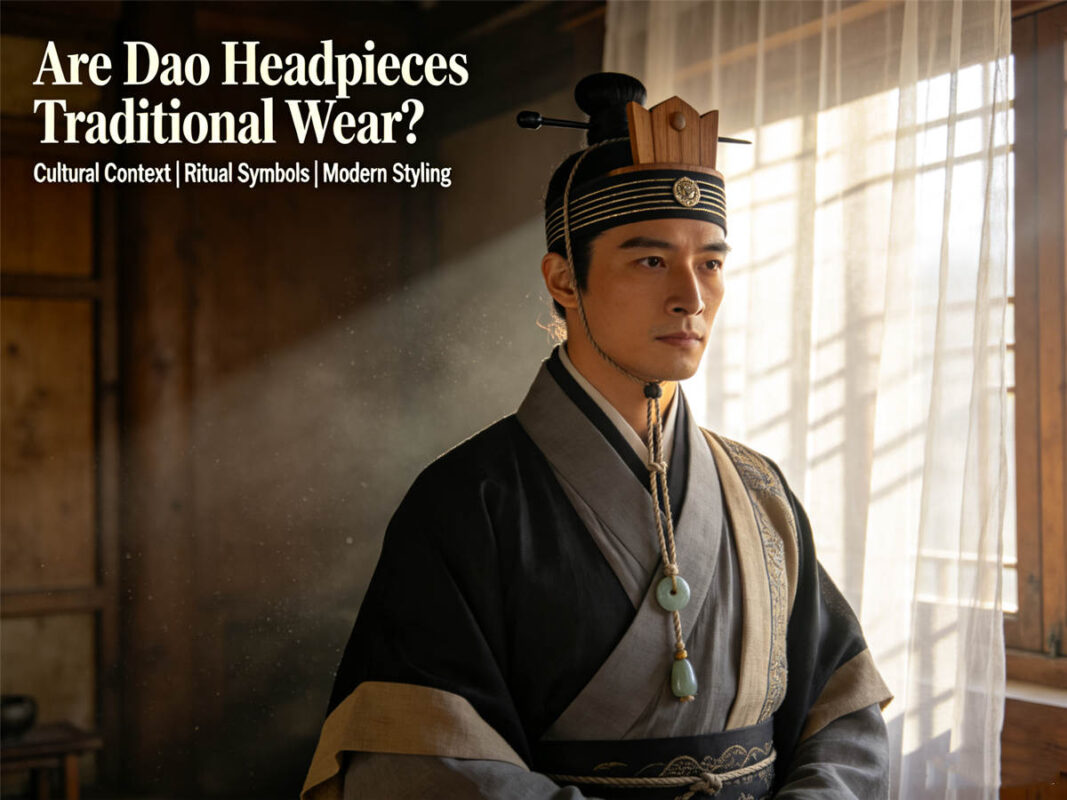
When people first see a Dao Headpiece, one of the most common questions is whether it should be considered traditional Chinese wear, a cultural accessory, or simply a modern fashion item inspired by historical designs. The answer depends largely on how the term is being used, because not every headpiece associated with Dao culture represents one specific historical costume, and many contemporary designs reinterpret traditional forms for modern wardrobes. Nevertheless, Dao Headpieces can be understood within a much broader tradition of Chinese headwear, ornamental craftsmanship, symbolic patterns, and classical aesthetics, making them meaningful accessories for anyone interested in Traditional Chinese Culture and Traditional Dao Culture.
Throughout Chinese history, clothing has rarely been limited to garments alone. Hair arrangements, hairpins, crowns, combs, ribbons, ornaments, and other forms of headwear have played important roles in completing an overall appearance, establishing social and ceremonial context, and expressing aesthetic preferences. In this sense, a modern Dao-inspired headpiece does not need to reproduce one historical object exactly in order to participate in the visual language of traditional Chinese dress. Instead, it can draw from historical shapes, natural motifs, traditional craftsmanship, classical color combinations, and the elegant relationship between clothing and accessories.
For modern wearers, this makes a Dao Headpiece particularly interesting because it can bridge traditional and contemporary fashion. It may be worn with a traditional-inspired outfit, incorporated into a cultural photography session, paired with a Qipao or Horse Face Skirt, or even used as a distinctive accent with relatively simple modern clothing. Understanding its cultural background and styling possibilities can make it much easier to appreciate the headpiece as more than a decorative object.
1. What Is a Dao Headpiece?
A Dao Headpiece is generally a decorative hair accessory or head ornament inspired by the visual traditions associated with Dao culture, classical Chinese aesthetics, natural imagery, and traditional craftsmanship. The exact form can vary considerably, ranging from simple hair ornaments and pins to more elaborate pieces incorporating metalwork, beads, wood, cords, carved details, or traditional-inspired motifs.
It is important to distinguish between a contemporary Dao Headpiece and a historically documented piece of Chinese ceremonial or everyday headwear. A modern product may borrow visual elements from several periods or regional traditions rather than reproducing a single historically accurate design. This is similar to the way modern fashion designers reinterpret traditional collars, sleeves, embroidery, or skirt structures without claiming that every contemporary garment is an exact historical reconstruction.
Traditional Inspiration Rather Than Costume Reproduction
This distinction is particularly useful when discussing Daocrafts products. A traditional-inspired headpiece can preserve recognizable aspects of Chinese visual culture while adapting the proportions, materials, fastening methods, and overall construction to modern users. The result is often easier to wear in everyday life while still retaining a strong connection to classical Chinese aesthetics.
Rather than viewing these pieces only through the question of whether they are “authentic traditional wear,” it is often more productive to consider what traditions they reference, how those references have been adapted, and how the finished accessory fits into the larger history of Chinese clothing and decorative arts.
2. The Role of Headwear in Traditional Chinese Clothing
Headwear has a long and varied history in Chinese dress, and its significance extended well beyond simple decoration. Different periods, social groups, occasions, hairstyles, and regional traditions produced an enormous variety of hats, crowns, hairpins, combs, ribbons, floral ornaments, and other accessories. The head and hair provided an important area for expressing personal taste as well as completing the visual structure of an outfit.
Traditional Chinese clothing is often recognized for its careful attention to proportion, layering, movement, and relationship between garment and accessory. A flowing robe, structured collar, wide sleeve, or pleated skirt could be visually transformed by the addition of a carefully chosen head ornament. This principle remains relevant today, because a modern outfit can acquire a distinctly traditional Chinese character simply by introducing one thoughtfully selected accessory.
Hair and Clothing as One Visual Composition
One reason traditional headpieces remain appealing is that they connect clothing with hairstyle rather than treating accessories as completely separate objects. A carefully arranged hairstyle provides the foundation, while the headpiece introduces a point of detail around the face and upper body. When combined with an appropriate neckline and garment silhouette, this creates a complete visual composition rather than a collection of unrelated fashion elements.
This is especially noticeable when a Dao Headpiece is worn with traditional-inspired clothing. The headpiece can visually extend the vertical lines of a robe, complement the collar of a Qipao, or introduce a delicate contrast against the structured pleats of a Horse Face Skirt.
3. Dao Headpieces and Traditional Dao Culture
The connection between Dao-inspired headwear and Traditional Dao Culture is best understood through the broader cultural traditions of simplicity, natural imagery, balance, craftsmanship, and respect for the relationship between people and their surroundings. Throughout Chinese artistic history, natural forms such as mountains, clouds, plants, birds, flowers, flowing water, and geometric patterns have provided rich sources of visual inspiration.
These themes can appear in contemporary Dao Headpieces through carved shapes, metal ornaments, symmetrical arrangements, muted natural colors, or subtle decorative details. The result does not necessarily need to be religious or ceremonial. Instead, these designs can be appreciated as part of a larger cultural heritage in which nature, craftsmanship, clothing, and visual symbolism have influenced one another for centuries.
Symbolism in Design
Traditional Chinese decorative arts frequently use visual symbols to communicate ideas associated with harmony, longevity, nature, prosperity, seasonal change, or personal aspirations. Modern designers may reinterpret these motifs in simplified forms, allowing the cultural reference to remain recognizable without requiring the wearer to follow a particular religious practice or ceremonial tradition.
This approach makes Dao-inspired accessories accessible to a wider audience. Someone may appreciate the shape of a cloud motif, the elegance of a traditional knot, or the balance of a symmetrical design simply because it reflects Chinese artistic heritage and craftsmanship.
4. How to Wear Dao Headpieces With Traditional and Modern Clothing
One of the most attractive qualities of a Dao Headpiece is its versatility. Although traditional clothing naturally provides the strongest cultural context, a headpiece does not necessarily require a complete historical-style outfit. In fact, combining one traditional-inspired accessory with modern clothing can often create a more natural and contemporary appearance.
With Qipao and Cheongsam
A Qipao or Cheongsam provides one of the most natural settings for a traditional-inspired headpiece because the garment already incorporates recognizable elements of Chinese clothing. A fitted silhouette, Mandarin collar, decorative buttons, embroidery, or traditional fabric creates a visual framework in which the headpiece can function as a complementary detail.
For an elegant appearance, consider keeping the headpiece relatively restrained when the Qipao itself contains substantial embroidery or decorative patterns. If the dress is simple and monochromatic, however, a more distinctive headpiece can become the main visual accent.
Daocrafts’ Qipao and Cheongsam collection can be paired naturally with traditional-inspired accessories, creating a wardrobe that connects classical Chinese silhouettes with contemporary styling.
With Horse Face Skirts
The Horse Face Skirt, or Mamian Qun, is another excellent companion for a Dao Headpiece. Its structured pleats and distinctive front and back panels create a strong lower-body silhouette, while a headpiece can provide a corresponding point of detail around the face and hair.
To keep the outfit balanced, choose a relatively simple top and allow either the skirt or the headpiece to serve as the primary focal point. When both pieces are highly decorative, the overall appearance can become visually crowded.
You can explore this traditional-inspired direction through the Daocrafts Horse Face Skirt collection, particularly if you are interested in creating a modern wardrobe influenced by classical Chinese clothing.
With Dao Robes and Qigong Clothing
Flowing robes and relaxed traditional-inspired clothing offer another natural combination. A simple headpiece can complement wide sleeves, flowing fabric, and relaxed silhouettes without creating a sense of excessive decoration. The visual result tends to be softer and more understated, particularly when natural fabrics and muted colors are used.
Daocrafts’ Qigong Clothing collection emphasizes relaxed forms, comfortable construction, flowing lines, and traditional influence, making it a useful reference for building a cohesive wardrobe around classical Chinese aesthetics.
5. Materials, Craftsmanship, and the Beauty of Handmade Details
A headpiece can be visually beautiful because of its overall shape, but its character often becomes much more apparent when you look closely at the materials and craftsmanship. Natural wood, metal, beads, fabric, cords, carved elements, and other materials each produce different visual effects, and traditional-inspired accessories often become more interesting when their material qualities are allowed to remain visible rather than hidden beneath excessive decoration.
Wood, for example, can introduce warmth and organic texture, while metal can provide a more refined and structured appearance. Fabric cords and traditional knotting techniques can create softness and movement, whereas carved or molded details can provide a stronger historical or artistic character.
Natural Materials and Classical Aesthetics
The use of natural-looking materials fits particularly well with the broader aesthetic associated with Traditional Dao Culture, where simplicity and an appreciation of natural forms have influenced artistic expression. A headpiece does not need to be elaborate to appear sophisticated; sometimes a carefully proportioned shape, restrained color palette, and visible material texture can communicate more than a heavily decorated design.
This same philosophy can be applied to other accessories. A wooden bracelet, simple pendant, or understated pair of earrings can complement a headpiece without competing with it. Daocrafts’ Dao Jewelry collection provides additional options for creating a coordinated traditional-inspired look.
6. Are Dao Headpieces Suitable for Everyday Fashion?
Although elaborate headpieces may be associated with ceremonies, performances, photography, festivals, or historical-inspired styling, simpler Dao Headpieces can be incorporated into everyday fashion surprisingly easily. The key is to choose the appropriate scale and coordinate the accessory with the rest of the outfit rather than trying to reproduce a complete traditional costume.
For everyday wear, a small hairpin, understated ornament, or minimal decorative piece can be paired with a plain blouse, linen shirt, long skirt, neutral dress, or even contemporary trousers. The headpiece then functions as a cultural accent, much like a distinctive pair of earrings or a vintage brooch.
Modern Minimalist Styling
Minimalist clothing is particularly effective because it creates visual space around the headpiece. A cream blouse, black trousers, simple shoes, and a restrained traditional-inspired hair ornament can produce a sophisticated appearance without looking theatrical. Similarly, a plain long dress in navy, charcoal, beige, or deep green can provide an elegant background for a headpiece featuring natural materials or subtle traditional motifs.
The principle is simple: the more distinctive the headpiece, the quieter the surrounding clothing should generally be. This allows the accessory to remain the focal point while keeping the complete outfit visually coherent.
7. How Dao Headpieces Fit Into Modern Chinese Cultural Fashion
The growing interest in traditional-inspired clothing reflects a broader desire to reconnect contemporary fashion with cultural history without necessarily reproducing historical clothing exactly. Modern consumers can appreciate traditional Chinese design through individual elements such as collars, embroidery, fabrics, skirts, hair accessories, jewelry, and decorative motifs, creating combinations that feel personal rather than costume-like.
In this context, a Dao Headpiece can be understood as part of a larger movement toward cultural fashion. It provides a relatively small but visually powerful way to incorporate Chinese heritage into a modern wardrobe, whether the wearer has a deep interest in historical clothing or simply appreciates the elegance of classical Chinese design.
The most successful styling usually comes from allowing traditional and contemporary elements to communicate with one another. A modern jacket can work with a traditional-inspired hair ornament; a Qipao can be paired with minimalist jewelry; a Horse Face Skirt can be worn with a simple contemporary blouse. What matters most is proportion, color, texture, and the overall relationship between the pieces.
For those who want to explore this aesthetic further, Daocrafts offers a broader selection of Dao Apparel, clothing, accessories, and traditional-inspired crafts that can be combined according to individual preferences. This makes it possible to build a complete look gradually instead of purchasing an entire wardrobe at once.
8. Choosing the Right Dao Headpiece for Your Personal Style
There is no single correct way to wear a Dao Headpiece, because personal style is ultimately more important than following a rigid set of historical or fashion rules. Someone who prefers understated clothing may find that a small wooden or metal hair ornament is enough, while someone who enjoys elaborate traditional styling may prefer a larger piece with multiple decorative elements.
When choosing a headpiece, consider the shape of your hairstyle, the neckline of your clothing, the colors you normally wear, the materials you prefer, and the occasions on which you expect to use it. A versatile piece should ideally work with more than one outfit, allowing you to wear it with traditional-inspired clothing as well as simpler contemporary garments.
It is also worth considering whether the headpiece feels comfortable and secure when worn. An attractive accessory becomes much more useful when it can remain comfortably in place throughout an event, photography session, cultural gathering, or ordinary day. Practicality and beauty do not need to be opposites; good accessory design should make room for both.
Ultimately, Dao Headpieces can be considered part of the broader world of traditional-inspired Chinese wear rather than being limited to one rigid category of historical costume. Their appeal comes from the way they bring together traditional Chinese aesthetics, Traditional Dao Culture, natural imagery, craftsmanship, and modern personal style. Whether worn with Qipao, Horse Face Skirts, flowing Dao-inspired robes, or a simple contemporary outfit, a carefully chosen headpiece can provide a subtle connection to Chinese cultural heritage while remaining practical and visually relevant today. When the rest of the outfit is kept balanced, complementary pieces such as Dao jewelry and a carefully selected Dao pendant can further develop the look, creating a complete style that feels culturally inspired, elegant, and naturally suited to the modern wearer.