Interesting Dao
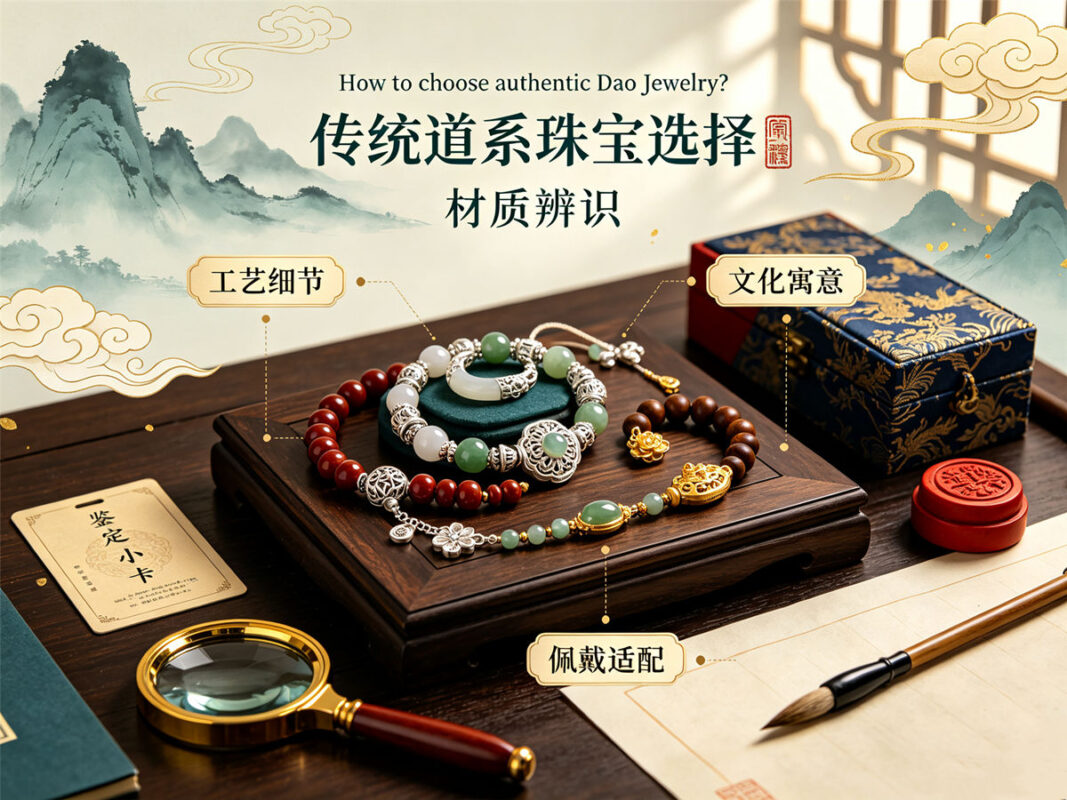
How to choose authentic Dao Jewelry?
Aug
Dao jewelry has attracted growing attention among collectors, cultural enthusiasts, and people who appreciate jewelry with a deeper symbolic meaning. Unlike ordinary fashion jewelry, Dao-inspired pieces often combine traditional philosophy, spiritual symbolism, craftsmanship, natural materials, and historical design elements, which means that choosing an authentic piece requires more than simply looking at its appearance or comparing prices. A beautiful pendant may have a traditional-looking pattern, but that alone does not prove that it has a genuine cultural connection to Daoist traditions or that it was made according to traditional craftsmanship.
For buyers who are new to this category, the market can sometimes feel confusing because terms such as traditional, handmade, antique, vintage, spiritual, and authentic are frequently used together, even though they describe very different things. The most reliable approach is to consider the materials, symbolism, craftsmanship, provenance, seller information, and overall consistency of the piece rather than relying on a single visual feature.
This guide explains the most important factors to consider when choosing authentic Dao jewelry, helping buyers make more informed decisions while appreciating the cultural background behind these distinctive pieces.
1. Understand What “Authentic Dao Jewelry” Actually Means
Before purchasing anything, it is important to understand that authenticity can have several different meanings, and confusing them is one of the most common mistakes buyers make.
A piece can be traditionally inspired without being historically old, handmade without being antique, or produced by a modern artisan while still respecting traditional Daoist symbolism. Therefore, an authentic modern piece does not necessarily need to be hundreds of years old. What matters is whether the design, symbolism, materials, and craftsmanship have a credible connection to the tradition it claims to represent.
Traditional Inspiration vs. Historical Authenticity
A contemporary pendant featuring a Taiji symbol, Bagua arrangement, Daoist talismanic pattern, or traditional Chinese motif may be considered Dao-inspired jewelry, but it should not automatically be marketed as an ancient artifact. Authenticity should never be confused with age.
For example, a newly crafted silver pendant made according to traditional symbolic principles can be a legitimate modern craft item, while an allegedly “500-year-old” pendant with no provenance, inconsistent materials, or suspiciously perfect condition deserves much greater scrutiny.
A responsible seller should clearly explain whether an item is newly crafted, traditionally inspired, vintage, antique, or an actual historical object. Clear terminology is one of the first signs that a seller takes authenticity seriously.
Look Beyond the Symbol
A symbol by itself is not enough. The presence of a Bagua, yin-yang design, cloud motif, crane, mountain, dragon, or other traditional image does not automatically make an item authentic Dao jewelry.
The surrounding design language matters as well. Traditional symbolism usually has a cultural or philosophical context, and experienced artisans often understand how different symbols relate to each other rather than simply placing popular motifs onto a generic piece of jewelry.
2. Examine the Materials Carefully
Material quality is another important factor when selecting authentic Dao jewelry. Traditional jewelry and ornaments can be made from a wide variety of materials, including jade, silver, bronze, wood, stone, beads, and other natural materials, depending on the historical period, regional tradition, and intended use.
The material should therefore be evaluated according to what the seller claims rather than according to appearance alone.
Jade and Natural Stone
Jade is particularly important in Chinese decorative traditions, but the word “jade” is often used too broadly in commercial descriptions. Different varieties of jade and other green or translucent stones can look surprisingly similar to inexperienced buyers.
If a seller claims that a piece is made from a particular type of jade, ask for specific information about the material instead of accepting a generic statement such as “natural Chinese jade.” For valuable pieces, independent gemological identification can provide much greater confidence.
Natural stones may also contain inclusions, variations in color, small internal structures, or differences in texture. These characteristics do not automatically indicate poor quality; in many cases, they are part of what makes a natural material unique.
Silver and Metalwork
For silver Dao jewelry, examine the metal markings, weight, finishing, edges, and workmanship. A hallmark can provide useful information, but it should not be treated as absolute proof because markings can also be copied.
Look closely at areas that are difficult to manufacture or finish cheaply, such as the back of a pendant, the edges of engraved patterns, attachment points, and small decorative details. Consistent craftsmanship across the entire piece is generally more convincing than a single stamp or logo.
3. Pay Attention to Craftsmanship and Construction
One of the strongest indicators of quality is craftsmanship. Authentic traditional-style jewelry does not have to be perfectly symmetrical or completely flawless, particularly when it is handmade, but it should demonstrate intentional workmanship.
Poorly finished edges, rough casting seams, shallow or mechanically inconsistent engraving, loose components, uneven polishing, and weak attachment points can indicate mass production or low-quality manufacturing.
At the same time, buyers should be careful about assuming that every handmade irregularity proves authenticity. Modern factories can deliberately create an aged or handmade appearance, while genuine artisans may use modern tools to achieve excellent precision.
Handmade Does Not Automatically Mean Traditional
The phrase “handmade” has become an important marketing term, but it does not necessarily tell you where the design originated or whether traditional techniques were used.
A modern artisan can handcraft a piece based on a completely contemporary design, while another artisan may use modern equipment while faithfully reproducing traditional patterns. The more useful questions are therefore: Who made it? How was it made? What techniques were used? What tradition does the design belong to?
A trustworthy seller should be comfortable answering these questions rather than simply repeating the word “handmade.”
Study the Small Details
When examining photographs, zoom in on the engraving, carving, lettering, suspension loop, chain connection, reverse side, and surface finishing. Authenticity is often easier to evaluate through these less visible areas than through the front of a beautifully photographed pendant.
If every photograph focuses only on the front and avoids showing the back, edges, markings, or construction details, buyers should ask for additional images before making an expensive purchase.
4. Research the Symbolism and Cultural Context
Dao jewelry is closely connected with a rich philosophical and cultural tradition, so understanding the meaning behind a design can help buyers distinguish thoughtful craftsmanship from superficial commercial decoration.
Common motifs may include yin-yang imagery, Bagua symbols, trigrams, Taiji concepts, celestial imagery, traditional talismanic forms, and natural elements. However, their meanings can vary according to context, historical period, school, and artistic interpretation.
A seller who provides a detailed explanation of a design’s cultural background is generally more credible than one who simply describes every symbol as bringing “luck, wealth, protection, and success.”
Be Careful With Overly Commercial Claims
One warning sign is exaggerated spiritual or supernatural language. Statements such as “guaranteed protection,” “ancient magic power,” or “certain wealth attraction” are not reliable methods for establishing authenticity.
Daoist traditions have a complex philosophical, religious, and cultural history, and reducing every traditional object to a commercial promise can obscure its actual meaning.
A more responsible description explains what the symbol represents, where the motif comes from, and how it has traditionally been interpreted, allowing the buyer to appreciate the object without making unsupported promises.
5. Investigate the Seller and Product Provenance
Even an excellent-looking piece can be difficult to evaluate without reliable information about where it came from. This is particularly important when buying jewelry described as antique, vintage, ceremonial, or historically significant.
Provenance does not necessarily mean that a seller must provide an uninterrupted ownership history extending hundreds of years. For modern jewelry, it may simply mean that the seller can explain the artisan, workshop, region, material source, production method, and design background.
For antique pieces, however, provenance becomes much more important.
Ask the Right Questions
Before purchasing a high-value item, consider asking:
- Who made the piece?
- Where was it made?
- When was it made?
- What material was used?
- Is the material natural or treated?
- Is the design historically documented or contemporary?
- Was it handmade or machine-produced?
- Are there photographs of the front, back, edges, and markings?
- Is there documentation supporting an antique claim?
- Can the seller provide an independent appraisal or material certificate when appropriate?
A seller does not need to have an elaborate historical story for every modern pendant, but the information provided should be consistent, specific, and verifiable.
6. Compare Prices Without Assuming That Expensive Means Authentic
Price can provide clues, but it should never be used as the sole measure of authenticity.
A very cheap piece advertised as rare antique Dao jewelry should naturally receive additional scrutiny, especially if the description claims precious materials, historical significance, and exceptional craftsmanship. At the other extreme, a high price does not prove authenticity either.
Some sellers deliberately use extremely high prices to create the impression that an object is rare or spiritually significant.
Instead of asking only whether a piece is expensive, consider whether the price is reasonable given its material, craftsmanship, age, provenance, rarity, and maker.
For contemporary handmade jewelry, craftsmanship and material quality may explain the price. For an antique or collectible object, documented age and provenance may become much more important. Understanding what you are actually paying for is therefore more useful than simply comparing price tags.
7. Buy From Sellers Who Value Transparency
The most practical way to reduce the risk of purchasing a misleading product is to choose sellers who provide detailed and transparent information.
A professional seller should be willing to discuss materials, dimensions, craftsmanship, production methods, cultural background, and return policies. They should also distinguish clearly between traditional inspiration and historical authenticity rather than deliberately leaving the distinction vague.
High-quality product photography is useful, but good photographs should support detailed product information rather than replace it.
If a listing uses dramatic claims such as “secret temple treasure,” “one-of-a-kind ancient relic,” or “powerful spiritual artifact” but provides almost no factual information about the object itself, buyers should be cautious.
Similarly, pressure to purchase immediately because “only one remains” or because the item supposedly has extraordinary spiritual power is not a reliable indication of authenticity.
8. Build Your Collection Around Knowledge, Not Just Appearance
The best way to choose authentic Dao jewelry is ultimately to develop your own ability to recognize quality and cultural context. The more you learn about traditional Chinese symbolism, materials, carving techniques, metalwork, regional crafts, and historical design, the easier it becomes to distinguish a carefully made piece from a generic decorative product.
Authenticity is not always about finding an impossibly old object. A beautifully crafted contemporary pendant made by an experienced artisan, using appropriate materials and respectful traditional symbolism, can have genuine cultural and artistic value even though it was created recently.
For collectors, it is also useful to keep records of purchases, including seller information, photographs, certificates, material descriptions, purchase dates, and any available provenance. Over time, these records can become valuable references when evaluating or expanding a collection.
Most importantly, approach Dao jewelry with respect for the culture behind the designs rather than treating traditional symbols simply as decorative patterns. When you understand why a particular motif exists, how it developed, what materials were traditionally used, and how artisans interpret it today, choosing jewelry becomes much more meaningful.
Whether you are looking for a pendant, bracelet, ring, amulet-inspired piece, or a decorative object, the same principle applies: look for transparency, credible craftsmanship, appropriate materials, meaningful symbolism, and realistic claims. These qualities provide a much stronger foundation for identifying a worthwhile piece than appearance, price, or dramatic marketing language alone.
The same approach can also be applied when exploring related categories such as Dao Accessories, Dao decor, and Dao Crafts, where traditional symbolism and contemporary craftsmanship often meet. By learning to distinguish cultural authenticity from superficial imitation, buyers can build a collection that is not only visually attractive but also thoughtful, well-made, and connected to the traditions that inspired it.