Interesting Dao
What is best Dao Apparel style?
Aug
Choosing the best Dao apparel style is not simply a matter of deciding which robe, jacket, or traditional-inspired outfit looks the most attractive. Dao-inspired clothing is connected with a broader aesthetic that values simplicity, natural harmony, movement, balance, and an understated relationship between the wearer and the surrounding environment. For modern consumers, this makes Dao apparel particularly interesting because it can combine traditional Chinese visual elements with practical contemporary clothing, creating garments that feel distinctive without necessarily appearing theatrical or overly historical.
There is also no single style that can be described as the universally “best” Dao apparel style. The right choice depends on why you want to wear it, the season, your body shape, the occasion, the materials you prefer, and how strongly you want the clothing to reflect traditional Daoist aesthetics. Someone looking for everyday clothing may prefer a minimalist linen shirt and loose trousers, while someone attending a cultural event may want a more recognizable traditional robe with layered construction and symbolic details.
The key is to understand the characteristics of different styles and then choose the one that feels natural rather than simply selecting the most elaborate design.
1. Understanding the Aesthetic Behind Dao Apparel
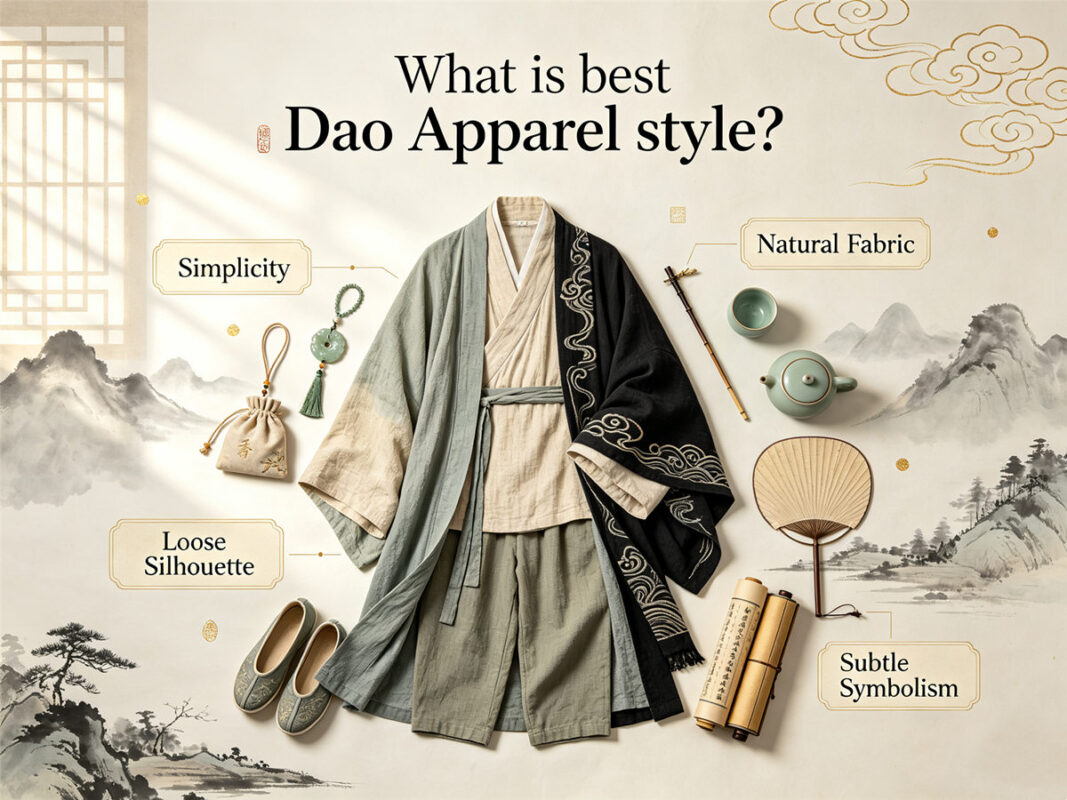
Before comparing specific clothing styles, it is useful to understand the aesthetic principles that influence Dao-inspired fashion. Traditional Daoist visual culture is often associated with ideas of simplicity, naturalness, balance, and harmony, and these ideas can be reflected in clothing through relaxed silhouettes, restrained decoration, natural fabrics, and colors inspired by the natural world.
Dao apparel does not necessarily mean clothing that belongs exclusively to religious practice. In contemporary fashion, the term can describe garments inspired by traditional Chinese clothing, Daoist cultural imagery, natural philosophy, and related historical aesthetics. Therefore, a modern Dao-inspired outfit may look quite different from the formal robes worn by Daoist practitioners.
Simplicity Is Often More Important Than Decoration
One of the most recognizable characteristics of Dao-inspired clothing is its restrained appearance. Instead of covering the garment with elaborate embroidery, excessive patterns, or large decorative elements, many designs allow the fabric, silhouette, and movement of the garment to create the visual effect.
This does not mean the clothing has to look plain or unfinished. A carefully selected texture, subtle contrast between layers, a traditional fastening system, or a beautifully cut sleeve can provide considerable character without making the outfit visually overwhelming.
This is one reason minimalist Dao apparel works particularly well for modern wardrobes. It can communicate a connection with traditional aesthetics while remaining comfortable and relatively easy to wear.
2. Loose and Flowing Robes: The Most Recognizable Style
If someone asks what style most immediately evokes traditional Dao-inspired clothing, the answer will often be a loose flowing robe. Long robes with relaxed silhouettes, wide sleeves, overlapping fronts, and simple closures create a distinctive appearance that has strong connections with historical Chinese clothing traditions.
The advantage of this style is its visual presence. Even a relatively simple robe can create an elegant silhouette because the garment moves naturally as the wearer walks, sits, or turns.
Why Flowing Robes Remain Popular
The loose construction provides another important advantage: comfort. Unlike highly structured modern jackets or fitted formalwear, a flowing robe does not require the garment to closely follow every contour of the body.
This makes it particularly appealing for people who appreciate relaxed clothing. Linen, cotton, ramie, and other breathable materials can further enhance this quality, especially during warmer weather.
A flowing robe can also be layered with a simple inner shirt or trousers, allowing the same garment to work in different settings. For a traditional-inspired photo session, cultural gathering, meditation environment, or relaxed everyday occasion, this style can create a strong visual identity without requiring an excessively complicated outfit.
3. Minimalist Dao Apparel for Everyday Wear
Although traditional robes are visually distinctive, they are not necessarily the most practical option for everyday life. For many people, the best Dao apparel style is actually a modern minimalist interpretation that incorporates traditional elements into ordinary clothing.
A loose linen shirt, wide-leg trousers, simple cross-collar top, or lightweight long jacket can provide the feeling of traditional Chinese clothing while remaining easy to combine with contemporary wardrobes.
Natural Fabrics Create a More Authentic Feeling
Fabric has a surprisingly large influence on how Dao-inspired clothing looks and feels. Linen and cotton are particularly suitable for minimalist designs because their natural texture complements the relaxed aesthetic.
Linen has a slightly irregular surface that becomes softer with use, while cotton can provide a smoother and more familiar feeling. Ramie and hemp fabrics can also create a distinctly natural appearance.
The goal is not necessarily to find the most expensive fabric. Instead, look for breathable, comfortable materials with a natural texture and appropriate weight for the intended season.
A lightweight linen robe, for example, can work beautifully in spring and summer, while heavier cotton or wool-blend layers can provide a more suitable appearance for colder weather.
4. Choosing Colors That Match the Dao Aesthetic
Color is another major factor when choosing Dao-inspired apparel. While there are no strict rules requiring every Dao-style garment to use a particular palette, understated colors generally work better when the goal is to create a calm and natural appearance.
Earth tones, muted greens, soft browns, charcoal, cream, off-white, dark blue, gray, and subdued natural shades can create a harmonious appearance without making the clothing feel excessively fashionable or artificial.
Black and White for a Classic Appearance
Black and white are among the easiest colors to incorporate into a Dao-inspired wardrobe because they create strong visual simplicity and can be combined in many different ways.
A black outer robe over a white or cream inner shirt creates a traditional-inspired contrast while remaining extremely easy to style. Similarly, an off-white linen robe paired with dark trousers can produce a softer and more contemporary appearance.
Earth Tones for a Natural Style
For people who prefer a warmer appearance, brown, beige, olive, muted green, and sand-colored clothing can work particularly well. These colors naturally complement linen, cotton, hemp, and other textured materials.
The important point is to avoid assuming that a more traditional appearance requires more color. In many cases, a restrained color palette creates a stronger Dao-inspired aesthetic than a garment covered in symbolic colors and patterns.
5. Dao Apparel for Different Occasions
The best style also depends heavily on where you plan to wear it. A robe that looks excellent at a cultural festival may feel impractical at work, while an understated linen shirt may be perfect for everyday use but insufficiently formal for a ceremonial event.
For everyday wear, consider loose shirts, relaxed trousers, simple jackets, and lightweight outer layers. These pieces can be combined with contemporary shoes and accessories, making them considerably easier to incorporate into a normal wardrobe.
For cultural events, photography, festivals, exhibitions, or traditional-themed gatherings, a longer robe with wider sleeves and more recognizable construction can create a stronger visual impression.
For formal occasions, the safest approach is usually elegance rather than extravagance. A well-cut robe in a dark neutral color with subtle detailing will often look more sophisticated than a heavily embroidered garment with multiple decorative elements.
6. How to Choose a Dao Apparel Style for Your Body Shape
Traditional-inspired clothing can be particularly forgiving because many Dao-inspired designs use relaxed silhouettes rather than tightly fitted cuts. Nevertheless, proportions still matter.
If you are shorter, an excessively long robe combined with very wide sleeves may visually overwhelm your frame. A slightly shorter outer layer with controlled volume can create a more balanced appearance.
For taller people, longer robes and wider silhouettes can work especially well because the additional fabric creates a natural sense of movement.
People who prefer a slimmer appearance may want to choose garments with relatively clean vertical lines rather than extremely oversized designs. Conversely, those who prioritize comfort can embrace wider trousers and looser outer layers.
Pay Attention to Proportion Rather Than Size Alone
One of the most common mistakes when purchasing traditional-inspired clothing online is choosing a garment based only on its labeled size.
Loose clothing still requires correct proportions. Sleeve length, shoulder width, garment length, trouser width, and the relationship between inner and outer layers can dramatically change the final appearance.
For this reason, always check the actual measurements rather than assuming that “large,” “medium,” or “oversized” has the same meaning across different manufacturers.
7. Combining Traditional and Contemporary Elements
For most modern wardrobes, the most practical approach is not to dress completely in historical clothing but to combine traditional-inspired pieces with contemporary garments.
A flowing Dao-inspired jacket can be paired with simple jeans or straight trousers. A linen cross-collar shirt can work with modern sneakers. Wide traditional-style trousers can be balanced with a relatively simple fitted shirt.
This hybrid approach makes the clothing feel natural rather than costume-like.
The same principle applies to accessories. A simple pendant, cloth belt, traditional-style bag, or understated bracelet can reinforce the visual identity without turning the entire outfit into a historical costume.
The strongest outfits usually have one or two clearly traditional elements surrounded by simple contemporary pieces, allowing the traditional details to attract attention without competing with everything else.
8. Building a Dao-Inspired Wardrobe With Personality
Ultimately, the best Dao apparel style is the one that fits both your lifestyle and your personal understanding of the aesthetic. If you love traditional silhouettes and enjoy wearing long robes, a flowing layered outfit may be the right choice. If you prefer modern minimalism, natural fabrics and relaxed cuts may give you the same feeling in a much more practical form.
It is also worth remembering that authentic-looking clothing does not need to be overloaded with symbols. Good design often works quietly. A natural fabric, thoughtful cut, muted color, and comfortable silhouette can communicate far more than a garment covered with every recognizable traditional motif.
For beginners, a good starting wardrobe might include one lightweight linen shirt, one pair of relaxed trousers, a simple long outer layer, and one more distinctive traditional-inspired robe for special occasions. These pieces can then be combined in different ways as your personal style develops.
The same design philosophy can extend beyond clothing into complementary products such as Dao Accessories, Dao decor, and Dao Crafts. When these elements share a similar preference for natural materials, restrained colors, thoughtful craftsmanship, and meaningful traditional inspiration, they can create a coherent aesthetic rather than looking like unrelated decorative products.
In the end, the best Dao apparel style is not necessarily the oldest-looking, most expensive, or most elaborate option. It is the style that combines comfort, simplicity, craftsmanship, cultural awareness, and personal expression in a way that feels natural to the person wearing it. Whether you choose a flowing traditional robe, a minimalist linen outfit, or a contemporary design influenced by classical Chinese clothing, the most convincing result comes from wearing the clothing with an understanding of the aesthetic behind it rather than simply reproducing its surface appearance.