
Interesting Dao
What Energy Does Lightning Struck Wood Hold?
May
Understanding Nature, Science, and Symbolic Meaning
1. The Fascination Behind Lightning Struck Wood
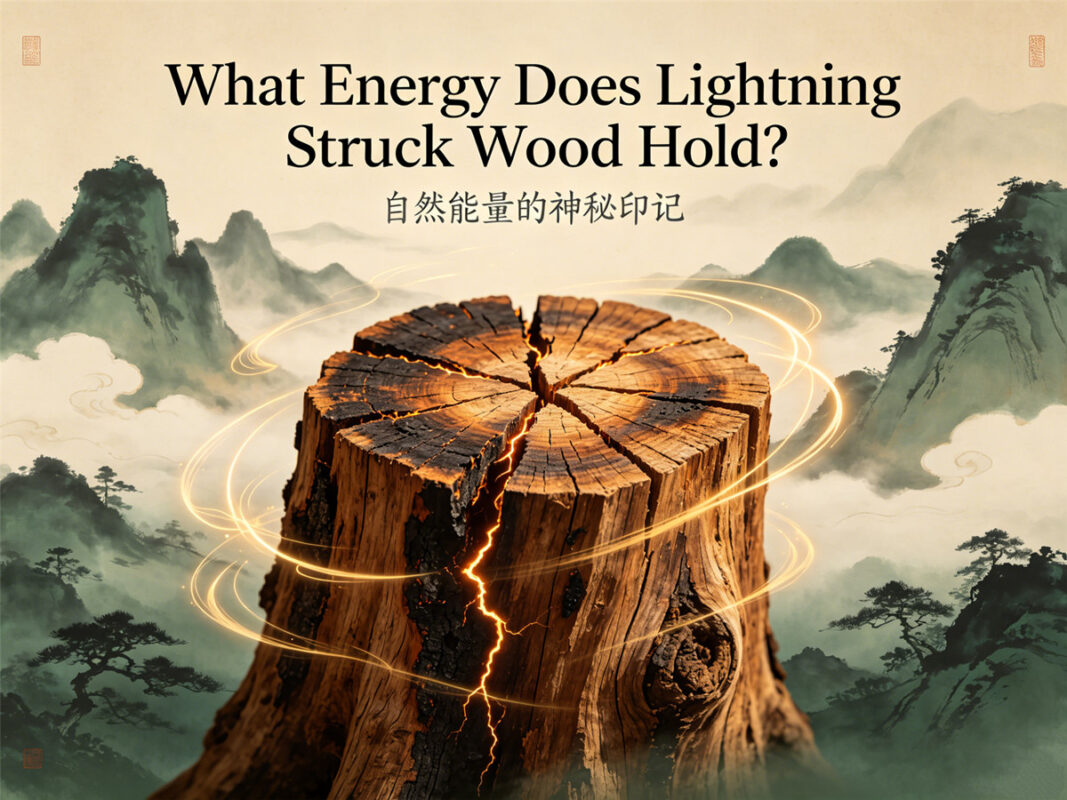
The idea of Lightning Struck Wood has fascinated people for centuries, not only because of its dramatic origin but also because of the way it appears to hold a kind of “captured energy” that feels both natural and extraordinary at the same time. When a tree is struck by lightning, it is exposed to an immense electrical discharge that can reach temperatures hotter than the surface of the sun for a fraction of a second, and this intense event leaves behind physical transformations that are visible in the wood’s texture, structure, and sometimes even its internal composition.
What makes it especially intriguing is that this process sits at the intersection of science and symbolism. On one hand, it is a natural phenomenon governed by physics, heat transfer, and electrical energy. On the other hand, many cultures interpret it as something more meaningful, often associating it with transformation, purification, or heightened natural power. This dual interpretation is what continues to draw attention to lightning struck wood in both scientific and cultural contexts.
The question of what “energy” it holds is therefore not a simple one, because it depends on whether we are discussing physical energy stored in material form, or symbolic energy derived from cultural meaning and human perception.
2. The Scientific Reality of Lightning Strikes on Wood
From a scientific standpoint, lightning is an electrical discharge that carries an enormous amount of energy, and when it strikes a tree, that energy is rapidly transferred into the tree’s structure, causing instantaneous heating, vaporization of moisture, and mechanical stress that can fracture or split the wood.
Electrical discharge and thermal transformation
When lightning hits a tree, the electrical current can reach tens of thousands of amperes, and the rapid conversion of electrical energy into heat causes water inside the wood to vaporize almost instantly. This internal expansion can result in explosive splitting or the formation of unique patterns known as lightning scars or channels.
These patterns are not just surface-level marks but can extend deep into the wood, altering its internal structure in ways that are permanent. However, it is important to understand that once the event is over, there is no ongoing electrical energy stored in the wood. The energy has already been dissipated into heat, sound, light, and mechanical damage.
Structural changes and physical residue
Although no active electrical charge remains, the wood may retain physical evidence of the strike, such as carbonization, resin changes, or altered density in certain areas. These changes are what give lightning struck wood its distinctive appearance, often featuring darkened streaks or irregular internal channels.
Scientifically speaking, the “energy” is not stored as a force but rather expressed through transformation of material structure.
3. Cultural Interpretations and Symbolic Energy
While science explains the physical process, cultural interpretations of lightning struck wood often assign it a symbolic or metaphysical form of energy, which has been present in folklore, traditional beliefs, and spiritual practices across different societies.
Lightning as a symbol of transformation
In many traditions, lightning is seen as a powerful symbol of sudden change, divine intervention, or natural force beyond human control. When this force interacts with a living tree, the resulting transformation is often interpreted as the transfer of symbolic energy into the wood.
This interpretation does not rely on measurable physical properties but instead reflects how humans understand dramatic natural events. The wood becomes a physical reminder of a moment of extreme natural intensity, which is why it is sometimes considered spiritually significant.
Cultural meaning and ritual associations
In some cultural frameworks, objects affected by lightning are believed to carry a form of heightened natural essence. This belief is not universal, but it appears in various traditions where natural phenomena are interpreted as expressions of larger cosmic balance.
As a result, lightning struck wood is sometimes used in decorative or symbolic contexts, where its origin story becomes part of its perceived value and meaning.
4. Material Properties and Aesthetic Characteristics
Beyond symbolism, lightning struck wood is also valued for its unique physical appearance and structural characteristics, which are directly shaped by the intense energy of the strike.
Distinctive patterns and coloration
One of the most recognizable features of lightning struck wood is its irregular internal patterning. The rapid heating and vaporization process can create branching, vein-like structures that resemble natural lightning paths frozen within the wood itself.
These patterns are often visually striking, making the material desirable for artistic and decorative use. The contrast between darkened channels and lighter surrounding wood adds depth and complexity to its appearance.
Texture changes and structural variation
The affected areas of the wood may also exhibit changes in density and texture. Some sections may become brittle due to carbonization, while others remain relatively intact. This variation creates a material that is both visually and physically unique compared to untreated wood.
However, these characteristics also mean that lightning struck wood must be handled carefully if used in craftsmanship, as its structural integrity can be inconsistent.
5. Practical Uses in Craft, Art, and Design
Although not commonly used in large-scale construction due to its unpredictable structure, lightning struck wood is sometimes incorporated into smaller artistic or decorative projects where its visual uniqueness is highly valued.
Artistic and decorative applications
Artists and craftsmen often use lightning struck wood to create sculptures, inlays, or ornamental pieces where the natural patterns become the focal point of the design. The unpredictability of each piece ensures that no two works are identical, which adds to its artistic appeal.
In some cases, the wood is stabilized using resin or other preservation techniques to enhance durability while preserving its natural appearance.
Symbolic use in handcrafted items
Because of its dramatic origin, lightning struck wood is sometimes used in items intended to carry symbolic meaning. These objects may be designed to represent transformation, resilience, or natural power, depending on the cultural or personal interpretation of the material.
This symbolic use often overlaps with modern craftsmanship traditions, where storytelling is an important part of design value.
6. Misconceptions About Energy Storage in Lightning Struck Wood
One of the most common misconceptions is that lightning struck wood retains some form of electrical or energetic charge after the strike, but this is not supported by scientific evidence.
No residual electrical energy
Once the lightning event is complete, the electrical energy is fully dissipated into the environment. The wood does not function as a battery or energy storage medium. Any remaining changes are purely structural or chemical, not electrical.
This distinction is important because it separates physical reality from metaphorical interpretation, helping to clarify what the material can and cannot do.
Why the perception of “energy” persists
Despite scientific explanations, the perception of lingering energy persists because of the dramatic visual impact of lightning strikes and the cultural symbolism attached to them. Humans often associate extraordinary natural events with lasting significance, which can lead to interpretations that go beyond physical evidence.
This blend of observation and meaning is what keeps lightning struck wood a topic of curiosity across both scientific and cultural discussions.
7. Modern Interest, Craftsmanship, and Cultural Appreciation
In contemporary contexts, lightning struck wood continues to attract interest not only from scientists and artists but also from people who appreciate natural materials with unique origins and symbolic depth.
Integration into modern craftsmanship
Modern artisans sometimes incorporate lightning struck wood into curated collections where natural materials are valued for their individuality and storytelling potential. The focus is often on preserving the natural markings while enhancing usability through careful treatment and stabilization techniques.
This approach allows the material to be appreciated both as a natural artifact and as a crafted object.
Cultural aesthetics and symbolic resonance
The continued fascination with lightning struck wood reflects a broader interest in materials that carry visible evidence of natural forces. In this sense, it aligns with a wider appreciation for objects that feel connected to nature’s unpredictability and raw energy, even if that energy is no longer physically present.
As interest in meaningful craftsmanship grows, items such as Dao gift pieces and curated Dao accessories are often explored alongside natural materials like lightning struck wood, as both emphasize symbolism, transformation, and intentional design. These concepts also appear in modern craft collections featured through platforms like Daocrafts.com, where natural inspiration, cultural storytelling, and material authenticity come together in ways that highlight how objects can carry meaning beyond their physical form while remaining grounded in real-world craftsmanship and design understanding.