Interesting Dao
What makes Qipao/Cheongsam Elegant?
May
Understanding Form, Heritage, and Modern Appeal
1. The Essence of Elegance in Qipao/Cheongsam Design
The elegance of the Qipao/Cheongsam is not something that can be reduced to surface appearance alone, because its appeal comes from a carefully balanced combination of structure, cultural history, and visual restraint that has evolved over time into one of the most recognizable silhouettes in fashion. Unlike garments that rely heavily on volume or ornamentation to create impact, the Qipao achieves elegance through precision, where every curve, seam, and proportion is deliberately considered to enhance the natural shape of the wearer without overwhelming it.
At its core, elegance in this garment is closely tied to the idea of controlled simplicity, meaning that nothing appears excessive, yet nothing feels missing. The design invites attention without demanding it, which is one of the reasons it continues to be chosen for formal events, cultural celebrations, and fashion photography where subtle sophistication is preferred over dramatic expression.
The Qipao also carries an inherent sense of discipline in its design language, where tailoring and structure work together to create a silhouette that feels both refined and intentional. This controlled structure is what allows it to remain visually timeless even as fashion trends continue to shift around it.
2. Silhouette and Tailoring Precision as the Foundation of Elegance
The most defining element of Qipao elegance lies in its silhouette, which is carefully tailored to follow the natural lines of the body while maintaining a sense of structure that prevents it from feeling overly casual or relaxed.
Form-fitting structure with restrained curves
The fitted design of the Qipao is one of its most recognizable characteristics, yet what makes it elegant rather than simply tight-fitting is the precision of its tailoring. The garment is shaped to follow the body without exaggeration, creating a smooth vertical flow that elongates the figure and enhances posture.
This balance between fit and restraint is essential, because it ensures that the garment remains sophisticated rather than overtly revealing. The result is a silhouette that feels both graceful and composed, which is a key marker of elegance in traditional dress design.
Side slits and movement fluidity
The side slits of the Qipao are another subtle yet important feature that contributes to its elegance. They introduce movement into an otherwise structured garment, allowing the wearer to walk with ease while maintaining visual continuity.
This interplay between structure and fluidity is what prevents the Qipao from feeling rigid. Instead, it moves with the body in a controlled way, creating a dynamic visual effect that enhances its overall refinement.
3. Fabric Selection and the Role of Texture in Refinement
Fabric choice plays a central role in defining how elegant a Qipao appears, because texture, weight, and drape all influence how the garment interacts with light and movement.
Silk as a traditional foundation
Silk remains one of the most iconic materials associated with the Qipao, and for good reason. Its natural sheen, smooth texture, and ability to drape elegantly over the body make it ideal for highlighting the garment’s tailored structure. Silk also responds beautifully to movement, catching light in subtle shifts that enhance visual depth without overwhelming the design.
In formal settings, silk Qipao often appears more refined because the fabric itself contributes to the sense of luxury and tradition embedded in the garment.
Modern fabrics and understated elegance
While silk remains classic, modern interpretations of the Qipao often use satin blends, brocade, or lightweight synthetic fabrics that mimic traditional textures while offering greater durability and accessibility. These materials can still achieve elegance when carefully selected and well-constructed, especially when paired with minimal embellishment.
The key is not the exclusivity of the fabric but how it is used within the design, ensuring that texture supports rather than competes with the silhouette.
4. Details, Embroidery, and the Language of Subtle Ornamentation
Elegance in the Qipao is often expressed through restraint in decoration, where embellishments are used sparingly and intentionally rather than excessively.
Symbolic embroidery and visual storytelling
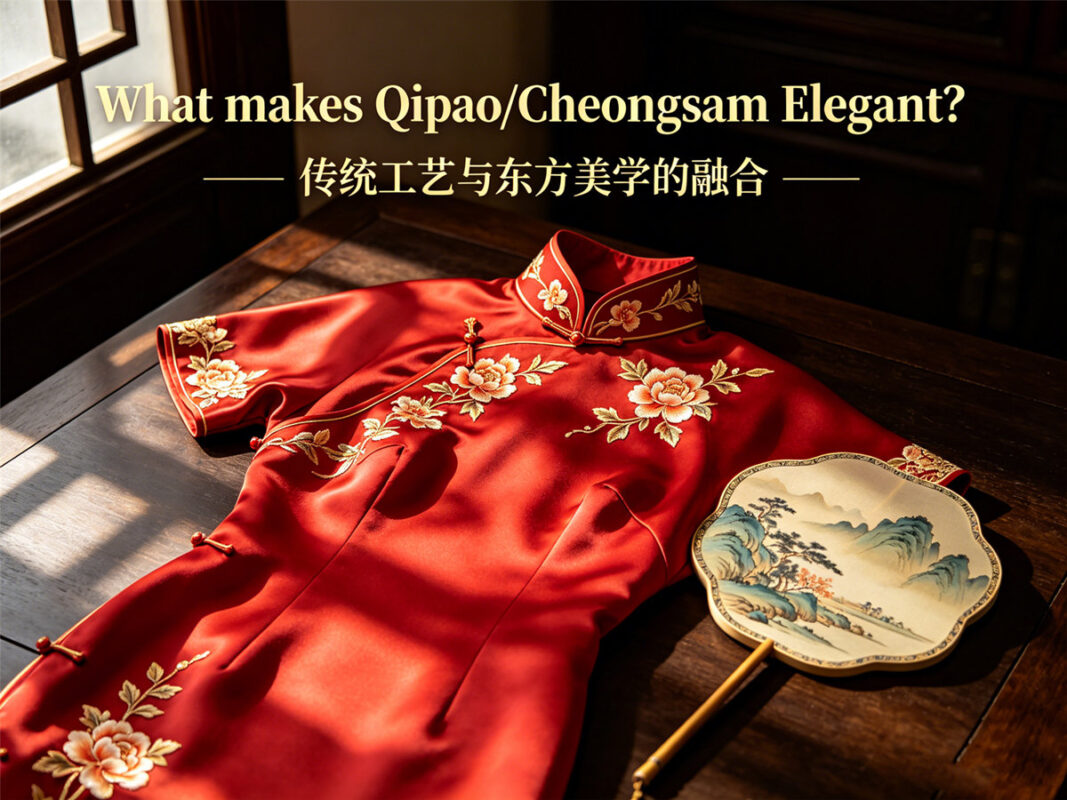
Embroidery on a Qipao is rarely purely decorative. Instead, it often carries symbolic meaning drawn from nature, mythology, or cultural imagery. Floral motifs, birds, and flowing patterns may represent prosperity, grace, or continuity, adding depth to the garment without disrupting its visual balance.
These details are typically placed strategically along collars, hems, or side panels, ensuring that they enhance rather than dominate the overall design.
Collar and button craftsmanship
The mandarin collar and traditional knotted buttons are small but essential features that contribute significantly to the Qipao’s elegance. The collar frames the face with clean lines, while the buttons add a delicate rhythm to the garment’s front structure.
These elements are subtle, yet they reinforce the garment’s identity and craftsmanship, ensuring that elegance is communicated through detail rather than excess.
5. Cultural Depth and Historical Continuity
The elegance of the Qipao is deeply connected to its cultural and historical background, which gives the garment a sense of continuity that extends beyond fashion trends.
Evolution from traditional dress forms
The Qipao has evolved over time from earlier forms of traditional Chinese dress, adapting to changing social and cultural contexts while retaining its core design principles. This evolution has allowed it to remain relevant without losing its identity, which is a rare quality in fashion history.
Its ability to bridge past and present is part of what makes it elegant, as it carries a sense of cultural memory that enhances its visual presence.
Cultural symbolism and identity expression
Wearing a Qipao often represents more than aesthetic choice; it can also express cultural identity, appreciation for tradition, or participation in cultural celebration. This added layer of meaning contributes to its perceived elegance, as garments that carry symbolic weight often feel more significant in social contexts.
6. Posture, Movement, and the Wearer’s Influence on Elegance
While design elements play a major role, the elegance of a Qipao is also shaped by how it is worn, particularly in terms of posture, movement, and presence.
Posture as part of the design experience
The structured fit of the Qipao naturally encourages upright posture, which enhances its overall elegance. A straight silhouette allows the garment to fall smoothly along the body, creating a clean vertical line that is visually appealing in both motion and stillness.
This interaction between garment and posture means that elegance is partially co-created by the wearer, rather than being solely embedded in the clothing itself.
Movement and controlled expression
Movement in a Qipao is typically measured and deliberate, as the garment’s design naturally limits overly wide or abrupt motions. This creates a sense of controlled grace, where each step contributes to the overall aesthetic rather than disrupting it.
The result is a visual rhythm that feels calm, composed, and refined.
7. Modern Interpretations and the Timeless Appeal of Qipao Elegance
In contemporary fashion, the Qipao continues to evolve, yet its core sense of elegance remains intact because its design principles are fundamentally timeless.
Adaptation in modern styling
Modern Qipao designs often experiment with length, fabric, and minimalistic detailing, making them more versatile for different occasions while preserving their essential silhouette. Some versions are designed for casual wear, while others remain strictly formal, demonstrating the garment’s adaptability.
Despite these variations, the underlying structure continues to define its elegance, ensuring continuity across interpretations.
Influence on global fashion aesthetics
The Qipao has also influenced global fashion designers, who often incorporate elements such as high collars, fitted silhouettes, and side slits into contemporary collections. This cross-cultural influence highlights its enduring relevance and reinforces its status as a design rooted in elegance rather than trend.
Its relationship with other traditional garments such as the Mamian Skirt further illustrates how different cultural clothing systems can coexist and inform one another while maintaining distinct identities.
As interest in cultural fashion continues to grow, people often explore related items such as Dao gift pieces that reflect similar values of symbolism and craftsmanship. These cultural expressions are increasingly appreciated not only as fashion but as part of a broader lifestyle aesthetic that values meaning and design integrity. For those interested in exploring curated cultural craftsmanship and modern interpretations of traditional aesthetics, platforms like Daocrafts.com provide a thoughtful look into how elegance, heritage, and contemporary design intersect in ways that keep garments like the Qipao relevant, expressive, and continuously evolving.